
Reviewed · COSTA BLANCA TRIPS & ACTIVITIES
Benidorm: Via ferrata Ponoig, cerca de la Nucia
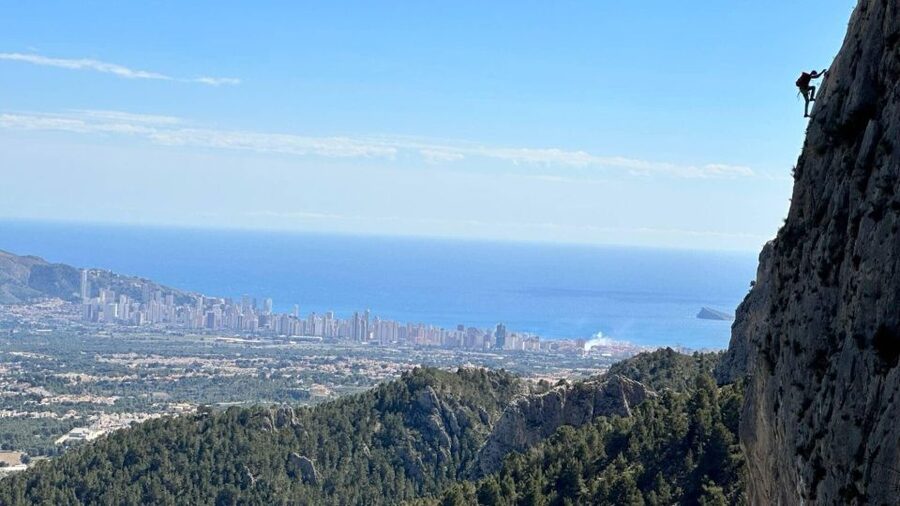
There are two kinds of thrills here: climbing and abseiling. Via ferrata Ponoig is one of Alicante’s most vertical routes, with iron clamps doing the heavy lifting. The top delivers big Costa Blanca views over Benidorm, Altea, and beyond.
What I love is the feeling of real exposure without it turning into a circus—lots of clamps, tight spacing, and two clearly defined vertical sections. I also like the built-in payoff: you finish at the Sleeping Lion viewpoint, then come down using ropes with two abseils of 25 m and 35 m.
One thing to consider: if you’re nervous about heights, or you hate the idea of descending by rope, this is not the one for you. It’s also not set up like ferratas where you can just walk down after the climb.
In This Review
- Key things to know before you clip in
- Benidorm’s Via Ferrata Ponoig: the Sleeping Lion climb you actually feel
- The climb setup: clamps, helmets, and what K4 really means in practice
- What you’ll see at the top: Costa Blanca views from the Sleeping Lion
- The descent: the part many people remember most
- How long it takes and how the pacing feels (4 hours in real life)
- Group size, guide style, and communication in a small group
- Meeting point and timing: don’t gamble with the start
- Equipment and what you should bring (so you’re comfortable on rope)
- Price and value: what $65 buys you here
- Who should book Ponoig and who should skip it
- Quick reality check: the weather and the mountain day feel
- Should you book Via Ferrata Ponoig near Benidorm?
- FAQ
- How long is the Via Ferrata Ponoig experience?
- Where do I meet for the activity?
- What is the difficulty level and route length?
- Is the descent walking, or do I abseil?
- What equipment is included?
- Are photos included?
- What should I bring?
- Is it suitable for people with vertigo?
- What languages do the instructors speak?
Key things to know before you clip in
- Vertical route, not a gentle scramble: most of the climbing is directly up.
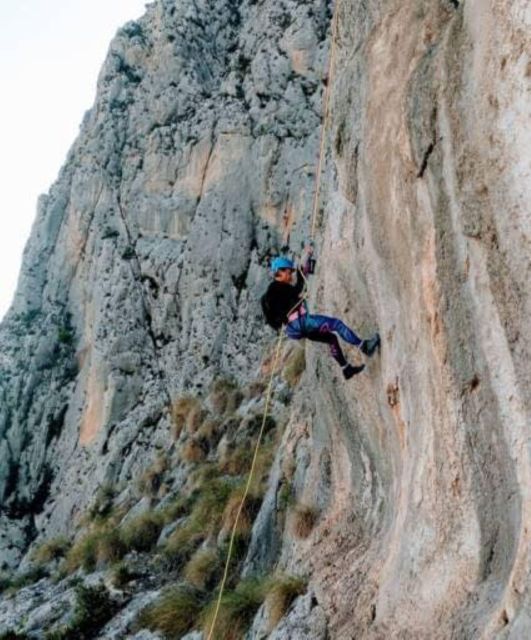
- K4 difficulty with lots of clamps: close-together grips make the vertical feel intense.
- Descent is abseil-only once the rope section starts: plan your comfort level around that.
- Sleeping Lion viewpoint: you stop at the top for wide Costa Blanca photos.
- Small groups up to 8: more attention when you’re learning the harness and safety set.
- Equipment, helmet, harness, and via ferrata lanyards are included: you bring the clothes and shoes.
Benidorm’s Via Ferrata Ponoig: the Sleeping Lion climb you actually feel
Benidorm gets the headlines, but this experience is about the mountains above it. Via ferrata Ponoig runs near Polop, about 20 minutes from Benidorm, and it’s built for people who want a serious vertical route and a proper “rope down” finish.
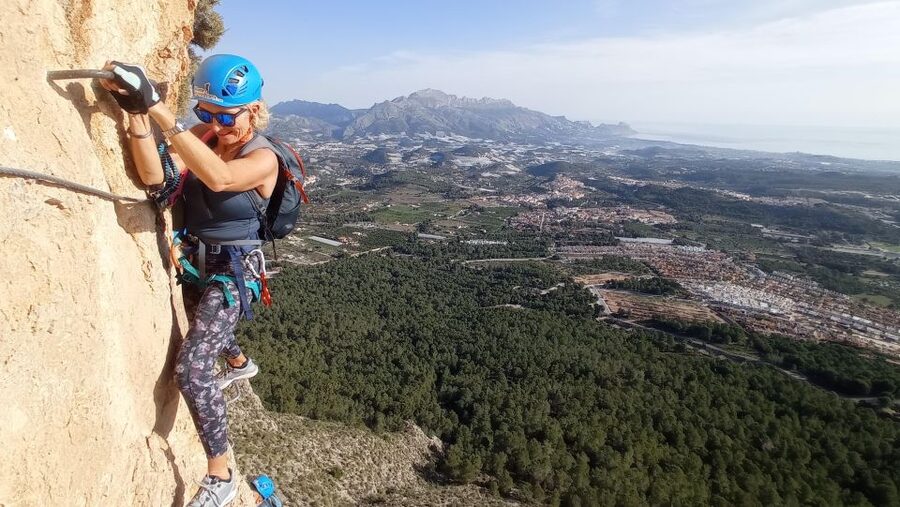
The ferrata itself is about 230 metres long, rated K4, and it’s split into two sections that are both vertical. From your first steps, you’ll notice a lot of iron clamps to grab—and because they’re close together, the route feels impressive and airborne rather than slow and grinding.
And then there’s the big twist: most other ferratas give you some kind of trail descent. Here, once you reach the rope area, your only way down is to abseil 25 m and 35 m. That changes how you pace yourself during the climb, because you’re not just thinking about going up—you’re thinking about returning safely.
More Costa Blanca outings worth the drive south
The climb setup: clamps, helmets, and what K4 really means in practice
K4 isn’t just a number on a sign. On Ponoig, the “why” is obvious: you’re climbing vertical passages using iron clamps, and the movement is mostly up, with no relaxed walking segments built into the route.
You’ll be fitted with the essentials: helmet, climbing harness, and a via ferrata security set (the lanyard system). The whole point of this structure is to make you focus on technique—staying balanced, placing your feet with confidence, and using your arms only as much as you need.
Because the clamps are close together, you’ll likely feel like you can keep moving without long hangs between holds. Still, “easy to grab” isn’t the same as “easy to do.” K4 climbs tend to ask for steady body positioning, good grip habits, and the nerve to keep trusting your system when you’re looking down.
A practical tip: wear shoes you’re comfortable getting dirty and scuffed. Good grip matters more than you think on metal clamps and uneven footing.
What you’ll see at the top: Costa Blanca views from the Sleeping Lion
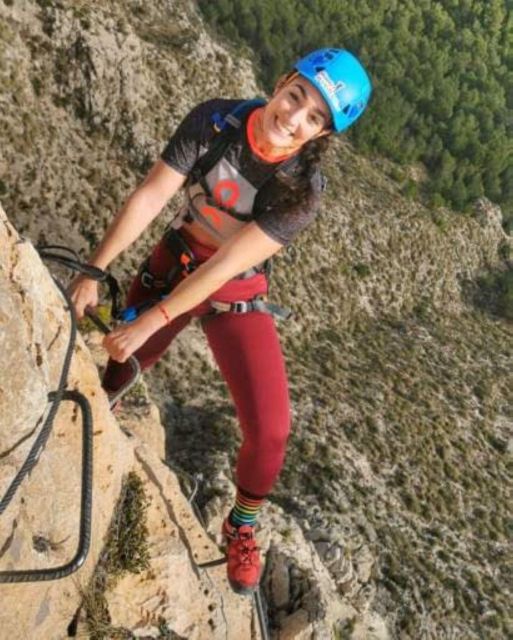
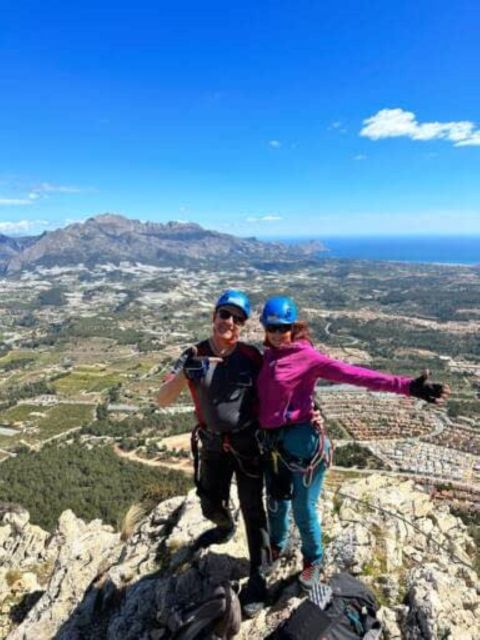
The summit stop is not an afterthought. When you reach the top, you arrive at the area known as the Sleeping Lion, and you get the chance to breathe and take photos.
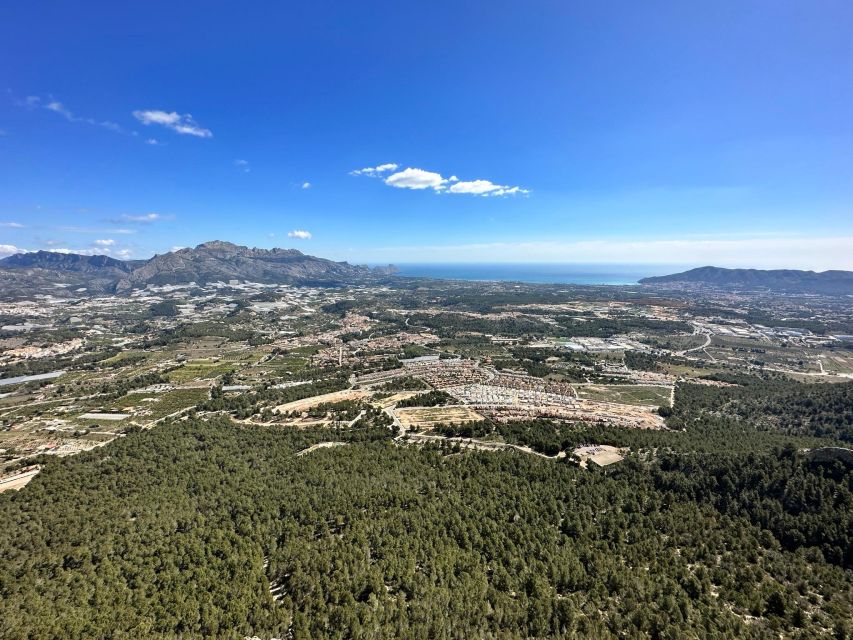
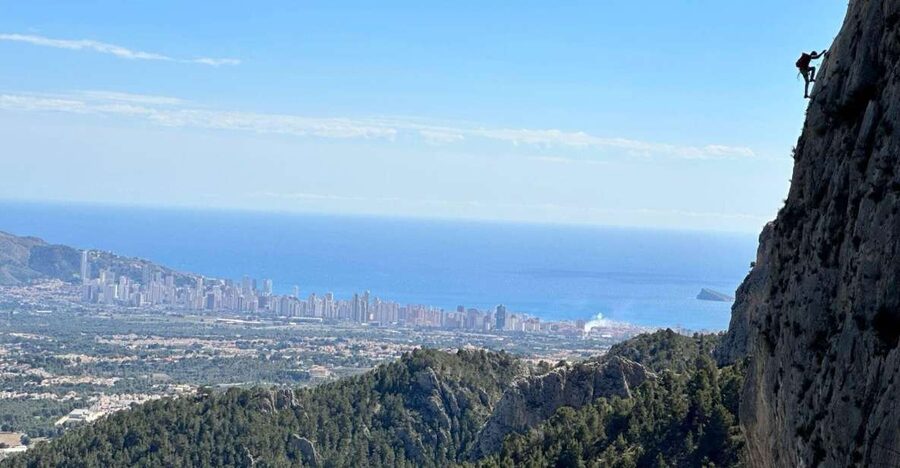
From there, the view covers the Costa Blanca in a big sweep: Altea, La Nucia, Callosa, and Benidorm are all in the background. It’s the kind of payoff that makes the vertical effort feel worth it even if you had a moment of “okay, wow” halfway up.
This is also where you control your pace for the transition to descent. You’re not racing the view, but you’re also not lingering so long that you lose your focus. Plan to grab photos quickly, then get ready—because once the rope section begins, you’ll want your mindset set.
The descent: the part many people remember most
Here’s where Ponoig becomes a true experience, not just a climb. After you finish the climbing section, you follow a path through the mountain until you reach the ropes.
Once you enter that abseiling zone, the rules are clear: the only way down is via the ropes. You’ll face two abseils, one 25 metres and the other 35 metres. That’s a long way to look down, so the guides’ instruction and your own calm matter.
If you’ve never abseiled before, don’t treat it like a stunt. Think in terms of procedure: stable stance, controlled movement, and using the gear correctly. The value of a guided group here is you’re not improvising.
If you already like ropes and heights, this descent is where you’ll feel the adrenaline. It’s also where you’ll feel the benefit of having practiced staying relaxed while your body is hanging and moving slowly.
- Chulilla: Hanging Bridges & Canyon Hiking Day Tour
★ 4.5 · 10 reviews - Benidorm: Via ferrata Ponoig, cerca de la Nucia
★ 4.9 · 7 reviews - Kayak Tour in Moraira
★ 4.7 · 3 reviews
How long it takes and how the pacing feels (4 hours in real life)
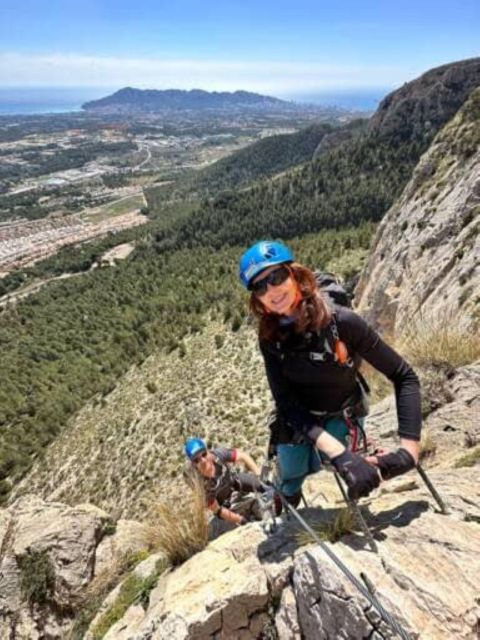
The activity runs for about 4 hours. That time includes the start, guidance, the climb, the viewpoint stop, and the rope descent.
In practice, you should expect a pace that stays active rather than leisurely. Even for people who were doing their first via ferrata, the climb felt like a real activity and not a slow tour walk. That’s good for most people because you don’t lose momentum, but it does mean you should be physically ready.
Plan for short moments of attention—gear checks, guidance at key sections, and the time needed to take photos. If you’re prone to getting cold, bring a layer, since you might be in wind at elevation even on a sunny day.
Group size, guide style, and communication in a small group
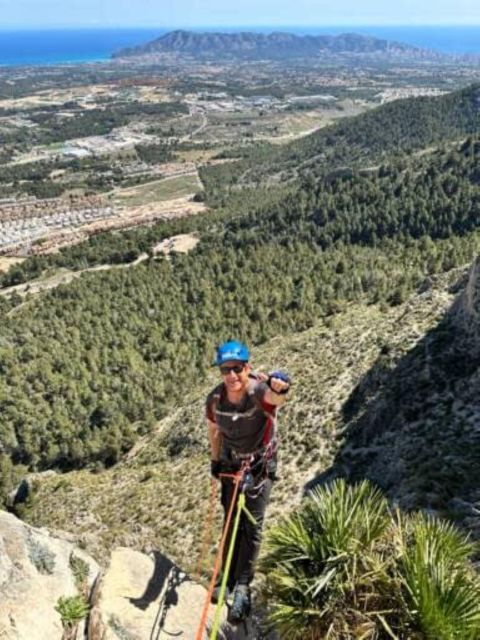
This tour keeps numbers low: limited to 8 participants. Smaller groups help when you’re learning how the harness and safety set work, and when you need encouragement on the vertical sections.
Guides wear fluorescent orange Alicante Aventura t-shirts, so you won’t have to hunt people down. The guides also handle the technical side: they provide instruction and manage the group timing so you don’t fall behind in the critical sections.
Language is listed as Spanish, English, and French. In real life, you may still want to rely on clear listening and visual cues, especially if you meet a guide whose primary language is Spanish. One review described an English-speaking participant feeling slightly daunted at first when a guide spoke Spanish, but the group atmosphere and careful attention helped.
Bottom line: you’ll be safe and supported, but come ready to communicate through the basics—listening, watching, and asking questions when you can.
Meeting point and timing: don’t gamble with the start
The meeting point is the Ponoig via ferrata car park (Polop area). There’s a pin here if you’re using a phone: https://maps.app.goo.gl/73r3vUy7c8P4Y8eY9
Arrive at least 15 minutes early so you can get in, get oriented, and avoid stress before the climb. After the activity starts, there’s a short courtesy window of up to 5 minutes. If you miss that and don’t notify them within 24 hours prior, the policy is strict—no refund, change of time, or change of date.
That might sound harsh, but it’s standard for rope-based activities. The guides have to move with the group, and safety checks can’t wait for someone who shows up late.
Equipment and what you should bring (so you’re comfortable on rope)
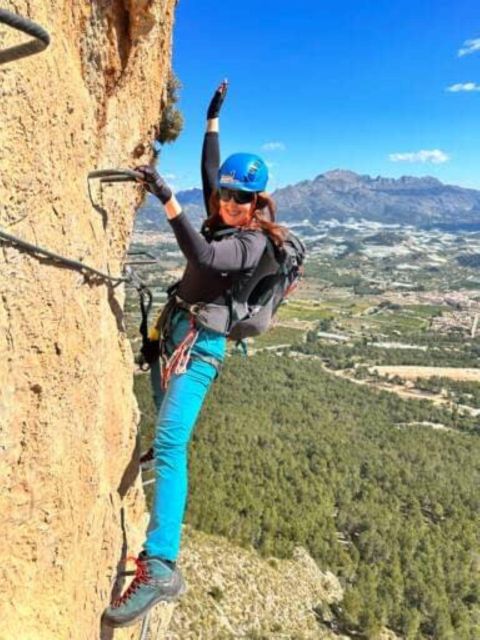
Your tour includes the technical gear: helmet, climbing harness, and via ferrata security set. You’ll also get photos of the activity, sent via WhatsApp using a link so the files don’t lose quality.
You should bring:
- Sportswear
- Sunscreen
- Water
- Snacks
- Sports shoes
- A daypack
Shoes are the big one. If you bring sneakers with smooth soles, you’ll feel it when you’re placing feet on metal and rock edges.
Also, bring snacks even if you think you won’t need them. With a vertical climb and abseils, it’s easy to burn energy faster than you expect.
Price and value: what $65 buys you here
The price is listed at about $65 per person, and you get more than just a route and a guide.
You’re paying for:
- A medium mountain sports technician
- Full safety gear
- Insurance covering personal accident and civil liability
- Entrance to the Falconera via ferrata (included with this experience)
- Activity photos sent to you afterward
That combination is why this can feel like good value compared with DIY adventuring. Via ferrata isn’t the place to under-spend on safety or on having someone who knows the mountain rhythm.
Also, the experience covers both the climb and the rope descent. If you’re looking for an all-in session that gives you a real achievement moment plus serious scenery, this price reflects that effort.
Who should book Ponoig and who should skip it
You’ll likely love Ponoig if you:
- Want a vertical via ferrata experience, not a mellow one
- Are curious about abseiling and want it included as part of the adventure
- Like finishing with big viewpoint photos from the Sleeping Lion
It’s not suitable for:
- People with vertigo
- Pregnant women
If you’re unsure about your comfort with heights, take that seriously. This isn’t a route where you can talk yourself into it at the last minute. Your mindset during the 25 m and 35 m rope sections is a key part of making the day work.
Quick reality check: the weather and the mountain day feel
The information you have doesn’t spell out weather rules, so use common sense for the coast-to-mountain combo. Bring sunscreen even if clouds show up. You’ll be in open viewpoints at the top.
If it’s very hot, you’ll still be active for around 4 hours, so hydrate and don’t skip snacks. If you’re prone to blisters, plan for your shoes and socks to be up to the job.
Should you book Via Ferrata Ponoig near Benidorm?
Book it if you want a standout Alicante-style via ferrata: vertical climbing with lots of clamps and a descent that forces you onto rope—25 m and 35 m. The combination of the Sleeping Lion viewpoint and the abseil makes it feel like a complete adventure day, not just a quick activity.
Skip it if you don’t want to descend by rope, if heights trigger anxiety fast, or if you know you’re not comfortable with vertigo risks.
If you do book, show up early, wear grippy shoes, and treat the abseils as a technique task, not a test of bravery. Done that way, this route turns adrenaline into a memorable sense of accomplishment.
FAQ
How long is the Via Ferrata Ponoig experience?
It lasts about 4 hours.
Where do I meet for the activity?
You meet at the Ponoig via ferrata car park near Polop (about 20 minutes from Benidorm).
What is the difficulty level and route length?
The route is approximately 230 metres long and has a difficulty level of K4.
Is the descent walking, or do I abseil?
You’ll follow a path after climbing, but when you reach the rope area, the only way down is abseiling. The abseils are 25 metres and 35 metres.
What equipment is included?
You get the technical equipment necessary for the activity, including a helmet, climbing harness, and via ferrata security set.
Are photos included?
Yes. You’ll receive photos of the activity sent by WhatsApp via a link.
What should I bring?
Bring snacks, sportswear, sunscreen, water, sports shoes, and a daypack.
Is it suitable for people with vertigo?
No. It is not suitable for people with vertigo.
What languages do the instructors speak?
Instructors are listed as speaking Spanish, English, and French.
More Tour Reviews in Valencian Community
- Alicante: Stand-Up Paddleboard Rental★ 4.8 · 18 reviews
- From Calpe, Javea & Denia- Discover the 3 Waterfalls of Anna★ 4.8 · 11 reviews
- Chulilla: Hanging Bridges & Canyon Hiking Day Tour★ 4.5 · 10 reviews
- Boat rental without license Cabo Roig★ 4.7 · 7 reviews
- Costa Blanca: Visit Relleu and its “Caminito del Rey”★ 4.7 · 4 reviews
Further Down the Costa Blanca
- Alicante: Stand-Up Paddleboard Rental★ 4.8 · 18 reviews
- From Calpe, Javea & Denia- Discover the 3 Waterfalls of Anna★ 4.8 · 11 reviews
- Boat rental without license Cabo Roig★ 4.7 · 7 reviews
- Costa Blanca: Visit Relleu and its “Caminito del Rey”★ 4.7 · 4 reviews
- Kayak Tour in Moraira★ 4.7 · 3 reviews
The newest Valencian Community reviews on our desk
Costa Blanca Trips & Activities, compared.
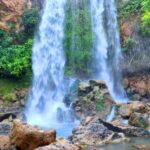
 ★ 4.6Trip to Guadalest, Altea, and entry to the Algar WaterfallsFrom $58307 reviews
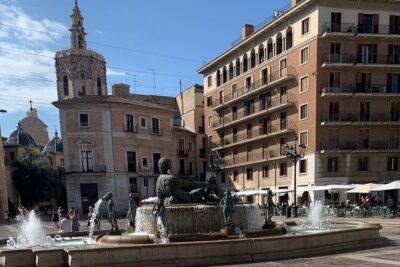 ★ 4.5Valencia City Excursion – From Albir, Benidorm & CalpeFrom $47146 reviews
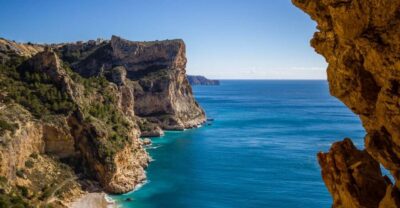 ★ 4.8Cala del Moraig Hiking & Beach TripFrom $58107 reviews
 ★ 4.8Guadalest, Altea & Algar Waterfalls Day TripFrom $6569 reviews
 ★ 5.0Hiking Cliffs & Old Fishing Trails around Moraira OFFICIAL GUIDEFrom $16538 reviews
 ★ 4.8Alicante: Stand-Up Paddleboard RentalFrom $2918 reviews
 ★ 4.9Full Day Tour to Altea, Benidorm & Villajoyosa from ValenciaFrom $11815 reviews
 ★ 4.5Altea Benidorm and Villajoyosa from ValenciaFrom $12015 reviews
Browse the lists this tour appears in