
Reviewed · VALENCIA BIKE TOURS & RENTALS
Bike tour with city guide from old to new
Valencia looks different from a bike. This guided ride strings together the old core and the city’s future-facing side, with a few serious wow moments along the way. I like how the route moves in big, logical arcs: old town landmarks → the Turia green corridor → Calatrava’s City of Arts. I also like that the experience is led by Annick, a guide praised for fast, friendly explanations and genuinely useful local tips.
My two favorite parts are the way the tour gives you context as you move—so you’re not just staring at buildings—and the balance between classic Valencia stops and the modern architecture hits. As for a drawback, you’ll be riding for about three hours, so if you’re not comfortable cycling for that long, this may feel like more effort than you want.
In This Review
- Key highlights (quick read)
- Entering Valencia by bicycle, from old streets to modern icons
- Where you start: the Ayuntamiento tourism office in Ciutat Vella
- Old town warm-up: Ceramics Museum, La Nau, and Mercado de Colón
- Down to the Turia Gardens: Valencia’s green lung on two wheels
- Calatrava’s City of Arts and Sciences: the architecture WOW moment
- From Serranos to Plaza de la Virgen: finishing in the Roman core
- Riding with Annick: the guide factor that changes the whole tour
- Price and value: about $40.12 for a full 3-hour overview
- What to expect on the ride: pacing, timing, and bike-tour reality
- Who this tour is best for (and who should choose something else)
- Should you book this Valencia bike tour?
- FAQ
- Where does the bike tour start?
- How long is the Valencia bike tour?
- What does the tour cost?
- Do I need to buy admission tickets for the stops?
- How big is the group?
- Do I get a mobile ticket?
- Is the tour suitable for most people, and when do I get confirmation?
Key highlights (quick read)
- Annick’s storytelling: local details and practical advice that help you plan your next day in Valencia
- Old-to-new route: Ceramics Museum, La Nau area, Mercado de Colón, then right into modern architecture
- Turia Gardens by bike: the former riverbed becomes the city’s daily “green lung”
- Calatrava’s WOW moment: City of Arts and Sciences stops short, but memorable and explained
- Finish in the Roman core: Serranos area and Plaza de la Virgen bring you back to the heart of Valencia
Entering Valencia by bicycle, from old streets to modern icons
If you only have one afternoon and want the city to click into place, a guided bike tour like this is a smart shortcut. You’re not wasting time figuring out what’s close together. You start in the center, move through the historic lanes, then gradually head toward the futuristic side—so the contrast feels earned, not random.
What I like most is that you get more than scenery. The guide helps you read what you’re seeing: why certain places matter, how Valencia’s layout connects, and what to notice as you ride past. And yes, there’s a true wow moment tied to Valencia’s most famous modern architect—done at the exact moment you’ll notice it most, not after the fact.
The whole tour runs about 3 hours, and it’s designed for small groups (max 12 travelers). That group size matters. You’re not stuck waiting forever for one person to catch up, and you get a more personal feel from the guide’s explanations.
Flat streets favour pedals. What else we rode in Valencia
Where you start: the Ayuntamiento tourism office in Ciutat Vella
You meet at the Tourism Office by the Ayuntamiento de Valencia on Pl. de l’Ajuntament, 1, in Ciutat Vella. This is a very practical starting point because you’re already in the historic center, close to where many first-time visitors naturally want to be.
You also start with the bikes right there in the center. That means fewer logistics headaches and less time “in transition.” The tour ends back at the meeting point, so you’re not stuck with an awkward second walk or transit ride after cycling.
One more practical detail: the meeting point is described as near public transportation, so it’s easy to get there whether you’re arriving by metro, bus, or walking from a nearby hotel.
Old town warm-up: Ceramics Museum, La Nau, and Mercado de Colón
Before the tour sweeps you into the greener, newer parts of the city, you get a classic Valencia orientation ride. The first stretch takes you past several well-known stops that help you understand the city’s texture and scale.
You cycle by the Ceramics Museum, then head toward the old University of La Nau area. After that, you pass the Mercado de Colón. Even if you don’t go inside any of these, riding past them while the guide explains what they are and why people care gives you a fast mental map.
Why this matters: Valencia’s charm isn’t only one “pretty street.” It’s a mix of institutions, markets, and historic spaces. This opening portion helps you see the city as a working place, not a museum. And because you’re on a bike, you get a continuous flow of sights instead of doing short stop-and-start walks.
Possible consideration: this early part can feel busy because you’re still in central streets with pedestrians and traffic around you. If you’re nervous about riding in mixed areas, give yourself a calm first minute to settle into the pace with your group.
Down to the Turia Gardens: Valencia’s green lung on two wheels
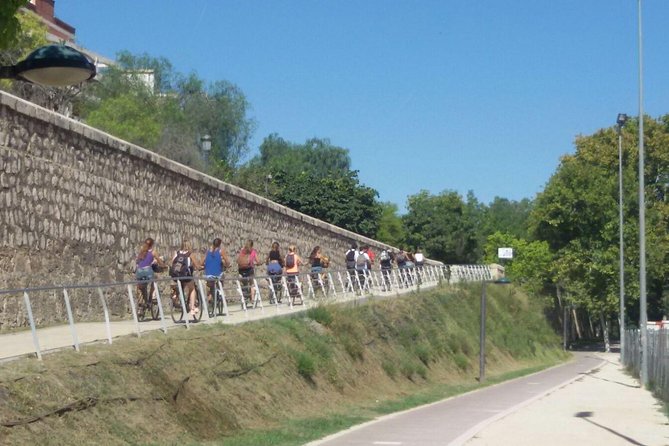
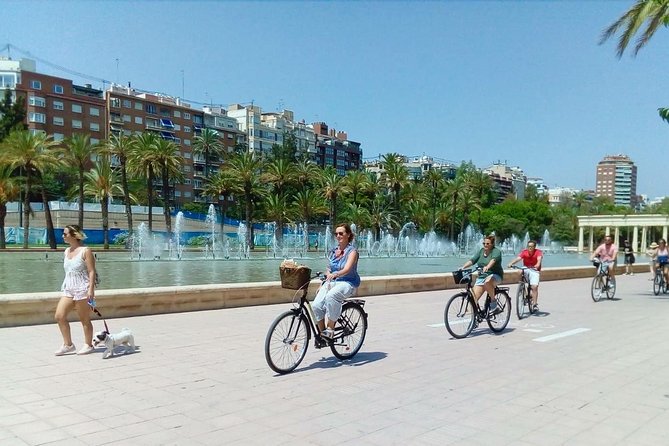
The route then descends to the former riverbed of the Turia. This is where the tour starts feeling like a proper Valencia escape. The river is gone, but the green corridor remains—an urban park system people use day after day.
The tour spends about 2 hours at Jardi del Turia, and that time is the backbone of the ride. You cycle through the landscaped paths and get to see how the city’s planning helps people move through it comfortably. It’s the best kind of city contrast: you’re still in Valencia, but it feels calmer than the old streets behind you.
Why I think this is such good value: on a short visit, it’s easy to miss the way locals actually enjoy their city. The Turia Gardens aren’t a “once in a lifetime” sight for tourists only. They’re a habit for residents. Experiencing it by bike helps you cover more ground than a slow walk, without feeling like you’re just sightseeing from a distance.
You’ll also feel the rhythm shift here. Before, you’re moving past buildings and landmarks. Now you’re riding through an open, plant-filled space. It makes the later “old-to-new” contrast hit harder.
Other Valencia outings that earned a spot in our notes
- Valencia: 24, 48, or 72-Hour Valencia Tourist City Card
★ 4.5 · 1,762 reviews - Valencia: Complete Tuk-Tuk Tour Around the City
★ 4.8 · 793 reviews - Valencia: City of Arts and Science 3D Movie at Hemisfèric
★ 4.1 · 455 reviews - Valencia Bike Tours: City Highlights
★ 4.9 · 450 reviews
Calatrava’s City of Arts and Sciences: the architecture WOW moment
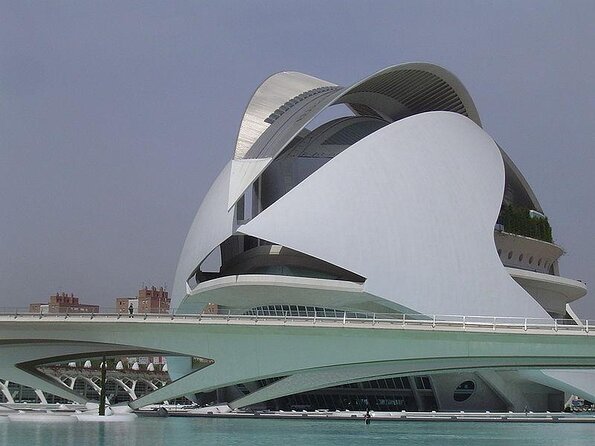
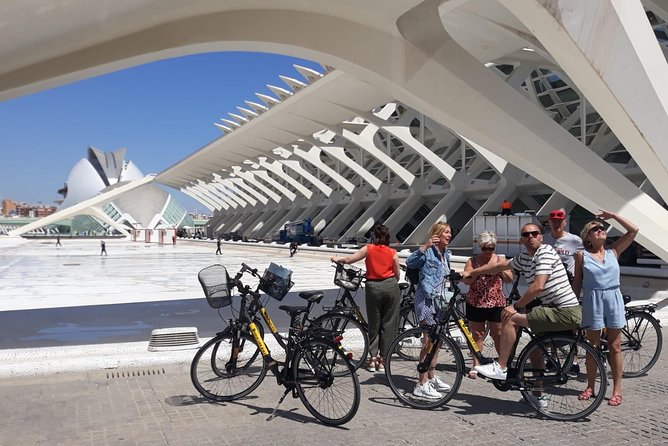
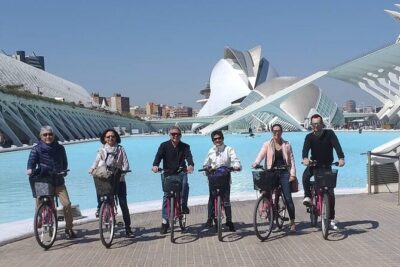
Then comes the part many people remember instantly: Valencia’s futuristic architecture. You ride along the former riverbed until the buildings by Santiago Calatrava suddenly take over the view. That “where did the skyline go?” feeling is the point.
This segment is shorter—about 30 minutes—but it’s intentionally focused. You’re not meant to spend the whole afternoon wandering around. You get to see the main forms, understand what makes them Calatrava, and learn how the guide connects the architecture to Valencia’s identity and design approach.
Here’s the practical advantage: if you’re short on time, this is the sweet spot. You get the modern highlights without turning the tour into a museum day. And because you’re already in motion from the Turia, your brain is primed to notice the shift from park green to sculptural concrete.
A minor consideration: since this stop is tied to the exterior views and the explanation time, you might want more if you’re an architecture fanatic. If you want deep interior exploring, plan a separate visit after the bike tour.
From Serranos to Plaza de la Virgen: finishing in the Roman core
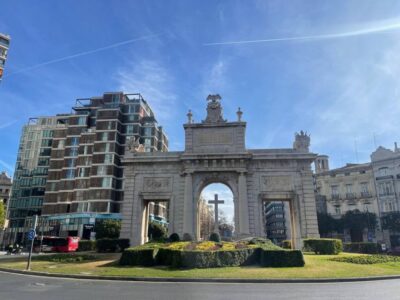
After the modern hit, the tour takes you back toward the old town. You cycle through the green corridor again and then pass the remaining city gate of Serranos, one of the last visible reminders of Valencia’s fortified layout.
From there, you head into the heart of the ancient Roman city—ending at Plaza de la Virgen. This square is described as the oldest kind of core Valencia ever had, still the center of gravity for the city today. The stop is brief—about 15 minutes—but it works as a satisfying landing point.
Why ending here makes sense: you start in the historic center, you leave it, you come back through one of Valencia’s most important green routes, and then you close in the place that feels like the city’s “it started here” zone. By the end, your mental map is almost automatically clearer.
You’ll likely also appreciate how the route loops. It’s not just a one-way line of sights. You retrace the city’s logic, so the final square feels more meaningful.
Riding with Annick: the guide factor that changes the whole tour
Annick is repeatedly credited for making this tour feel like a real guided experience rather than a checklist ride. In plain terms: she’s described as easy-going and cheerful, and she gives explanations that go beyond what you’d read on a sign.
That shows up in how you’ll experience the stops. Instead of just passing points, you’ll get small stories and context—like what to notice about Calatrava’s work, or why certain old-town institutions matter. You’ll also get practical suggestions, including restaurant and bar recommendations, and ideas for museum visits.
This is a big deal if you’re the kind of traveler who wants to go home with a plan. A good guide helps you avoid the “I saw things, now what?” problem.
If you’re a solo traveler or just want a friendly group vibe, the small max group size (12 people) also supports that feel. You can ask questions without feeling like you’re shouting over a crowd.
Price and value: about $40.12 for a full 3-hour overview
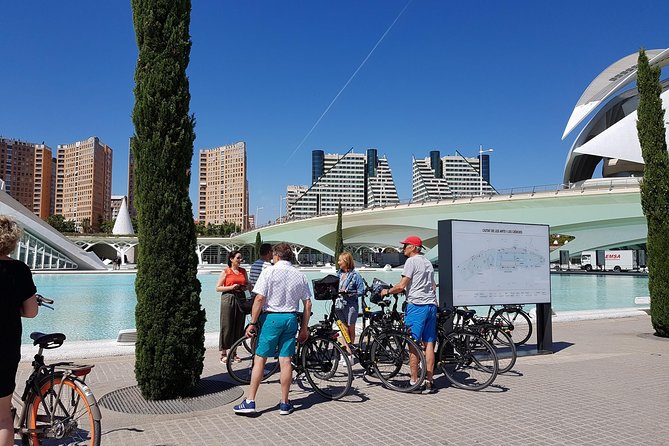
At $40.12 per person for around 3 hours, this is priced like a serious “time saver.” Here’s how the value adds up:
- You get a guided route that connects multiple districts without backtracking or figuring routes out yourself.
- Key stops are listed as having free admission for the included segments, including Jardi del Turia, the Ciudad de las Artes y las Ciencias area in this context, and Plaza de la Virgen.
- You’re paying for local interpretation and practical tips, not only bike rental.
So the value isn’t just the sights—it’s the coaching. If you’re doing Valencia for the first time, you’ll learn what matters and what’s worth your limited time after the tour.
Where value might drop for you: if you already know Valencia well and just want to bike on your own, a guided format can feel like extra spending. But if you’re new—or even if you’ve been once and want a sharper second look—this is one of the easiest ways to feel oriented fast.
What to expect on the ride: pacing, timing, and bike-tour reality
The tour is listed as most travelers can participate, which suggests the cycling level is approachable. Still, keep one thing in mind: you’re cycling for about three hours, including a descent toward the Turia and a return through the green corridor.
The pace is guided. With a group capped at 12, you should expect the rhythm to be steady rather than frantic. You’ll pass multiple sights in sequence, which is fun, but it’s not a slow “sit and chat for an hour” tour.
Bring basics that make cycling pleasant:
- sun protection (Valencia can get bright fast),
- water for the ride,
- comfortable clothes and shoes you don’t mind getting a little warm.
Also, the tour uses a mobile ticket, which is convenient if you’re already traveling paperless.
Who this tour is best for (and who should choose something else)
This bike tour fits best if you want:
- an efficient orientation to Valencia,
- a blend of old-town landmarks and modern architecture,
- a guide who will give you more than surface-level facts,
- a friendly group size rather than a huge bus-style crowd.
It’s also a good option for travelers who like planning. By the end, you’ll usually know where to go next for food, museums, and walks—because the guide’s local tips help you turn sightseeing into an actual itinerary.
You might choose a different option if:
- you dislike cycling for extended stretches,
- you want long interior visits at museums or inside the complex buildings (this tour focuses on the ride and key exterior/context moments),
- you’re traveling in a way that doesn’t handle shared pacing well.
Should you book this Valencia bike tour?
I’d book it if you want a fast, guided “old-to-new” Valencia experience that makes the city feel coherent. The route is built for first-time visitors who want both the familiar and the surprising. The Turia segment gives you a breather, and the Calatrava moment gives you that skyline wow.
I’d think twice if cycling for three hours sounds like a chore for you. In that case, a walking tour might feel more comfortable. But if you’re okay on a bike and want to see the city’s story in one afternoon, this is a strong value way to do it.
One last tip: once you’re back at Plaza de la Virgen, use what the guide explained to choose your next neighborhood walk. The tour’s best benefit is that it teaches you how Valencia connects—so you can keep exploring with better instincts.
FAQ
Where does the bike tour start?
You meet at the Tourism Office – Ayuntamiento de Valencia, Pl. de l’Ajuntament, 1, Ciutat Vella, 46002 Valencia, Spain. The tour ends back at the same meeting point.
How long is the Valencia bike tour?
It’s listed at about 3 hours.
What does the tour cost?
The price is $40.12 per person.
Do I need to buy admission tickets for the stops?
Admission tickets are listed as free for the key stops mentioned: Jardi del Turia, the Ciudad de las Artes y las Ciencias stop area, and Plaza de la Virgen.
How big is the group?
The tour has a maximum of 12 travelers.
Do I get a mobile ticket?
Yes, the tour uses a mobile ticket.
Is the tour suitable for most people, and when do I get confirmation?
It states that most travelers can participate. Confirmation is received at booking time unless you book within 3 days of travel, in which case confirmation comes within 48 hours (subject to availability).
More City Tours in Valencia
- Valencia: City Highlights Guided Bike Tour★ 4.7 · 2,373 reviews
- Valencia: 24, 48, or 72-Hour Valencia Tourist City Card★ 4.5 · 1,762 reviews
- Valencia Bike Tour from the City to the Beach, plus Bike Guy App!★ 5.0 · 1,187 reviews
- Valencia: Complete Tuk-Tuk Tour Around the City★ 4.8 · 793 reviews
- Valencia: City of Arts and Science 3D Movie at Hemisfèric★ 4.1 · 455 reviews
More Tour Reviews in Valencia
- Valencia: Oceanogràfic Entry Ticket★ 4.7 · 9,893 reviews
- Valencia: 24 or 48-Hour Hop-on Hop-off Bus Ticket★ 3.9 · 5,611 reviews
- Valencia: Sailing Catamaran Cruise with Sunset Option and DJ★ 4.1 · 4,270 reviews
- Valencia: Palosanto Flamenco Show Ticket★ 4.8 · 3,876 reviews
- Valencia Old Town Tour with Wine & Tapas in 11th Century Historic Monument★ 5.0 · 3,234 reviews
Valencia from the Saddle
- Valencia: City Highlights Guided Bike Tour★ 4.7 · 2,373 reviews
- Valencia Bike Tour from the City to the Beach, plus Bike Guy App!★ 5.0 · 1,187 reviews
- Valencia Bike Tour★ 4.6 · 826 reviews
- Valencia: Top 25 Highlights Guided Bike Tour★ 4.8 · 644 reviews
- Valencia Bike Tours: City Highlights★ 4.9 · 450 reviews
The newest Valencia reviews on our desk





Valencia Bike Tours & Rentals, compared.
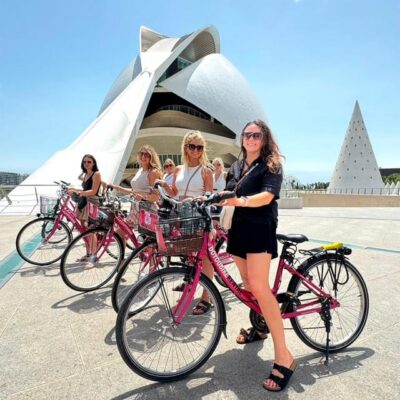 ★ 4.7City Highlights Guided Bike TourFrom $262,373 reviews
 ★ 5.0Valencia Bike Tour from the City to the Beach, plus Bike Guy App!From $481,187 reviews
 ★ 4.6Valencia Bike TourFrom $44826 reviews
 ★ 4.8Top 25 Highlights Guided Bike TourFrom $34644 reviews
 ★ 4.9Valencia Bike Tours: City HighlightsFrom $27450 reviews
 ★ 4.5Valencia Highlights Bike TourFrom $28285 reviews
★ 5.0Top 25 Highlights Guided Bike TourFrom $32175 reviews
★ 4.5Valencia Highlights Bike TourFrom $28285 reviews
★ 5.0Top 25 Highlights Guided Bike TourFrom $32175 reviews
 ★ 5.0Best Bike Tour Dutch & English in ValenciaFrom $39132 reviews
Browse the lists this tour appears in