
Reviewed · VALENCIA OLD TOWN & EL CARMEN
Guided tour of downtown Valencia + Silk Exchange
Silk Exchange secrets in just two hours. This guided downtown Valencia walk strings together the city’s best-known plazas and markets, then focuses on the UNESCO-listed Llotja de la Seda—so you don’t just see it, you understand it. Valencia’s story shows up everywhere on this route, from Roman, Muslim, and Christian traces in the streets to the city’s long-running business culture.
I especially like how the guide gives you quick context before each major stop. You also get Silk Exchange entry included, which matters because the building’s meaning comes from what’s inside, not just the exterior. One watch-out: the tour is only two hours and stays on foot, so if you like to linger, you may need extra time after the tour to fully absorb the Central Market area.
In This Review
- Key Things I’d Bet You’ll Care About
- How the 2-Hour Valencia Walk Works in the Real World
- Plaza del Ayuntamiento: Where the Story Starts
- Plaza Redonda and Plaza Lope de Vega: Commerce in Plain Sight
- Mercado Central: Modernist Architecture You’ll Want to See Up Close
- Llotja de la Seda: Civil Gothic, UNESCO, and the Meaning Behind the Symbols
- Tapinería Market and the Idea of Tradition Meeting Innovation
- Plaza de la Reina and Plaza de la Virgen: Cathedral Power and Living Belief
- Price and Value: Why $23 Feels Fair for This Specific Route
- Who This Tour Suits Best (and Who Might Want Something Else)
- Should You Book This Downtown Valencia and Silk Exchange Tour?
- FAQ
- How long is the guided tour?
- Is the entry to the Silk Exchange included?
- Where does the tour start?
- What languages is the live guide available in?
- Is the tour wheelchair accessible?
- What’s the route like, in terms of main stops?
Key Things I’d Bet You’ll Care About
- UNESCO Llotja de la Seda entry included, with time inside (about 30 minutes)
- A commerce-focused route that links plazas, markets, and architecture to Valencia’s trading past
- Central Market and modernist architecture as a highlight, not just a quick photo stop
- Tribunal de las Aguas and the religious heart of Valencia visited in the same walk
- A live guide in Spanish or English helping you read the city as you go
How the 2-Hour Valencia Walk Works in the Real World
This is the kind of tour that helps you stop guessing. Valencia’s historic center can feel like a patchwork of styles and eras, so I like that this route builds a simple theme: the city grew into a trading hub, and you can still see that in the streets, squares, and everyday traditions.
At $23 per person for 2 hours, you’re paying for (1) a guided walk connecting multiple landmarks and (2) included entry to one of the most important heritage sites in town. That’s a strong value formula, especially if you want the benefits of a guide but don’t have a half-day to spare.
Expect mostly walking at a comfortable pace through central spots, finishing near the religious core. The guide handles the “what you’re looking at and why it matters” part, which is exactly what you want when time is tight.
Still circling Ciutat Vella? These reviews walk the same lanes
Plaza del Ayuntamiento: Where the Story Starts
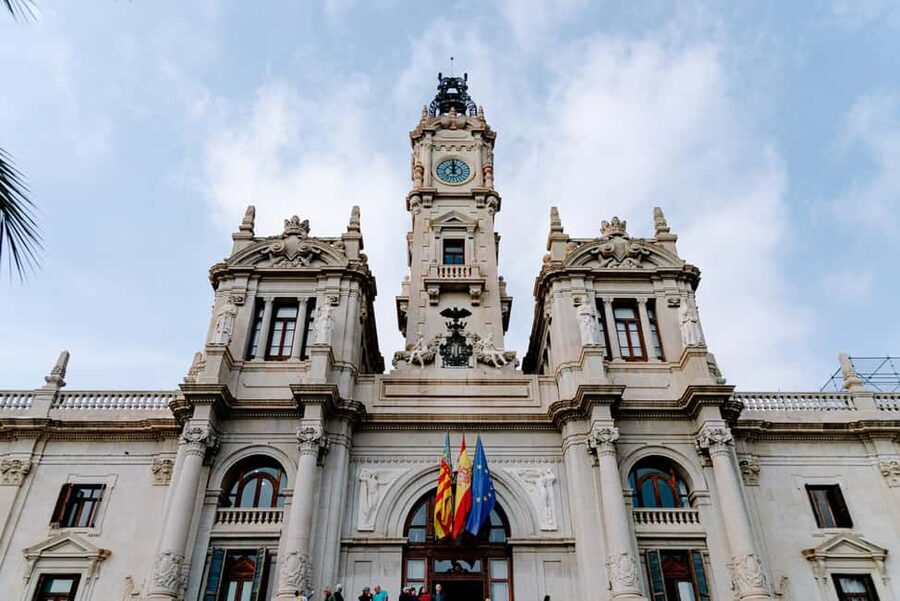
Most city tours begin in a pretty square. This one starts in the Plaza del Ayuntamiento (Town Hall Square), which is a smart move because it anchors the walk in civic Valencia—the city as an organized, active place, not just a museum.
From here, you get oriented around the historic center’s layout and architecture before you move into smaller squares. If you’re the type who likes to understand where you are before you chase details, you’ll feel it click early.
A small practical point: this is a good moment to gauge your energy level. Two hours is short, so once you set your pace here, you’ll be better prepared for the rest of the route.
Plaza Redonda and Plaza Lope de Vega: Commerce in Plain Sight
After the big civic start, the tour leans into Plaza Redonda, a square tied to Valencia’s commerce and tradition. That doesn’t sound like much on paper, but in practice it’s a nice shift. It trains your eye to see how public space works in daily life—where people gather, exchange information, and keep local customs alive.
Then you move to Plaza Lope de Vega, described as a typical medieval square. This stop is useful for understanding “old city logic.” Medieval squares often feel intimate, and they help explain how Valencia’s trading energy didn’t only live in grand buildings like the Silk Exchange—it also lived in street-level routines.
If you’re curious about Valencia beyond the headline sights, these squares do the job. They’re also a good place to spot how the guide connects era to architecture without turning it into a lecture.
Mercado Central: Modernist Architecture You’ll Want to See Up Close
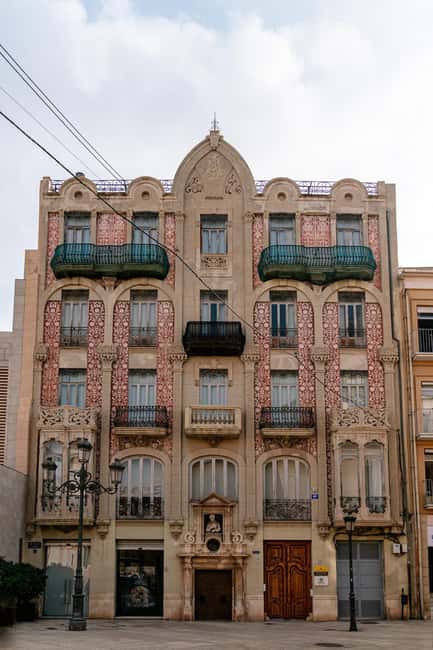
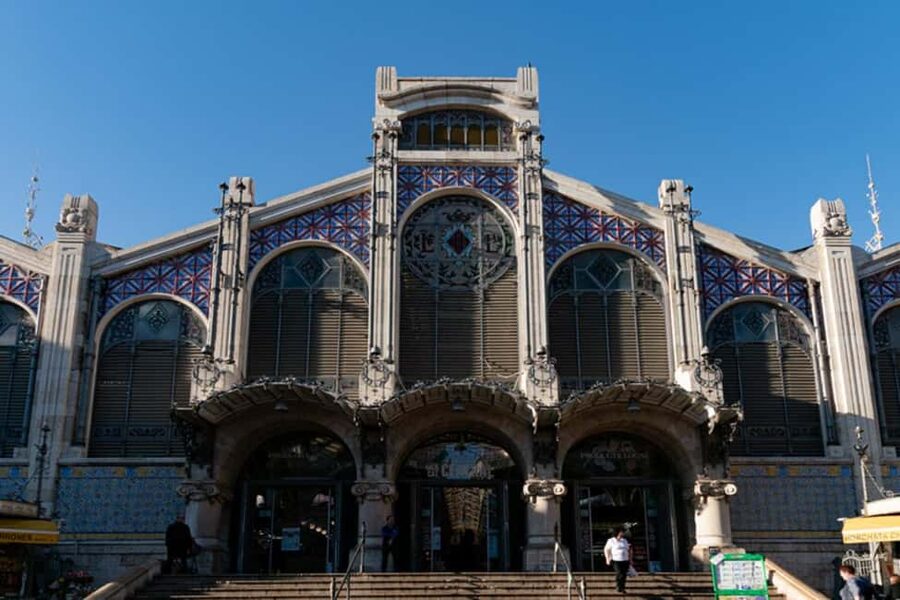
One of the best stops on this walk is the Central Market (Mercado Central). Even if you don’t plan to shop, you’ll appreciate the scale and the look—this is described as Valencia’s largest market and an icon of Valencian modernism.
Here’s why this stop matters: Valencia’s identity isn’t trapped in the past. The market shows how the city kept evolving while still relying on commerce. The tour’s theme—tradition plus business—finds a very physical expression at Mercado Central.
You’ll likely spend enough time to admire the architecture, and you can decide on the spot whether you want to browse stalls afterward on your own. If you’re a foodie, this is the point where you’ll probably start thinking about what to eat next.
- Valencia: Oceanogràfic Entry Ticket
★ 4.7 · 9,893 reviews - Valencia: 24 or 48-Hour Hop-on Hop-off Bus Ticket
★ 3.9 · 5,611 reviews - Valencia: Sailing Catamaran Cruise with Sunset Option and DJ
★ 4.1 · 4,270 reviews - Valencia: Palosanto Flamenco Show Ticket
★ 4.8 · 3,876 reviews
Llotja de la Seda: Civil Gothic, UNESCO, and the Meaning Behind the Symbols
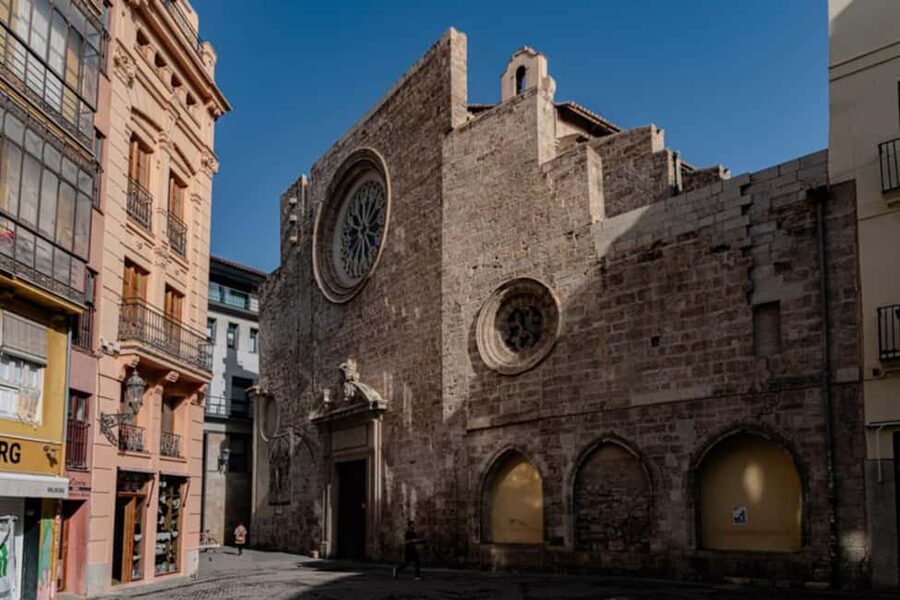
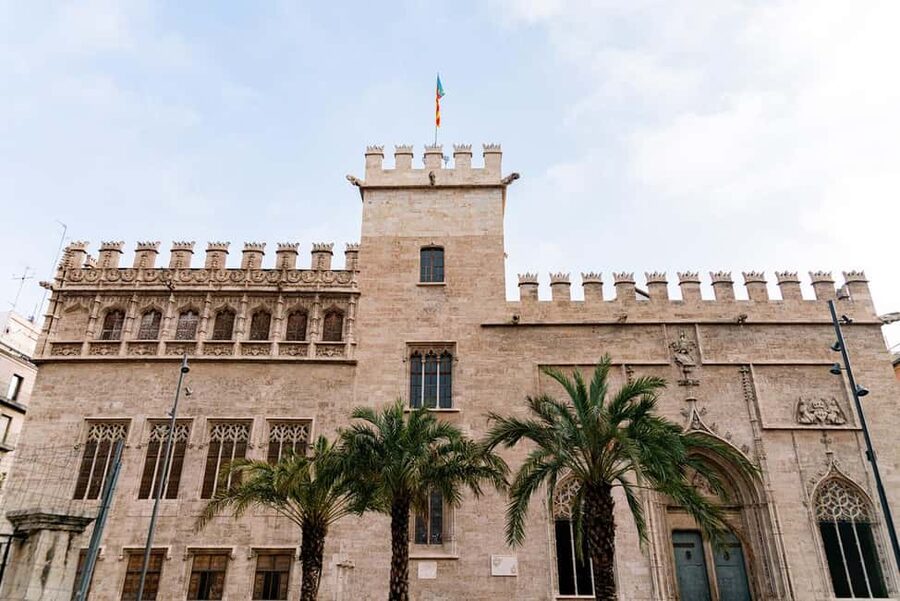
The star of the tour is the Silk Exchange, Llotja de la Seda, and the fact that entry is included is a big deal. Seeing it from the outside is fine. Seeing it with a guide who explains the iconography and symbolism is where the experience turns from sightseeing into understanding.
The building is highlighted as civil Gothic and a UNESCO World Heritage Site, and that tracks with what you’ll feel inside: this is architecture built for business, status, and order. Unlike religious spaces meant for ceremony, the Silk Exchange is about commerce—about how a city organized trade and projected credibility.
The tour gives around 30 minutes here, which is a realistic amount of time to learn the basics of the design and then look more carefully yourself. You’ll want to pay attention to the details the guide calls out, because they’re not random decoration. They help explain how power and trade were expressed in stone.
Practical note: if you’re sensitive to crowds or prefer quiet, this is the stop where you should plan your patience. It’s the most famous interior on the route, so give yourself permission to slow down for the best bits.
Tapinería Market and the Idea of Tradition Meeting Innovation
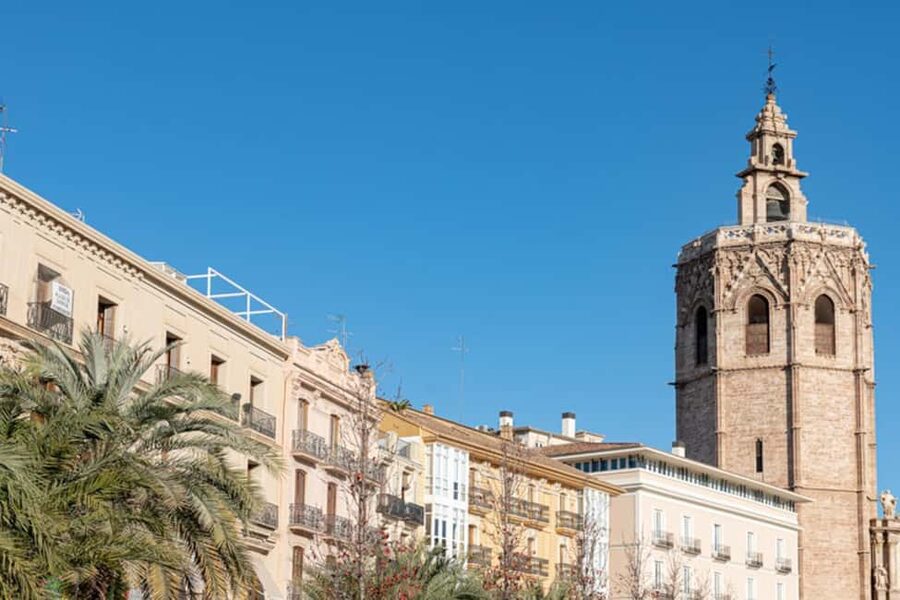
After the Silk Exchange, the walk shifts to a more modern day-to-day flavor at Mercado de Tapinería. The description emphasizes how this market blends tradition and innovation, and that gives you a nice contrast to the medieval-and-Gothic feel of the Silk Exchange.
Why this part is valuable: the tour isn’t only about big historical monuments. It’s also about how Valencia keeps making space for local habits to continue. Markets are a perfect example because they live at the intersection of everyday life and the city’s longer identity.
You’re likely to leave this stop thinking in a more local way. Instead of treating history as something far away, you see it as something that keeps influencing how Valencia operates now.
Plaza de la Reina and Plaza de la Virgen: Cathedral Power and Living Belief
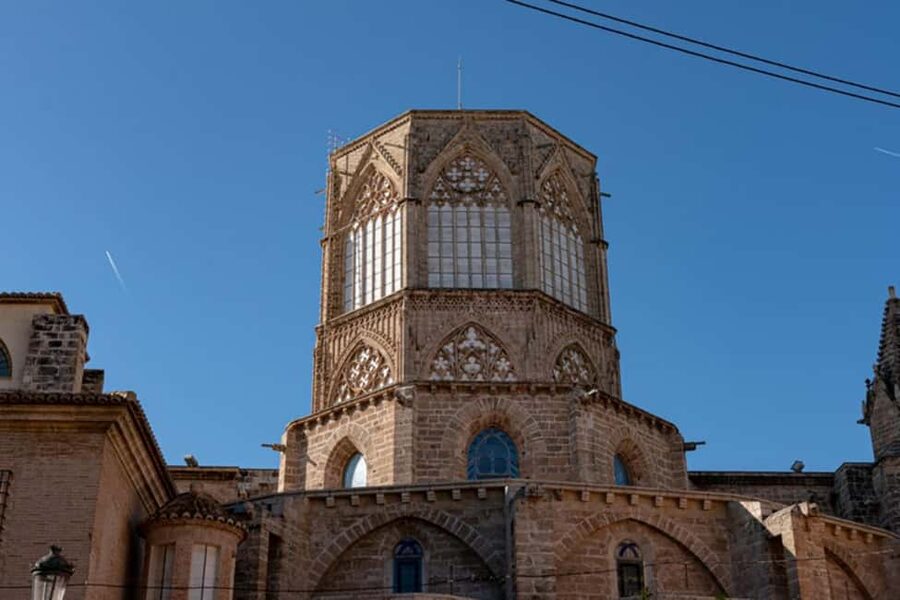
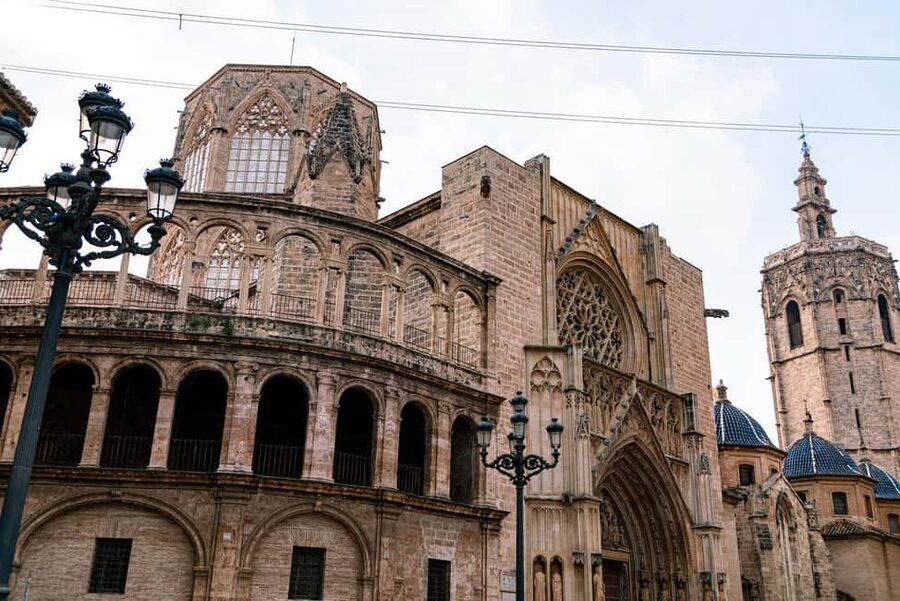
Next comes Plaza de la Reina, where you admire the Valencia Cathedral. Even without stepping deep into the religious history on your own, the cathedral’s presence is a strong visual anchor. It helps you connect the tour’s earlier theme—commerce—to another kind of influence: spiritual authority and community life.
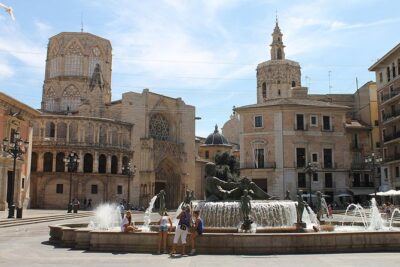
Then the walk reaches Plaza de la Virgen, the religious heart of Valencia. Here, you’ll encounter two highlights that make this stop more than just a scenic square:
- Basilica of the Virgen de los Desamparados
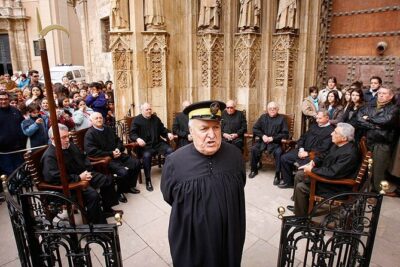
- Tribunal de las Aguas, noted as an Intangible Cultural Heritage
This is a great payoff moment because it shows that heritage isn’t only about buildings. The Tribunal of the Waters reflects a living tradition, the kind that continues because people still use it and value it. It’s the opposite of a dead artifact behind glass.
If you want to understand Valencia as a city with both history and active culture, this ending is a strong conclusion. It puts belief and community rhythm right next to the earlier trading-story you followed through the center.
Price and Value: Why $23 Feels Fair for This Specific Route
Let’s talk value in a grounded way. At $23 per person for 2 hours, you’re not just paying for walking and a map. You’re paying for:
- a focused route across major landmarks in the historic center
- a live guide in Spanish or English
- included entrance to the Silk Exchange, with time inside (about 30 minutes)
Many short tours feel like a rush to many places with minimal payoff. This one leans into a key interior experience instead of trying to cram everything into quick exterior views. That balance is exactly why the price feels reasonable.
Also, the guide’s job isn’t only to name sights. The tour aims to explain how Valencia became a thriving trading center and how that shows up in architecture and customs. If you’re the kind of person who likes to understand the “why,” that meaning is where your money goes.
Who This Tour Suits Best (and Who Might Want Something Else)
This experience is a smart fit if you:
- have limited time and want a coherent route across Valencia’s core sites
- care about the UNESCO weight of Llotja de la Seda
- like learning how commerce shaped a city, not just collecting photos
- want guidance on what to look for in markets and plazas
It may be less ideal if you want long, slow time in one place. The tour is paced for coverage. That can be great for orientation, but it won’t replace a full afternoon spent browsing Mercado Central at your own rhythm or lingering inside the Silk Exchange until every detail feels exhausted in a good way.
Should You Book This Downtown Valencia and Silk Exchange Tour?
Yes—if you want a fast, well-structured introduction to central Valencia with a real focus on the Silk Exchange. The strongest reason to book is simple: the interior entry is included, and the tour uses that time to explain the building’s iconography and symbolism rather than treating it like a checklist stop.
If your goal is to understand Valencia’s identity—commercial history, daily life markets, and the religious heart—this route does that in a tight window. I’d book it early in your trip so the rest of the city starts making sense as you wander.
FAQ
How long is the guided tour?
The tour lasts 2 hours.
Is the entry to the Silk Exchange included?
Yes. Entry to the Silk Exchange (Llotja de la Seda) is included.
Where does the tour start?
It starts at the Oficina de Turismo del Ayuntamiento de Valencia.
What languages is the live guide available in?
The tour offers live guiding in Spanish and English.
Is the tour wheelchair accessible?
Yes. The tour is wheelchair accessible.
What’s the route like, in terms of main stops?
You’ll visit key historic-center places such as Plaza del Ayuntamiento, Plaza Redonda, Central Market (Mercado Central), the Llotja de la Seda, Mercado de Tapinería, and end near Plaza de la Virgen (Basilica area and Tribunal de las Aguas).
More Tour Reviews in Valencia
- Valencia: Oceanogràfic Entry Ticket★ 4.7 · 9,893 reviews
- Valencia: 24 or 48-Hour Hop-on Hop-off Bus Ticket★ 3.9 · 5,611 reviews
- Valencia: Sailing Catamaran Cruise with Sunset Option and DJ★ 4.1 · 4,270 reviews
- Valencia: Palosanto Flamenco Show Ticket★ 4.8 · 3,876 reviews
- Valencia Old Town Tour with Wine & Tapas in 11th Century Historic Monument★ 5.0 · 3,234 reviews
Deeper into El Carmen
- Valencia Old Town Tour with Wine & Tapas in 11th Century Historic Monument★ 5.0 · 3,234 reviews
- Valencia: Old Town Tour, Wine & Tapas in an 11th c. Monument★ 4.9 · 1,797 reviews
- Valencia: Cathedral, St Nicholas, and Lonja de la Seda Tour★ 4.8 · 861 reviews
- Essentials of Valencia and its World Heritage Sites★ 4.5 · 350 reviews
- Valencia: Medieval Old Town Segway Tour★ 4.8 · 251 reviews
The newest Valencia reviews on our desk



Valencia Old Town & El Carmen, compared.
 ★ 5.0Valencia Old Town Tour with Wine & Tapas in 11th Century Historic MonumentFrom $963,234 reviews
 ★ 4.9Old Town Tour, Wine & Tapas in an 11th c. MonumentFrom $941,797 reviews
 ★ 4.8Cathedral, St Nicholas, and Lonja de la Seda TourFrom $53861 reviews
 ★ 4.5Essentials of Valencia and its World Heritage SitesFrom $20350 reviews
 ★ 4.8Medieval Old Town Segway TourFrom $41251 reviews
 ★ 5.0Essential Valencia and World Heritage Sites (English)From $12188 reviews
 ★ 4.7Valencia all in one: beaches, old town & city arts by E-bikeFrom $4778 reviews
 ★ 5.0Private premium wine tasting with snacks in Valencia’s old townFrom $7157 reviews
Browse the lists this tour appears in