
Reviewed · VALENCIA OLD TOWN & EL CARMEN
Valencia: Cathedral, St Nicholas, and Lonja de la Seda Tour
Valencia’s Old Quarter has a way of stacking centuries in your lap. This guided tour links 2,500 years of city life with real, ticketed access to three headline stops: Valencia Cathedral, the Church of Saint Nicholas, and the UNESCO Lonja de la Seda. I also like that it is built around architecture you can actually see up close, not just photo stops.
My other big plus is the way the guide approach turns monuments into stories you can follow from one square to the next. I’ve seen examples of tour leaders like Ferran and Marcela (and guides such as Paolino, Benito, Jorge, and Anais in other tours) who focus on small details in frescoes, carvings, and street layout. One possible drawback: if your group has smokers at outdoor pauses, it can get hard to hear the guide clearly.
The format is a 3–4 hour walking tour that meets around Torres de Serranos and moves through the historic core. It runs rain or shine, with possible cancellation only in heavy storms, so plan for weather and bring shoes that can handle uneven old-street paving.
In This Review
- Key takeaways before you go
- Starting at Torres de Serranos: a strong launch point for the Old Quarter
- St Nicholas Church: the fresco ceiling and the modern light show moment
- Lonja de la Seda UNESCO: Gothic trading power in plain sight
- Valencia Cathedral and the Holy Grail legend inside
- Plaza de la Reina and Plaza de la Virgen: why the squares matter
- Almoina Roman ruins: the city under your feet
- What the itinerary feels like on the ground
- Tickets, skip-the-line access, and why the $53 price can make sense
- Who this tour is best for (and who should consider a different plan)
- Should you book this Valencia Cathedral, St Nicholas, and Lonja Tour?
- FAQ
- Where is the meeting point for the tour?
- How long does the tour last?
- What is included in the price?
- Are food and drinks included?
- Does this tour skip the ticket line?
- What happens if it rains?
- What languages are available for the live guide?
- What is the cancellation policy?
- Is a private group option available?
Key takeaways before you go
- Skip-the-line entry to the Cathedral, St Nicholas, and the Lonja de la Seda saves time for three major sites.
- St Nicholas is famous for its Baroque ceiling frescoes by Dionís Vidal, plus a projection light show schedule you can plan around.
- The Lonja de la Seda is a UNESCO stop with Gothic trade-era architecture you’ll want to look at slowly.
- You’ll connect landmarks to the city’s physical layers, including the Roman ruins of the Almoina.
- The walk threads through classic squares like Plaza de la Reina and Plaza de la Virgen, which helps the history click.
- Guides often add extra context or timing that improves the visits, including better seating around the light show in St Nicholas.
Starting at Torres de Serranos: a strong launch point for the Old Quarter
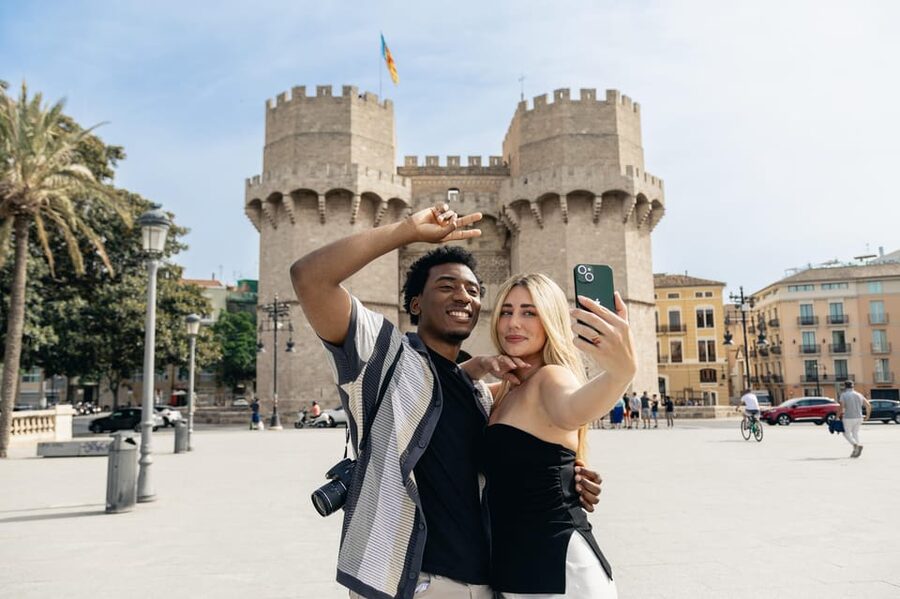
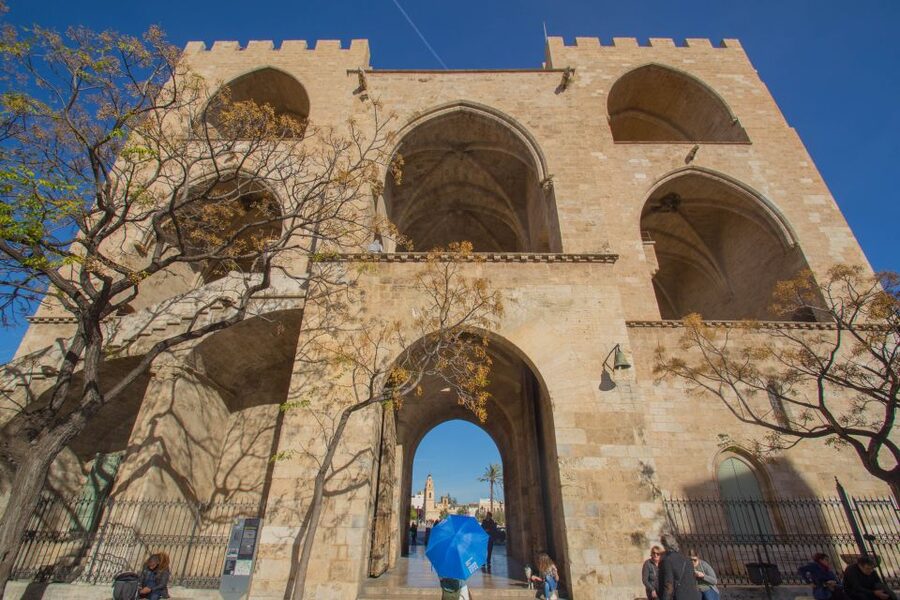
The tour usually meets at Torres de Serranos, one of Valencia’s imposing medieval gate towers. It’s a smart start because it frames the Old Quarter as a place that once had edges—walls, gates, and defenses—so the rest of the walk feels grounded in how the city grew.
From there, you head into the dense, central streets where everything is close but nothing is obvious at first glance. That is exactly where a guide helps. Valencia’s historic core can look like “pretty streets” if you’re wandering alone. With a guide, you get a route that explains why one plaza exists, why one neighborhood developed, and why certain buildings ended up where they did.
Timing matters too. Several guides in other tour experiences have handled detours when the city gets busy (one example was during Fallas Festival opening ceremony conditions). That kind of on-the-ground flexibility is why a guided route is more than just a ticket bundle.
Further reading around the Cathedral quarter and its Grail chapel
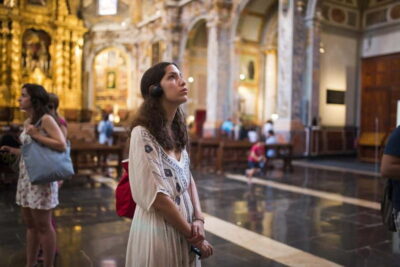
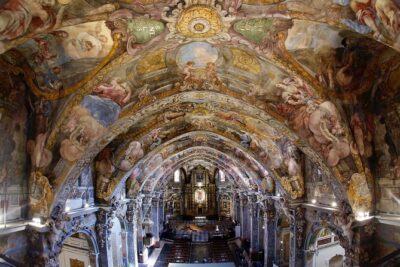
St Nicholas Church: the fresco ceiling and the modern light show moment
If you love churches for art and not just for quiet photo time, St Nicholas is the star of the show.
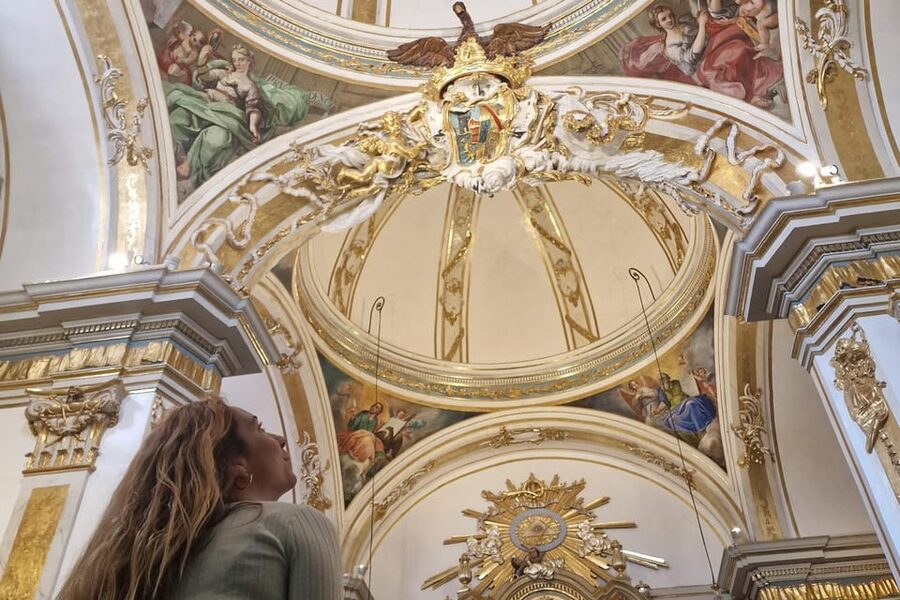
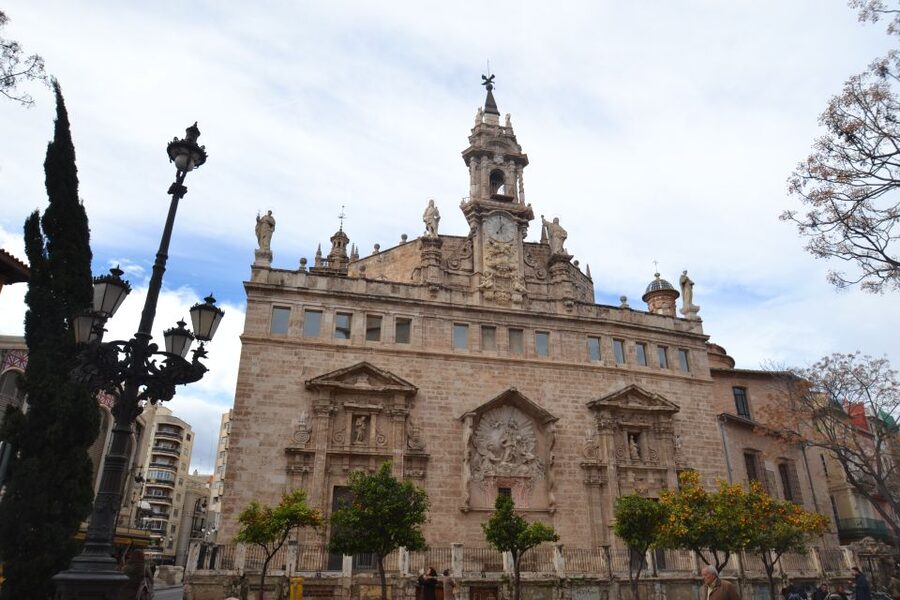
The tour includes entry to the Church of Saint Nicholas, where the interior is covered in Baroque frescoes over 2,000 square meters, painted by Dionís Vidal. That number matters because it tells you the scale: this isn’t a few decorated panels. It’s a ceiling you read like a book, one scene at a time, once someone points out what you’re actually seeing.
Here’s what makes this stop especially practical: St Nicholas also uses a projection light show on the ceiling and walls, and you can time your visit around it. In at least one recent experience, the guide coordinated the group so they could be seated promptly for the show, and the projection ran on a regular schedule (every half hour). Even if you’re not trying to “watch a show,” the projections are a good way to understand the space—modern tech re-emphasizes old artwork.
Also, St Nicholas is tied to the legend and traditions around Saint Nicholas, which is why some guides weave in the Christmas folklore angle. If that sounds quirky, good. Valencia’s religious art and local traditions are linked more than you might expect.
Practical note: you’ll be inside for the fresco interpretation, but the tour still includes outdoor walking between stops. Plan for a mix of standing, listening, and shifting positions in crowds near entrances.
Lonja de la Seda UNESCO: Gothic trading power in plain sight
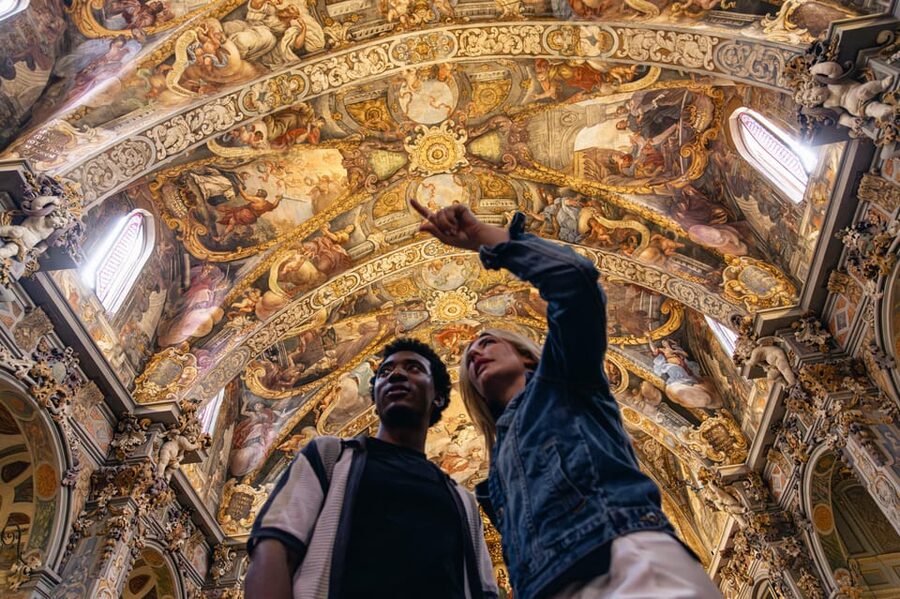
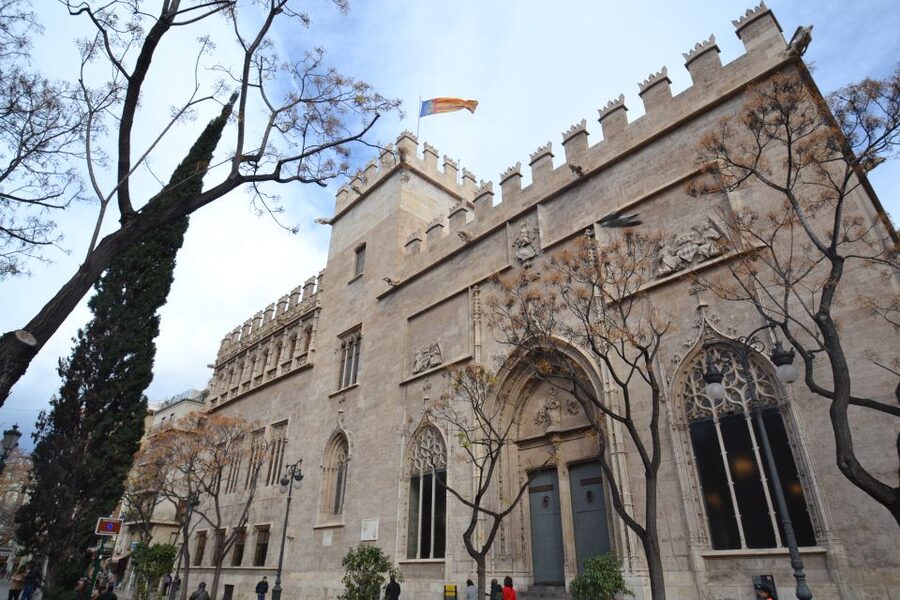
Next comes the Lonja de la Seda, Valencia’s UNESCO-listed silk exchange and one of those buildings that makes you rethink what “Gothic” can mean. This isn’t just a cathedral cousin. It’s a civic-economic monument built to show status and authority through design.
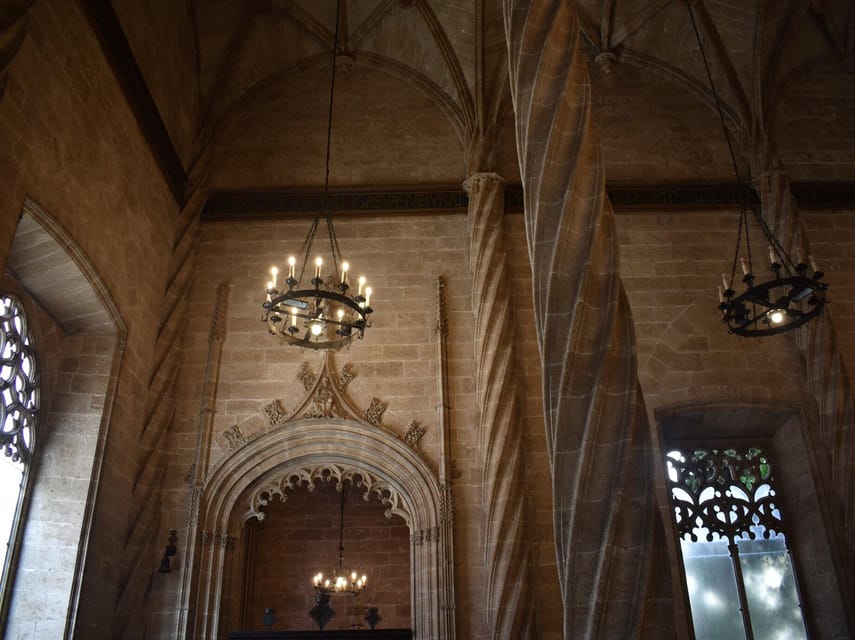
Expect the signature features: tall, sturdy columns and a geometric roof that creates a strong sense of order. A good guide helps you notice how the structure communicates power. The building is functional trade architecture, yet it’s constructed with the kind of attention you usually associate with religious spaces.
What I like about including the Lonja here is the narrative flow. After St Nicholas, you’ve been in a world of devotional art. Then you jump to a different kind of grandeur, where the message is about wealth, commerce, and Valencia’s historical role in trade. You don’t just learn what a building looks like—you learn what it was built to do.
One more practical plus: this is an indoor major sight with ticketed entry included, so you’re not stuck searching for an open-door moment or waiting on your own. Skip-the-line access helps, especially in peak seasons when queues are the real enemy.
Valencia Cathedral and the Holy Grail legend inside
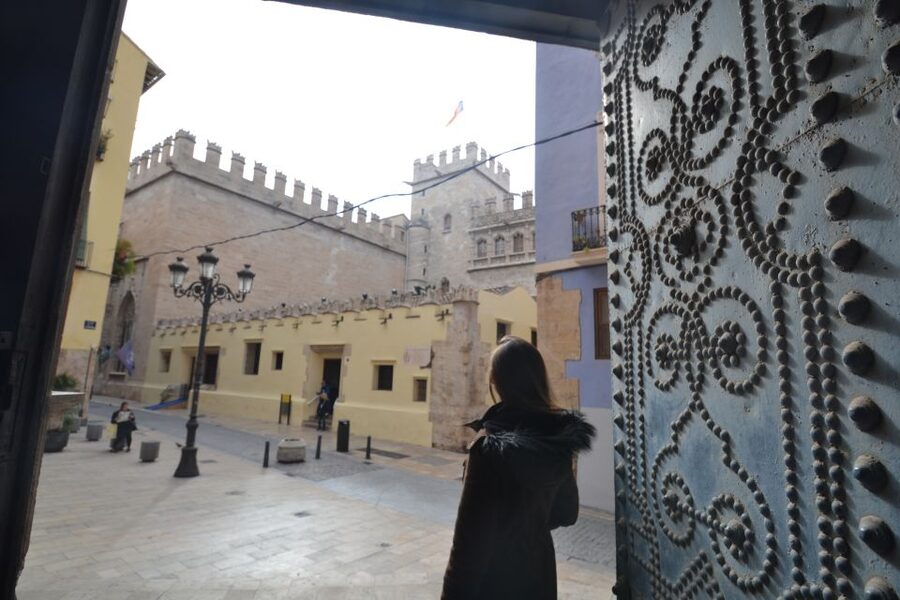
The tour also includes the Metropolitan Cathedral of the Assumption of the Virgin Mary. The guide framing matters here because the cathedral can feel overwhelming if you’re only looking for a single highlight.
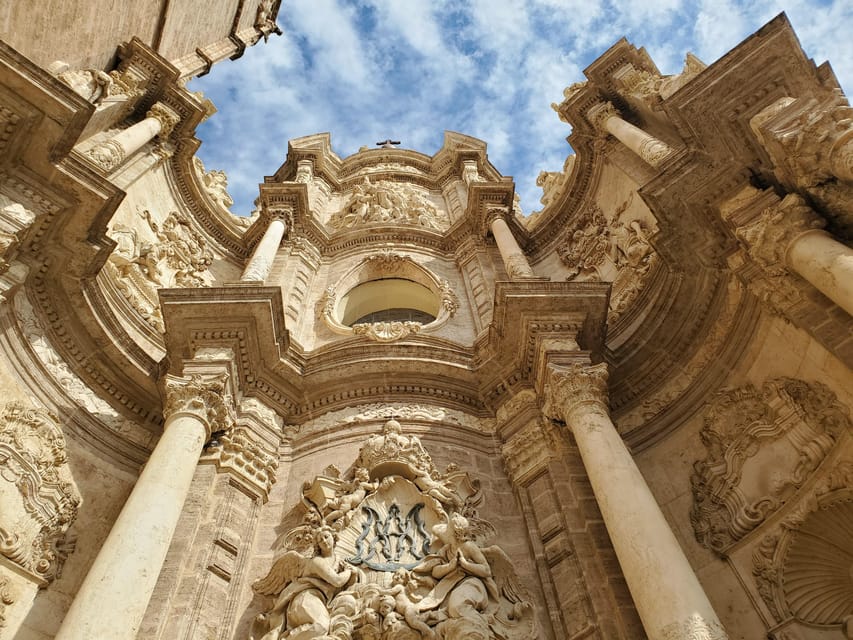
You’ll learn how the cathedral fits into Valencia’s bigger story, and the tour specifically points out that it is said to hold the Holy Grail in its interior. Treat that as a legend tied to the site rather than something you can verify by science, but it’s still part of why the cathedral draws people in. The key value is not whether you believe the legend—it’s how the story shaped public imagination and religious pilgrimage culture.
You also get interpretive help for what to look for, including how different eras and styles show up across the complex. This is where having a guide with a habit of explaining architectural elements pays off. Several guide reports mention they point out carvings, paintings, and design choices in ways that help you “see” instead of just “walk past.”
If you have limited time in Valencia and want your cathedral visit to feel like more than a quick look, this stop is worth it.
Still circling Ciutat Vella? These reviews walk the same lanes
- Valencia Old Town Tour with Wine & Tapas in 11th Century Historic Monument
★ 5.0 · 3,234 reviews - Valencia: Old Town Tour, Wine & Tapas in an 11th c. Monument
★ 4.9 · 1,797 reviews - Essentials of Valencia and its World Heritage Sites
★ 4.5 · 350 reviews - Valencia: Medieval Old Town Segway Tour
★ 4.8 · 251 reviews
Plaza de la Reina and Plaza de la Virgen: why the squares matter
A lot of walking tours sprint through plazas like they’re just scenic pauses. This one uses squares as wayfinding anchors—and that changes the experience.
You’ll pass through or near Plaza de la Reina and Plaza de la Virgen. In a small, old-city walk, those spots act like checkpoints for how the city is laid out. You start recognizing the logic: where a major church sits, how the main square relates to it, and how the trade and religious worlds were close enough to influence each other.
Plaza de la Virgen is also where you learn about the Basilica of the Virgin Mary of the Forsaken. That title is unusual, so a guide’s explanation helps make it more than just a name on a sign. It gives you something to remember when you leave the square and turn into the next narrow street.
These squares are also great for catching your breath. The tour length is 3–4 hours, and while it’s not an extreme hike, you still need the occasional moment to reset your legs and listen again.
Almoina Roman ruins: the city under your feet
One of the most interesting additions is a stop for the Roman ruins of the Almoina, described as the most relevant archaeological remains in Valencia. This is where the tour’s long-range story starts to feel real, because you’re not just learning about dates—you’re seeing evidence of layers.
The value here is simple: Valencia isn’t “one period.” It’s a stack. Even if you only catch a portion of what’s visible, the guide helps you connect Roman-era presence to later medieval and religious development. That’s a big deal because it explains why the city looks the way it does now.
If you enjoy ruins, you’ll probably want to pause longer than the tour schedule allows. If you don’t, it can still be a strong moment because it adds variety: it’s not another church interior, and it breaks up the art-heavy stops.
What the itinerary feels like on the ground
This tour is designed to combine indoor masterpieces with short outdoor connections. In practice, that means you’re constantly switching from “look closely” to “listen about context” to “stand back and take in scale.”
The included sites are spread across the historic center, which helps you see the Old Quarter efficiently. Reviews also point to a good walking pace—enough time to enter buildings and take in details, but not so slow that you feel stuck. A few guide experiences mentioned small-group dynamics that make it easier to gather and move through narrow streets.
One more thing: many guides time the church moments so you’re not arriving after the best part of a light show schedule. You may still need to follow the guide’s directions and be flexible with positioning, but that coordination is a real upgrade from a self-guided plan.
Tickets, skip-the-line access, and why the $53 price can make sense
At $53 per person for about 3–4 hours, you’re paying for two kinds of value:
1) Guided interpretation across multiple landmark types: cathedral, Baroque fresco church, and a UNESCO civic building.
2) Included entry tickets to the Cathedral, St Nicholas, and the Lonja de la Seda, plus skip-the-ticket-line access.
If you were planning to visit all three major sites anyway, this pricing often feels fair because it bundles entry and saves time you’d otherwise spend queueing on your own. If you only want one or two of the stops, then the value depends on what you’re prioritizing. In that case, you might compare against buying tickets separately and using a standard walking route.
Also worth noting: food and drinks are not included. That’s common for walking tours, but it does change your planning. You’ll want to budget for a snack or meal either before you start or after the tour ends in the Plaza de la Virgen area.
Who this tour is best for (and who should consider a different plan)
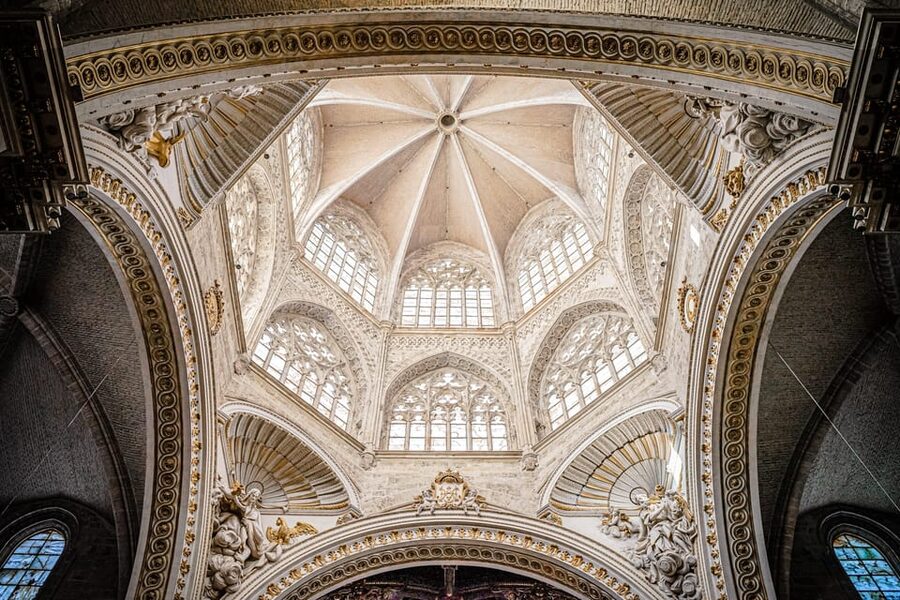
This is a great fit if you like history that’s tied to visible places. You’ll get more out of it if you enjoy architecture, religious art, and the way city life shifts across centuries.
It’s also ideal for first-timers who want a “can’t-miss” route that doesn’t require research. The guide’s job is to connect the dots between monuments, and this itinerary is built for that.
You might choose something else if:
- You want a completely self-paced day with no standing in lines or listening to explanations.
- You get impatient with indoor pacing that includes time for art reading and context.
- You’re sensitive to smoke around groups during outdoor segments (one review flagged that issue).
Should you book this Valencia Cathedral, St Nicholas, and Lonja Tour?
Yes, if your top goal is to see Valencia’s major Old Quarter landmarks in the right order, with entry tickets included and a guide to explain what you’re looking at. St Nicholas alone is a strong reason, especially if you care about the ceiling frescoes by Dionís Vidal and the projection light show timing.
I’d book it when you want an efficient 3–4 hour plan that protects your time (skip-the-line) and helps the day feel more than a checklist. If you’re willing to plan your own routes and only want one site, you may not get the same value from the bundle.
If you go, do yourself a favor and wear comfortable shoes. Old streets are charming until your feet start filing complaints.
FAQ
Where is the meeting point for the tour?
The meeting point may vary depending on the option booked. The tour is described as meeting at Torres de Serranos.
How long does the tour last?
The duration is 3 to 4 hours.
What is included in the price?
The tour includes a tour guide, entry tickets for the Valencia Cathedral, the Church of Saint Nicholas, and Lonja de la Seda.
Are food and drinks included?
No. Food and drinks are not included.
Does this tour skip the ticket line?
Yes, this tour includes skip-the-ticket line access.
What happens if it rains?
The tour usually takes place rain or shine, but it may be canceled in the event of heavy storm conditions.
What languages are available for the live guide?
The tour offers live guides in Polish, Italian, Portuguese, French, Spanish, English, and German.
What is the cancellation policy?
Free cancellation is available up to 24 hours in advance for a full refund.
Is a private group option available?
Yes, private group availability is offered.
More Tour Reviews in Valencia
- Valencia: Oceanogràfic Entry Ticket★ 4.7 · 9,893 reviews
- Valencia: 24 or 48-Hour Hop-on Hop-off Bus Ticket★ 3.9 · 5,611 reviews
- Valencia: Sailing Catamaran Cruise with Sunset Option and DJ★ 4.1 · 4,270 reviews
- Valencia: Palosanto Flamenco Show Ticket★ 4.8 · 3,876 reviews
- Valencia Old Town Tour with Wine & Tapas in 11th Century Historic Monument★ 5.0 · 3,234 reviews
Deeper into El Carmen
- Valencia Old Town Tour with Wine & Tapas in 11th Century Historic Monument★ 5.0 · 3,234 reviews
- Valencia: Old Town Tour, Wine & Tapas in an 11th c. Monument★ 4.9 · 1,797 reviews
- Essentials of Valencia and its World Heritage Sites★ 4.5 · 350 reviews
- Valencia: Medieval Old Town Segway Tour★ 4.8 · 251 reviews
- Essential Valencia and World Heritage Sites (English)★ 5.0 · 88 reviews
Around the Cathedral Once More
- Valencia: The Light of Saint Nicholas★ 4.7 · 588 reviews
- Valencia: San Nicolas, Silk Museum and Santos Juanes Church★ 4.3 · 391 reviews
- The Light of Saint Nicholas★ 4.5 · 227 reviews
- Valencia: 48 hour Hop-On-Hop-Off Bus Ticket and San Nicolás★ 4.0 · 196 reviews
- Valencia: San Nicolás, Silk Museum and Santos Juanes Church★ 4.5 · 49 reviews
The newest Valencia reviews on our desk




Valencia Old Town & El Carmen, compared.
 ★ 5.0Valencia Old Town Tour with Wine & Tapas in 11th Century Historic MonumentFrom $963,234 reviews
 ★ 4.9Old Town Tour, Wine & Tapas in an 11th c. MonumentFrom $941,797 reviews
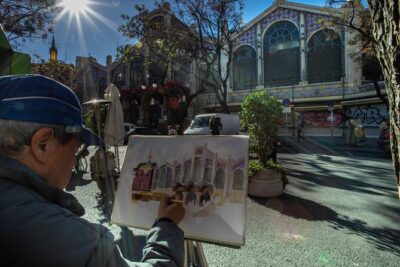 ★ 4.5Essentials of Valencia and its World Heritage SitesFrom $20350 reviews
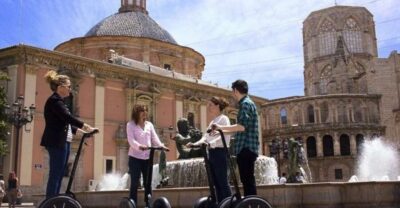 ★ 4.8Medieval Old Town Segway TourFrom $41251 reviews
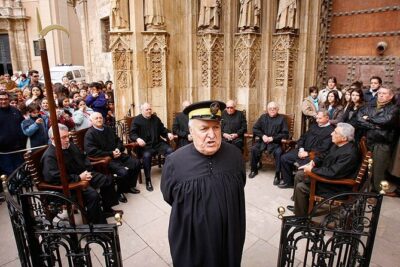 ★ 5.0Essential Valencia and World Heritage Sites (English)From $12188 reviews
 ★ 4.7Valencia all in one: beaches, old town & city arts by E-bikeFrom $4778 reviews
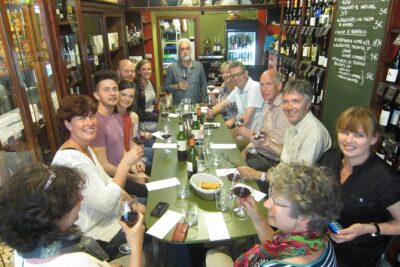 ★ 5.0Private premium wine tasting with snacks in Valencia’s old townFrom $7157 reviews
 ★ 4.8Old Town and Gardens Segway TourFrom $4754 reviews
Browse the lists this tour appears in