
Reviewed · VALENCIA OLD TOWN & EL CARMEN
Essential Valencia and World Heritage Sites (English)
Valencia’s UNESCO story comes fast on foot. In about 2 hours, you’ll cover the historic center and focus on the city’s World Heritage highlights, from Lonja de la Seda to the Fallas tradition.
I like how the tour is built for real understanding, not just photo stops. I also like that you get two of Valencia’s biggest UNESCO anchors in one sweep—Silk Exchange (Lonja de la Seda) and Water Court (Tribunal de las Aguas)—with Fallas as the third UNESCO thread running through the walk.
One thing to plan for: it’s a walking route with no included transport, so comfortable shoes and good weather matter.
In This Review
- Key points worth knowing before you go
- Why this Valencia UNESCO walking tour works so well
- The route feel: from Estació del Nord to Ciutat Vella
- Lonja de la Seda (Silk Exchange): what you should pay attention to
- The squares that shape the story: Place de la Reina and Place de la Vierge
- Central Market and the Town Hall area: seeing Valencia as a living city
- The UNESCO trio: Fallas and the Water Court in plain terms
- The Water Court (Tribunal de las Aguas)
- Fallas
- Guides matter: what good explaining looks like on this route
- Price and value: what $121.91 per person buys you
- Who this tour suits best (and who might want a different plan)
- Quick practical advice for a smoother 2-hour walk
- Should you book this Essential Valencia and World Heritage Sites tour?
Key points worth knowing before you go
- Three UNESCO themes in a tight timeline: Silk Exchange, Water Court, and Fallas all show up in one compact walk.
- Guides bring the sites to life: Sara, Gabor, and María Eugenia-style tours lean on clear explanations and even visuals on a tablet.
- Great for first-time orientation: you’ll get a logical path through major squares and key old-town landmarks.
- Fallas-season energy: if you’re in Valencia while the city is preparing, the storytelling can connect the festival to what you see.
- Private group experience: only your group joins, which usually means less waiting and more room for questions.
- Mobile ticket for easier check-in: it’s designed to keep things simple once you arrive.
Why this Valencia UNESCO walking tour works so well
If you only have a short window in Valencia, this is the kind of tour that gives you momentum fast. The goal is simple: focus on the city center’s most emblematic monuments while keeping an eye on the four World Heritage properties connection—especially the UNESCO trio tied to Lonja de la Seda, the Water Court, and Fallas.
I like that the format is built around learning as you walk. You’re not stuck in one place or handed a list of monuments with no story—your guide shares context so the streets start to make sense.
The length is also a big deal. With about 2 hours, the pace is brisk enough to cover essentials, but still short enough to stay flexible for the rest of your day.
Still circling Ciutat Vella? These reviews walk the same lanes
The route feel: from Estació del Nord to Ciutat Vella
The tour starts at Bailén – Estació del Nord (46007 Valencia) and ends near Carrer del Micalet, 7 in Ciutat Vella (46001 Valencia). That matters because it nudges you from a main transport hub into the older core of town, which is where most first-time visitors want to be.
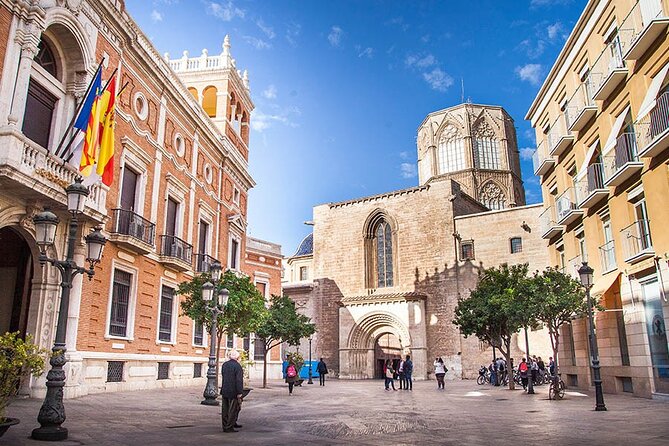
Expect a walk through classic historic-center space—streets and squares where you can see how Valencia layers time. The route is designed around big, recognizable anchors like city hall and major plazas, plus signature stops tied to UNESCO.
Here’s a practical note: because transport isn’t included, you’ll want to plan how you’ll get to the meeting point and then how you’ll finish near your next activity. Ending in Ciutat Vella is convenient if you’re heading to dinner or further exploring on foot.
Lonja de la Seda (Silk Exchange): what you should pay attention to
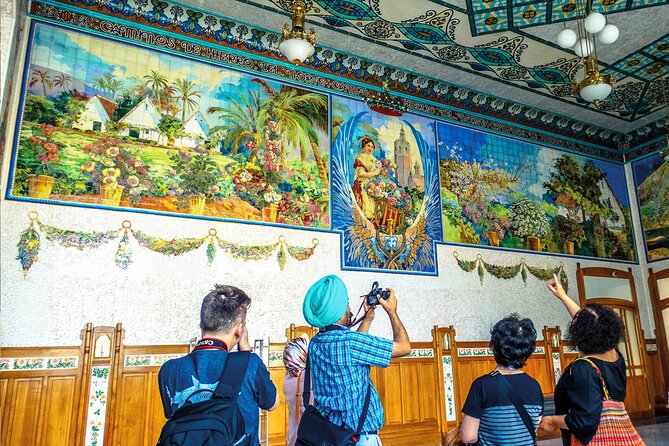
The star stop is Lonja de la Seda—the Silk Exchange, Valencia’s UNESCO-linked monument. The tour doesn’t treat it as a standalone “important building.” Instead, you’ll get the broader city story around it as your guide connects the site to Valencia’s historic identity.
I like this approach because the Silk Exchange is easy to admire and harder to interpret on your own if you’re just looking at architecture. With a guide, you’re more likely to notice the details that relate to why this place mattered to Valencia in the past.
One more helpful angle: some guides (like Sara) use photos on a tablet as they talk. That kind of visual support is gold when you’re standing on the street and the site is hard to fully understand from one glance.
If you want a smooth experience, do this: slow your pace at the Silk Exchange moment. Give yourself a few seconds longer than you think you need, so you can match what you’re hearing to what you’re seeing.
The squares that shape the story: Place de la Reina and Place de la Vierge
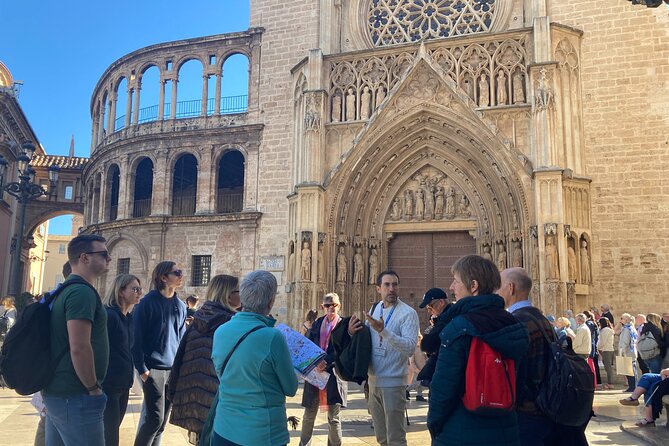
Walking Valencia’s old center is as much about the squares as it is about monuments. This tour moves through key plazas such as Place de la Reine and Place de la Vierge, and your guide uses them as story stations—places where people gathered, where power and religion showed up, and where city life still plays out.
These stops are valuable because they help you read Valencia like a map. If you’ve ever wandered and felt like you were just collecting landmarks, this section gives you a “why this here” explanation.
A small drawback: if you’re the type who hates stopping often, you may find the pacing a bit talk-heavy during the square moments. It’s still only a 2-hour walk, but the guide will spend enough time that you’ll probably remember the stories, not just the location.
First visit? These are the Valencia intros we lined up against each other
- Valencia: City Highlights Guided Bike Tour
★ 4.7 · 2,373 reviews - Valencia: Essentials and World Heritages Sites Walking Tour
★ 4.7 · 684 reviews - Valencia: Top 25 Highlights Guided Bike Tour
★ 4.8 · 644 reviews - Valencia Bike Tours: City Highlights
★ 4.9 · 450 reviews
Central Market and the Town Hall area: seeing Valencia as a living city
The walk includes major civic and public spaces like the Central Market and the Town Hall area. Even if you’re not there to shop, these locations matter because they show the city’s everyday engine—how Valencia functions now, not only how it looked centuries ago.
I like when a walking tour avoids the museum-only trap. City centers are made of layers: commerce, politics, religion, festivals, and daily routines. This tour stitches those threads together so you can keep exploring after the walk ends.
If you have time afterward, this is a smart route to use as a warm-up. You’ll leave knowing where the action clusters, which makes it easier to choose what to do next—especially for meals, shopping, or just wandering without getting lost.
The UNESCO trio: Fallas and the Water Court in plain terms

This is where the tour earns its name. Valencia’s UNESCO status isn’t just about one masterpiece. It’s about three different cultural expressions, and your guide brings them into the same conversation as you move through the historic center.
The Water Court (Tribunal de las Aguas)
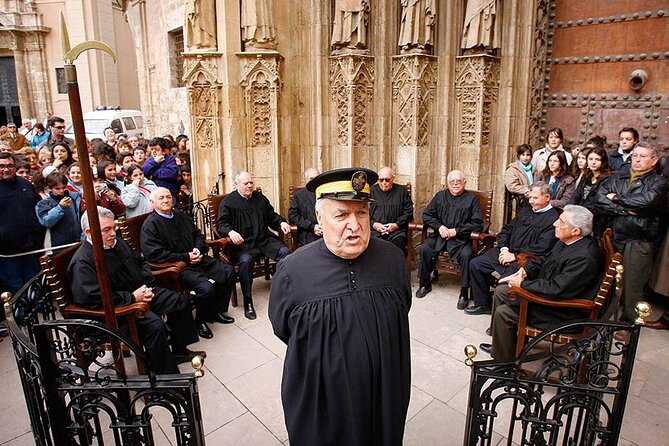
You’ll focus on the Water Court (Tribunal de las Aguas) as one of the UNESCO properties. The big value here is perspective: you get a sense of how traditions and community systems can be cultural heritage, not just old buildings.
This also helps you understand Valencia’s relationship with water and agriculture as part of its cultural identity. Even if those details are unfamiliar at first, a guide turns them from random trivia into something you can connect to what you’re seeing.
Fallas
Then there’s Fallas, the annual festival tied to ephemeral art, fire, and fireworks. This tour treats Fallas as part of the cultural heartbeat of the city, not just as a one-time spectacle.
If your visit lines up with the season when Valencia is preparing, you’ll likely feel the energy. One guide experience described Fallas preparations as a moment that made the explanations click, so you might walk through the center with the festival in the back of your mind.
A small tip for your mindset: if you’re in town during Fallas season, don’t only look for the big displays. Watch for small cues—craft energy, city buzz, the way locals talk about the festival—because the guide’s stories will connect those cues to the UNESCO idea behind Fallas.
Guides matter: what good explaining looks like on this route
You’ll be walking for about two hours, so the guide’s teaching style affects the whole experience. In the most positive accounts, guides showed a few consistent strengths.
First, they kept the narration organized. Guides like Gabor are described as giving a strong overview while also pointing out details you might otherwise miss. That matters for a short tour because you want a structure that helps you remember what you saw.
Second, they used visuals and variety. Sara is specifically noted for showing photos on a tablet, which helps when you’re standing close up to a building but still trying to picture the bigger context.
Third, they made room for questions. Multiple guide experiences highlighted that the guides were open to questions and willing to add personal suggestions—like where to eat—without turning it into a sales pitch.
Here’s how to get the most out of that: keep one or two questions ready before the tour starts. Good prompts are simple—How does this connect to Valencia’s traditions? What should I do next in this area?—and a strong guide will run with it.
Price and value: what $121.91 per person buys you
The price is $121.91 per person, and the tour is booked about 92 days in advance on average. That tells me two things: it’s a popular format, and you should treat it as something you plan into your trip rather than something you wing last-minute.
For value, focus on what’s included versus what isn’t. You get a professional guide, and you also get the convenience of a mobile ticket. What’s not included is transportation to and from the meeting point.
So the “value math” looks like this: you’re paying for time efficiency and interpretation. In a city like Valencia, that matters. A two-hour guided walk is often the difference between seeing UNESCO sites as isolated stops and understanding them as part of a cultural story.
Also, there’s mention of group discounts. Since the tour is private with only your group, that can be a nice deal if you’re traveling with friends or family rather than solo.
Who this tour suits best (and who might want a different plan)
This tour fits best if you want:
- a focused overview of Valencia’s historic center
- UNESCO context tied directly to what you’re seeing
- a route that helps you orient yourself quickly
It’s also a good match for first-time visitors. The walking loop helps you learn where the important landmarks sit, so your independent exploring afterward feels less random.
If you’re the type who needs lots of time inside buildings, browsing slowly, or taking long breaks, this tour may feel a bit fast. The upside is that you’ll know exactly where to return.
Families can participate with the note that children must be accompanied by an adult. Service animals are allowed, and the tour is marked as suitable for most travelers.
Quick practical advice for a smoother 2-hour walk
- Bring comfortable walking shoes. Two hours in old streets adds up faster than you expect.
- Pay attention to shade and sun. Valencia weather can change your comfort level quickly.
- Have one loose plan for after the tour. Ending near Ciutat Vella makes it easy to keep going.
- If you’re visiting around the festival season, keep your curiosity switched on. The guide’s UNESCO explanations connect best when you’re tuned in to local festival energy.
Should you book this Essential Valencia and World Heritage Sites tour?
I’d book this tour if you want a compact way to understand why Valencia’s UNESCO identity isn’t one thing—it’s several cultural expressions working together. The combination of Lonja de la Seda, the Water Court, and Fallas makes it a smart choice when time is limited.
I’d skip it or consider another option if you prefer a long, slow, self-paced tour with lots of free time at each stop. This one is built for pace and guidance, and that’s exactly why many people find it useful at the start of a trip.
If you’re visiting soon, I’d also lean toward booking earlier rather than later, since it’s commonly scheduled well in advance.
If your goal is to leave Valencia’s historic center understanding more than you started with, this is a very workable plan.
More Tour Reviews in Valencia
- Valencia: Oceanogràfic Entry Ticket★ 4.7 · 9,893 reviews
- Valencia: 24 or 48-Hour Hop-on Hop-off Bus Ticket★ 3.9 · 5,611 reviews
- Valencia: Sailing Catamaran Cruise with Sunset Option and DJ★ 4.1 · 4,270 reviews
- Valencia: Palosanto Flamenco Show Ticket★ 4.8 · 3,876 reviews
- Valencia Old Town Tour with Wine & Tapas in 11th Century Historic Monument★ 5.0 · 3,234 reviews
The Whole City in One Go
- Valencia: City Highlights Guided Bike Tour★ 4.7 · 2,373 reviews
- Valencia: Essentials and World Heritages Sites Walking Tour★ 4.7 · 684 reviews
- Valencia: Top 25 Highlights Guided Bike Tour★ 4.8 · 644 reviews
- Valencia Bike Tours: City Highlights★ 4.9 · 450 reviews
- Valencia: 2-hour City Highlights Guided Tour by Tuk Tuk★ 4.5 · 388 reviews
Deeper into El Carmen
- Valencia Old Town Tour with Wine & Tapas in 11th Century Historic Monument★ 5.0 · 3,234 reviews
- Valencia: Old Town Tour, Wine & Tapas in an 11th c. Monument★ 4.9 · 1,797 reviews
- Valencia: Cathedral, St Nicholas, and Lonja de la Seda Tour★ 4.8 · 861 reviews
- Essentials of Valencia and its World Heritage Sites★ 4.5 · 350 reviews
- Valencia: Medieval Old Town Segway Tour★ 4.8 · 251 reviews
The newest Valencia reviews on our desk





Valencia Old Town & El Carmen, compared.
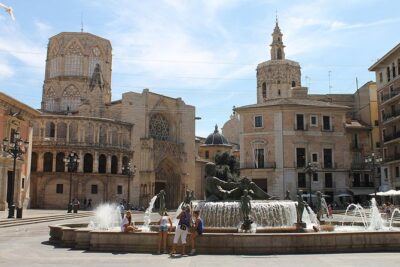 ★ 5.0Valencia Old Town Tour with Wine & Tapas in 11th Century Historic MonumentFrom $963,234 reviews
 ★ 4.9Old Town Tour, Wine & Tapas in an 11th c. MonumentFrom $941,797 reviews
 ★ 4.8Cathedral, St Nicholas, and Lonja de la Seda TourFrom $53861 reviews
 ★ 4.5Essentials of Valencia and its World Heritage SitesFrom $20350 reviews
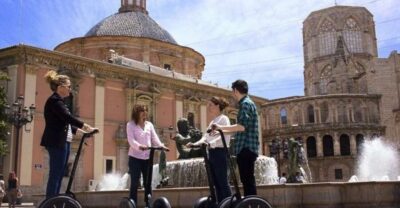 ★ 4.8Medieval Old Town Segway TourFrom $41251 reviews
 ★ 4.7Valencia all in one: beaches, old town & city arts by E-bikeFrom $4778 reviews
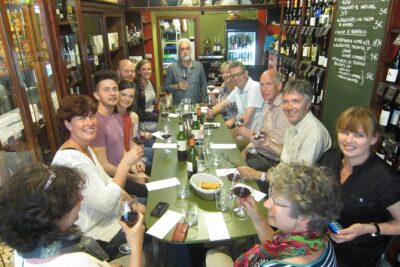 ★ 5.0Private premium wine tasting with snacks in Valencia’s old townFrom $7157 reviews
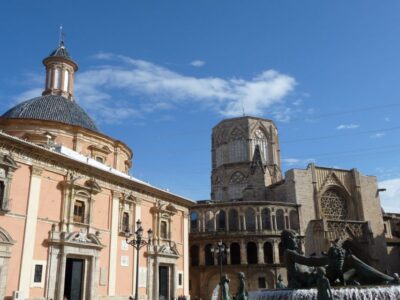 ★ 4.9Private 4-Hour Walking Tour of the Old TownFrom $39454 reviews
Browse the lists this tour appears in