
Reviewed · CITY OF ARTS & SCIENCES TOURS
Valencia: Entrance – Visit the Palau de Les Arts with a guide
This place looks like sci-fi architecture, but it’s built with real engineering. A guided visit to the Palau de Les Arts turns the building from a photo-stop into a story you can actually follow. Two things I especially like: you get expert explanations for what you’re seeing, and you’re taken into rooms and viewpoints most people miss on a quick walk-by.
The main thing to consider is simple: this is a 1-hour guided tour, so it’s not a slow, museum-style wander. If you want lots of free time to linger, you may feel a little rushed—though the payoff is that you’ll come away with clear context and memorable views.
In This Review
- Key moments worth knowing before you go
- Why Palau de Les Arts feels different the moment you arrive
- Meeting point and the fast start from the ticket office
- Spiral staircases: where the design stops being abstract
- Panoramic elevator to the 50m-high garden (the wow moment)
- Terraced gardens and perspective shifts that feel curated by physics
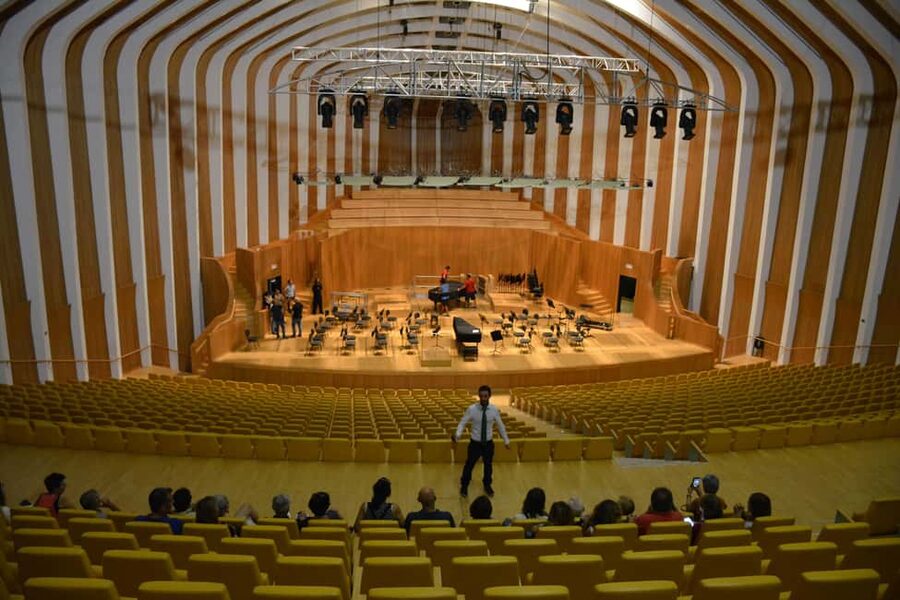
- Inside the halls: where music and set design meet architecture
- Stage technology talk: why it matters even if you don’t know opera jargon
- Rehearsals and live practice you might see along the way
- Price and value: is $21 for an hour actually fair?
- Who this tour suits (and who might want a different plan)
- Tips to get more out of your hour
- Should you book this Palau de Les Arts guided entrance tour?
- FAQ
- How long is the Palau de Les Arts guided entrance tour?
- Where do I meet for the guided visit?
- What languages is the tour offered in?
- Is the ticket price $21 per person?
- What’s included in the ticket?
- Is this tour wheelchair accessible?
- Are pets allowed inside?
- Is there free cancellation?
Key moments worth knowing before you go
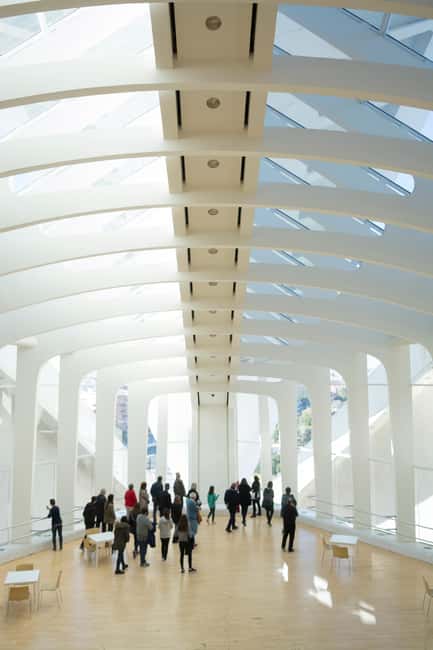
- Expert-led access inside: You’ll enter parts of the building that aren’t always open during casual visits.
- Calatrava architecture in plain language: Expect explanations tied to materials, design, and how the building works.
- Spiral staircases and smart movement: The route highlights circulation and perspective, not just big rooms.
- Panoramic elevator to the 50m garden: A major viewpoint feature built into the experience.
- Halls tied to music and performance: You’ll see where the cultural magic happens, plus stage elements.
- Stage technology talk: The guide’s focus on how performances are made is a standout for many visitors.
Why Palau de Les Arts feels different the moment you arrive
Valencia’s Palau de Les Arts isn’t just another landmark. It’s one of architect Santiago Calatrava’s most recognizable works, and it has that rare quality of looking dramatic from almost every angle. Up close, though, the building makes more sense than it first appears. The structure isn’t random flourishes—it’s about movement, angles, light, and how people experience the spaces.
That’s exactly where a guided visit earns its value. Without a guide, you can still enjoy the exterior and some interior rooms. With the guide, you start connecting the dots: why certain corridors feel like they funnel you toward key areas, how staircases are shaped for both function and flow, and why the venue’s design supports performance spaces. Even if you’re not an opera die-hard, you’ll leave understanding what makes this building special.
More ways into the City of Arts, from combo tickets to guided visits
Meeting point and the fast start from the ticket office
You meet at the ticket office for guided visits, and the tour starts and finishes right nearby. This matters more than it sounds. It keeps the experience tight and reduces the “where do I go now?” stress that can happen at large cultural complexes.
Once you’re in the group, your guide sets the tone quickly. You’ll get an overview of what you’ll see and what to look for while you’re moving through the building. In other words, you don’t just follow along—you get a mental map. That’s the kind of orientation that makes later stops feel rewarding instead of random.
Spiral staircases: where the design stops being abstract
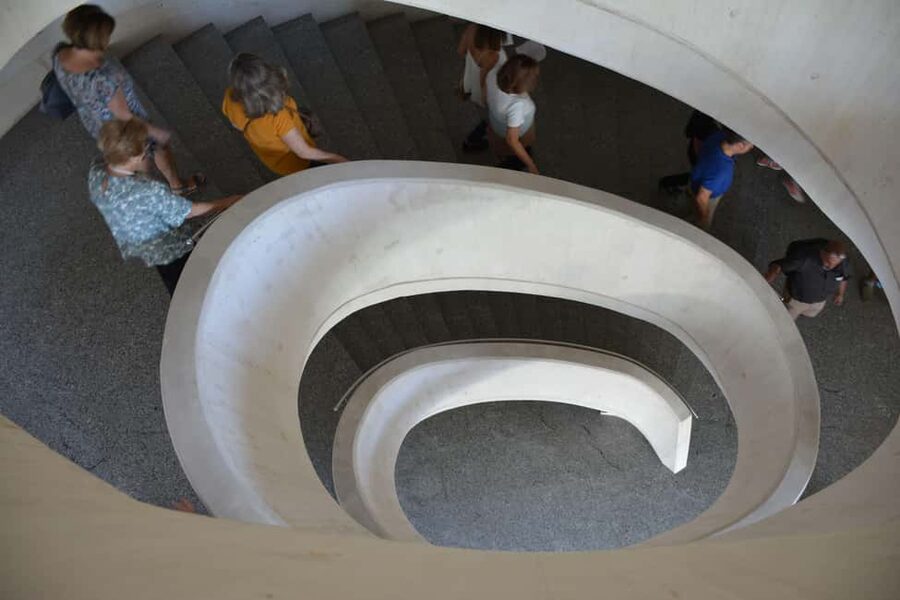
One of the best parts of this tour is how it treats circulation. You’re not just looking at interiors—you’re moving through them in a way that reveals how the building is organized. Spiral staircases are part of the route, and they’re more than scenic. They help you understand the building’s rhythm: how you shift levels, how sightlines change, and how the architecture guides you upward.
What I like about this approach is that it makes the building feel alive. Calatrava’s style can look purely sculptural from outside, but staircases show the practical side: transitions between spaces, vertical logic, and the intentional experience of going up and around.
And yes, this is also where your photos will get better. When you’re climbing or turning, you naturally catch angles that show layers of the venue instead of flat front views.
Panoramic elevator to the 50m-high garden (the wow moment)
The tour’s headline visual is the panoramic elevator, which takes you to a garden about 50 meters high. This is the kind of stop that makes you pause and look around for a full minute—even if you normally skip the “view” part of tours.
Because it’s panoramic, the elevator ride isn’t just transportation. It acts like a moving “preview” for what comes next: you get height, changing angles, and a sense of how the Palau sits within Valencia’s larger complex. Then you land at the garden and the city becomes part of the experience.
A small practical note: plan to slow down your pace here. People often rush into a viewpoint stop and miss the best sightlines. If you like watching how light lands on buildings, this is where you’ll do that.
- Valencia: Oceanogràfic Entry Ticket
★ 4.7 · 9,893 reviews - Valencia: 24 or 48-Hour Hop-on Hop-off Bus Ticket
★ 3.9 · 5,611 reviews - Valencia: Sailing Catamaran Cruise with Sunset Option and DJ
★ 4.1 · 4,270 reviews - Valencia: Palosanto Flamenco Show Ticket
★ 4.8 · 3,876 reviews
Terraced gardens and perspective shifts that feel curated by physics
After the elevator, the tour continues through garden areas designed to be experienced from different levels. Terraced layouts are great for this because they force you to look in more than one direction. You’ll notice how the building frames views and how the garden spaces change the “mood” compared to the interior halls.
What makes this stop valuable isn’t just greenery. It’s perspective. You’ll see the Palau de Les Arts as a system—architecture meeting public space—rather than a single object. A garden on a roof like this also helps explain the venue’s scale. From ground level, everything looks big. From above, you can measure how big the building really is.
If you’re the type who likes to understand how designers think, the garden stop is a strong payoff. It’s a reminder that performance venues aren’t only backstage and stage lighting. They’re also about audience experience before the curtain rises.
Inside the halls: where music and set design meet architecture
Back inside, the tour shifts from height to atmosphere. Your guide leads you through major interior spaces connected to performance—places where the “magic” of music is meant to happen. The tour doesn’t treat the Palau like a generic building tour. Instead, it frames the interiors around the idea of staging: how spaces function for artists and audiences.
This is where many people feel the difference between a typical sightseeing stop and a real guide-led visit. One review highlight I really agree with: the tour doesn’t just point at pretty rooms. It explains the building materials, interior elements across different halls, and why the venue is unique in the world.
You’ll also get talk about spectacular sets that have appeared in the venue since it opened. That helps you connect the physical space to real productions, even if you’re not catching a show during your visit.
Stage technology talk: why it matters even if you don’t know opera jargon
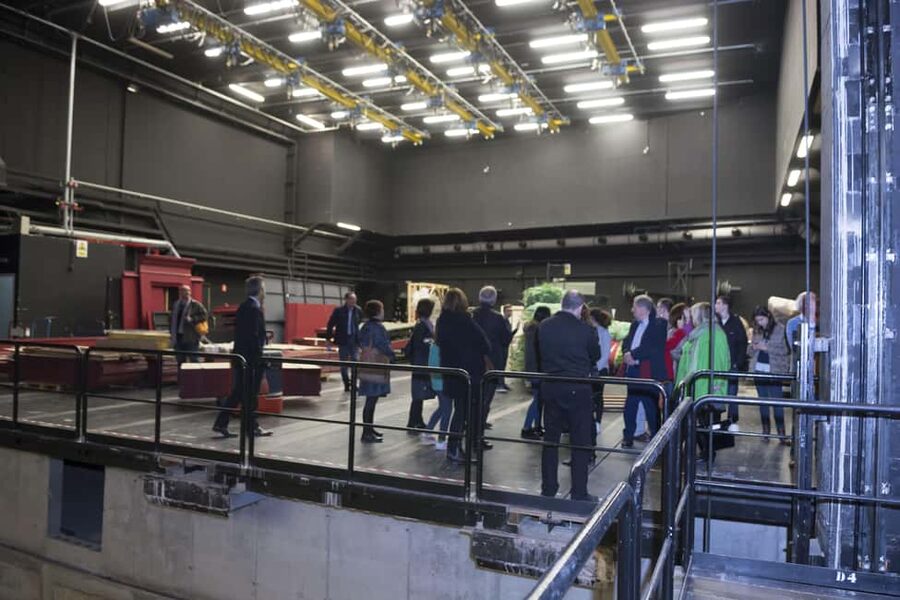
One of the most praised parts of this experience is the attention to technical elements. The guide focuses on how the venue supports performance, including stage equipment. Some visitors specifically loved the explanation of the stage technology and how it’s described as one of the largest systems, noted as second-largest after the Metropolitan in a review.
Here’s the practical value for you: if you’ve ever watched a show and thought the stage must be insanely complicated, this tour gives you a way to understand that complexity. You’ll see why certain design choices make operations possible. And you’ll likely start noticing technical language that usually stays invisible during a performance.
Even if you never plan to memorize terms, the technical framing gives depth. It turns what could be a quick interior look into a “how it all works” experience.
Rehearsals and live practice you might see along the way
There’s a nice bonus possibility during your visit. Sometimes people are rehearsing in the building, and that can add an extra layer to what you’re seeing. One review mentioned this as a fun addition: while the tour is focused on architecture and explanation, the presence of rehearsal activity helps you picture the building in use.
No promises here—rehearsal schedules aren’t listed in the details. But if you arrive at the right time, you might catch a little performance energy.
Price and value: is $21 for an hour actually fair?
At $21 per person for about one hour, the cost is not bargain-basement. But it’s also not overpriced when you think about what you get: a live guide, access inside the building, and guided routes through key architectural features like staircases, an elevator ride to a high garden, and interior halls tied to performance.
A self-guided visit can be cheaper, sure. But the value here is the interpretation. This tour is built for people who want to understand what they’re seeing—materials, hall design, stage functionality, and why the venue is considered unique. If you’re even mildly curious about architecture, performance spaces, or Calatrava’s engineering style, the guide makes the ticket feel worthwhile.
If you’re the type who only wants photos and doesn’t care about explanations, you might feel the hour is short. But if you like learning while you walk, you’ll likely get your money’s worth quickly.
Who this tour suits (and who might want a different plan)
This is a great match for:
- Architecture fans who like seeing design decisions explained in human terms
- People visiting Valencia’s City of Arts and Sciences area who want one strong interior stop
- Opera and live-music lovers who want to understand the building’s “how it works” side
- Anyone who enjoys viewpoint moments—especially the 50m garden
It may be less perfect for:
- Visitors who want lots of free time inside and zero structure
- People who strongly prefer to wander at their own pace (this tour is time-focused)
Also, it’s wheelchair accessible, which is a big plus if you need that accommodation. If you use mobility aids, the key is to arrive with enough time at the meeting spot so the group can move smoothly.
Tips to get more out of your hour
You’ll get the most when you treat this like a “guided museum,” not a “walk-through.” A few practical moves:
- Come ready to look up. Calatrava-style architecture often rewards overhead angles.
- In the garden stop, pause before you start taking pictures. Give yourself 20–30 seconds to actually scan the views.
- If you care about stage tech, stay attentive during those sections. The guide’s explanations are a big reason this tour gets strong marks.
- If the group is moving fast, don’t fight it. The route is designed so the best perspectives happen at the right time.
Should you book this Palau de Les Arts guided entrance tour?
I think you should book if you want a high-impact hour: inside access, real context from an English-speaking guide, and a memorable viewpoint via the panoramic elevator to the 50m garden. This is one of those tours where the building’s reputation makes you curious, and the guide makes that curiosity turn into understanding.
Skip it only if you’re looking for a long, self-paced visit or you’d rather spend your time elsewhere in the complex. If you’re balancing limited time in Valencia, this one-hour format is a smart way to get more meaning out of a single stop.
FAQ
How long is the Palau de Les Arts guided entrance tour?
It lasts 1 hour.
Where do I meet for the guided visit?
The meeting point is the ticket office for guided visits.
What languages is the tour offered in?
The live tour guide is in English.
Is the ticket price $21 per person?
Yes, the listed price is $21 per person.
What’s included in the ticket?
Your ticket includes access to the building, plus an expert guide’s explanation.
Is this tour wheelchair accessible?
Yes, it is wheelchair accessible.
Are pets allowed inside?
Pets are not allowed. Assistance dogs are allowed.
Is there free cancellation?
Yes. You can cancel up to 24 hours in advance for a full refund.
More Tour Reviews in Valencia
- Valencia: Oceanogràfic Entry Ticket★ 4.7 · 9,893 reviews
- Valencia: 24 or 48-Hour Hop-on Hop-off Bus Ticket★ 3.9 · 5,611 reviews
- Valencia: Sailing Catamaran Cruise with Sunset Option and DJ★ 4.1 · 4,270 reviews
- Valencia: Palosanto Flamenco Show Ticket★ 4.8 · 3,876 reviews
- Valencia Old Town Tour with Wine & Tapas in 11th Century Historic Monument★ 5.0 · 3,234 reviews
The City of Arts, Ticket by Ticket
- Valencia: Oceanogràfic, Hemisfèric & Science Museum Combo★ 4.4 · 2,959 reviews
- Valencia: Principe Felipe Science Museum Entry Ticket★ 4.3 · 1,039 reviews
- Valencia: City of Arts and Science 3D Movie at Hemisfèric★ 4.1 · 455 reviews
- City of Arts and Sciences Private Segway Tour★ 5.0 · 196 reviews
- The City of Arts and Sciences in Valencia★ 4.5 · 96 reviews
The newest Valencia reviews on our desk





City of Arts & Sciences Tours, compared.
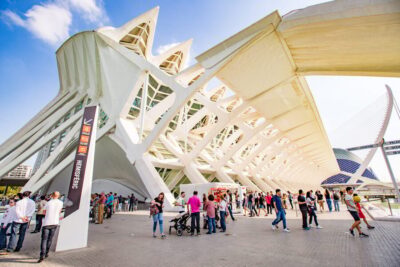
 ★ 4.4Oceanogràfic, Hemisfèric & Science Museum ComboFrom $542,959 reviews
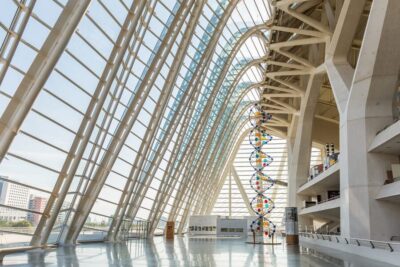 ★ 4.3Principe Felipe Science Museum Entry TicketFrom $111,039 reviews
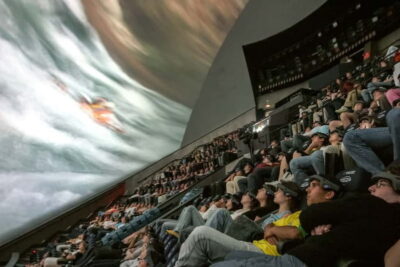
 ★ 4.1City of Arts and Science 3D Movie at HemisfèricFrom $10455 reviews
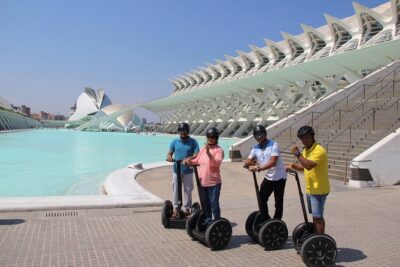 ★ 5.0City of Arts and Sciences Private Segway TourFrom $60196 reviews
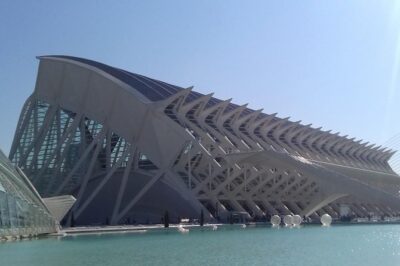 ★ 4.5The City of Arts and Sciences in Valencia96 reviews
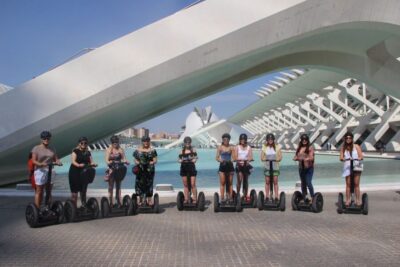 ★ 4.7City of Arts and Sciences Segway TourFrom $5962 reviews
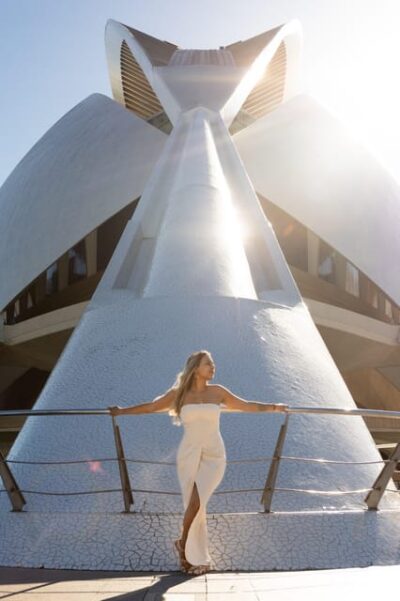 ★ 5.0Professional photoshoot at City of Arts & SciencesFrom $5854 reviews
 ★ 5.0City of Arts & Sciences Tour with Rooftop Tapas & WineFrom $13641 reviews
Browse the lists this tour appears in