Reviewed · VALENCIA
Valencia Step By Step for you
Valencia in 2.5 hours: sharp, story-filled, and practical. This step-by-step route strings together the big sights you’d normally spread over a full day, with a guide who makes architecture and local culture feel clear (and actually fun). I like how you start with orientation right at Ajuntament de Valencia, then build context as you move through markets, gates, churches, and archaeological remains.
Two things I especially like: you get an included pause at Mercat Central de Valencia to try a typical local drink inside a standout modernist market hall; and you get inside major landmarks like La Lonja de la Seda with UNESCO context explained in plain language. One consideration: not every stop includes admission, so a couple of key sights (like the Cathedral and the Almoina Archaeological Center) may require tickets you’ll need to plan for.
In This Review
- Key highlights worth marking on your mental map
- Entering Ajuntament de Valencia for the best orientation in the city
- Mercat Central de Valencia: modernist design plus a real local drink
- La Lonja de la Seda: UNESCO without the textbook vibe
- Torres de Serranos: where you actually see the old river story
- Valencia Cathedral stop: major scale, but admission isn’t included
- Basilica de la Virgen de los Desamparados: ceiling art and the patron statue
- Almoina Archaeological Center: seeing the first Roman city ruins right here
- Santa Catalina Church and the Baroque tower moment
- Palacio del Marques de Dos Aguas: a 19th-century bourgeois snapshot
- The return to Ajuntament de Valencia: finishing with shopping street energy
- Price and value: why $180.24 can make sense (or not)
- Who should book this Valencia Step By Step tour
- Should you book? My practical take
- FAQ
- How long is the Valencia Step By Step tour?
- Where does the tour start?
- Is it offered in English?
- Is this a private tour?
- What’s included in the price?
- Which stops require admission that isn’t included?
- Do you need a printed ticket?
- Is the tour appropriate for most travelers?
- Are service animals allowed?
- What if the weather is bad?
Key highlights worth marking on your mental map
- City Council balcony intro: Ajuntament de Valencia first, so you understand where you are fast.
- Mercat Central tasting included: Regional products in a market setting, plus a typical drink during the visit.
- La Lonja de la Seda as UNESCO Civil Gothic: A middle-ages moment that’s explained, not just looked at.
- Turia story at Torres de Serranos: See the old riverbed area where Valencia still says El Rio.
- Church stops that show devotion through art: Ceiling paintings and patron-saint symbolism at the Basilica.
- Roman layers at Almoina: The first Roman-city ruins are right here, not a distant museum.
Entering Ajuntament de Valencia for the best orientation in the city
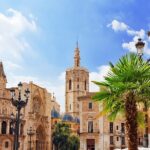
You meet at the Pl. de l’Ajuntament, and the tour gets moving with a clever move: you go inside Valencia’s town hall building first. The payoff is the views from the building’s balcony—right over the town hall square—so you get your bearings while someone gives you a focused introduction to the city.
This is more than a nice photo moment. When you start here, the rest of the walk makes sense. You’re not just hopping between landmarks; you’re learning how the center connects—where civic power sits, how the old city grew, and why certain streets and gates matter. It’s also a quick stop (about 15 minutes), which helps if you’re the type who dislikes slow starts.
The guide is often a big reason this tour lands so well. Marcela, for example, is known for sharing stories and anecdotes in a way that feels easy to follow, even when the topic turns architectural.
Before you settle on this one, set it against the Valencia tours our readers rate highest.


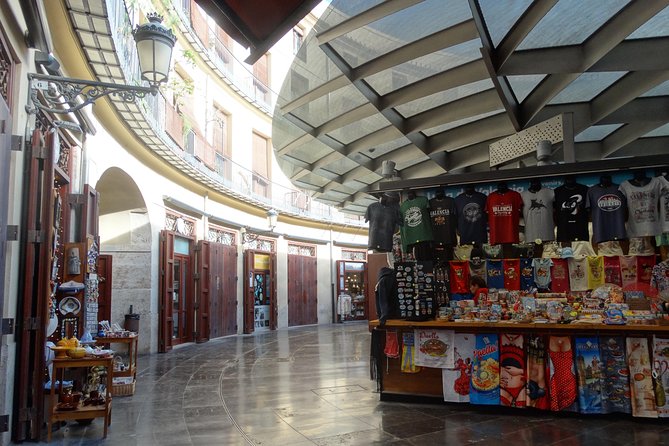
Mercat Central de Valencia: modernist design plus a real local drink
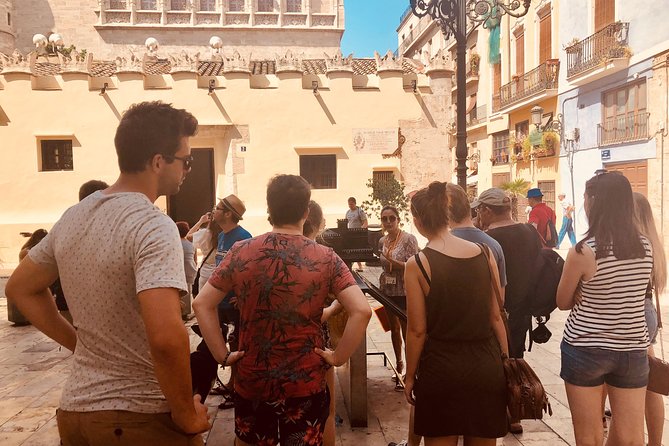
Next comes Mercat Central de Valencia, and this is one of the best-value parts of the whole itinerary. You go into the central market to admire its modernist structure, see regional products, and then taste a typical Valencia drink included in the visit.
If you’ve visited other European markets, you know the risk: lots of stalls, little context, and the visit ends up feeling like wandering. Here, you’re given a guided framework—what to notice in the market’s structure and what kinds of regional items are worth looking for. Then you get that practical reward: an included drink so you’re not paying extra for the “taste the place” moment.
It’s also timed well. About 15 minutes keeps it from dragging, while still giving you enough time to look, ask questions, and understand what makes this market special in Valencia’s daily rhythm.
La Lonja de la Seda: UNESCO without the textbook vibe
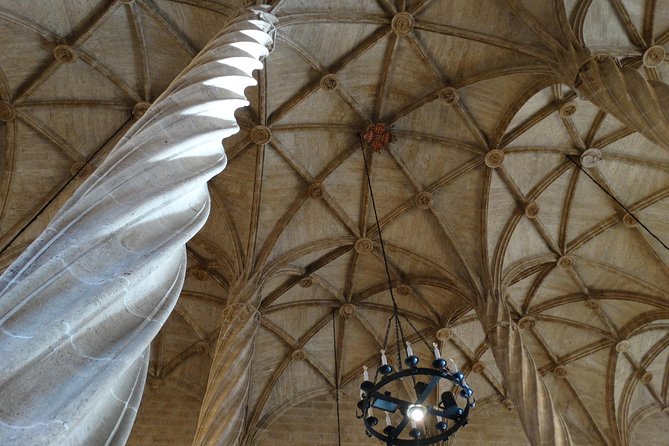
From the market, the tour shifts into medieval territory with La Lonja de la Seda. You enter this UNESCO world heritage Civil Gothic building and learn how it functioned historically—what it was used for and how that connects to the era that built it.
This stop matters because it’s easy to see La Lonja as just another grand façade. The guided approach helps you understand the building as a working space from its time, not just a pretty shell. It’s also paced in a way that doesn’t overwhelm you: you get roughly 25 minutes here, which is enough time to notice details without feeling like you’re stuck reading facts on the run.
Marcela (and guides with similar style) are praised for English that stays clear and for the way they tell stories alongside the architecture. Even if you don’t consider yourself an architecture person, this is the kind of stop that tends to click because it’s explained in human terms.
Torres de Serranos: where you actually see the old river story
Then you go to the Torres de Serrans area, entering through the city’s main gate. This is where the Turia River story becomes visual. You see the old riverbed of the Turia River and learn why people in Valencia still call it El Rio.
That “aha” moment is the value here. The Turia is one of those city features everyone references, but it’s a lot more meaningful when you can point to the space itself. You’re not just hearing a nickname—you’re standing where the old river ran, and that makes the city’s layout feel more logical.
This segment is short (about 15 minutes), so it works well as a rhythm change between bigger indoor stops. It’s also a great time to ask questions, because once you walk away you’ll be moving through more religious and civic buildings.
- Valencia: Oceanogràfic Entry Ticket
★ 4.7 · 9,893 reviews - Valencia: 24 or 48-Hour Hop-on Hop-off Bus Ticket
★ 3.9 · 5,611 reviews - Valencia: Sailing Catamaran Cruise with Sunset Option and DJ
★ 4.1 · 4,270 reviews - Valencia: Palosanto Flamenco Show Ticket
★ 4.8 · 3,876 reviews
Valencia Cathedral stop: major scale, but admission isn’t included
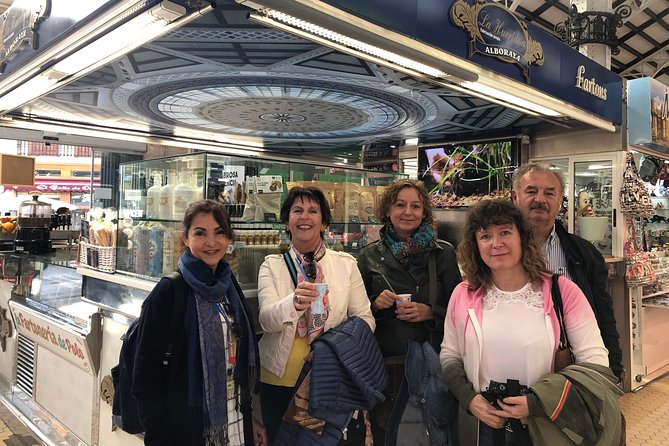
After the gate, the route reaches Valencia Cathedral. This is described as a journey through 500 years of architecture, and it includes the idea of the chapel of the Holy Grail being part of what the cathedral welcomes.
You’ll spend about 15 minutes here, but plan ahead: admission isn’t included for this stop in the tour details. So if you want extra time inside beyond what the guide covers, you may need to budget for entry separately.
Still, this stop is worthwhile in a step-by-step itinerary because it gives you a sense of how religious power and architecture developed over a long time. Even with limited time, you’ll get a guided framework for what you’re seeing—why the cathedral feels like multiple eras stacked together.
Basilica de la Virgen de los Desamparados: ceiling art and the patron statue
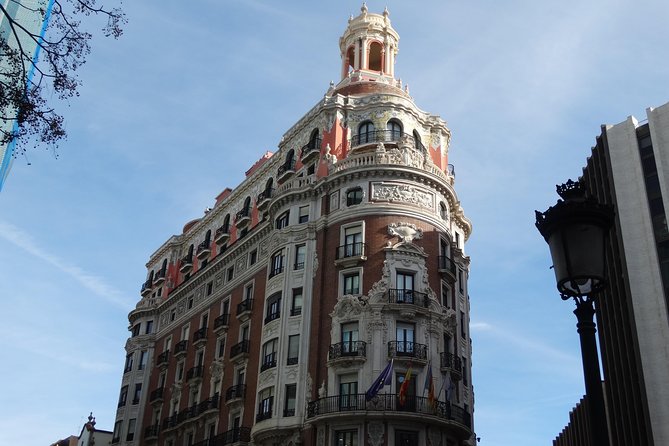
Next up is the Basilica de la Virgen de los Desamparados, and it’s one of the stops that’s both visual and emotionally grounded. You go inside to see the paintings that decorate its ceiling and the statue of the patron saint of the city.
This is a shorter stop (about 10 minutes), but it’s the kind of time crunch that works. The guide points your attention toward what matters, so you’re not just passing through. Ceiling paintings can be easy to miss if you don’t know where to look first, and the patron statue is a focal point that helps you understand why this building plays such a role in local identity.
Admission is listed as free for this stop, which makes it a nice payoff. You get a memorable interior moment without needing extra ticket planning.
Almoina Archaeological Center: seeing the first Roman city ruins right here
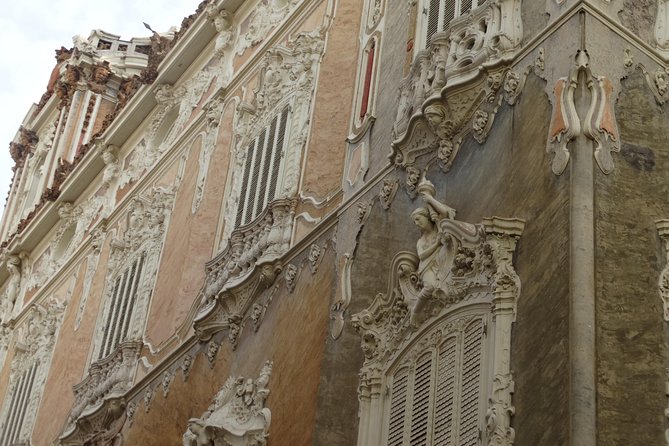
After the basilica, you head to the Almoina Archaeological Center, where you can observe the ruins of the first city of Roman origin that existed in this area.
This is another short stop (about 10 minutes), and again, admission isn’t included. The trade-off is that you’re getting the key context of what’s beneath the center without needing a whole separate visit. If you like history that’s physically present—not just in a distant museum—this stop hits a sweet spot.
The value in this step-by-step format is the connection-making. You’ve moved from medieval and civic Valencia into sacred spaces, and then you land on Roman remains. That sequence helps you feel the layers of the city rather than treating each monument as an isolated “stop.”
Santa Catalina Church and the Baroque tower moment
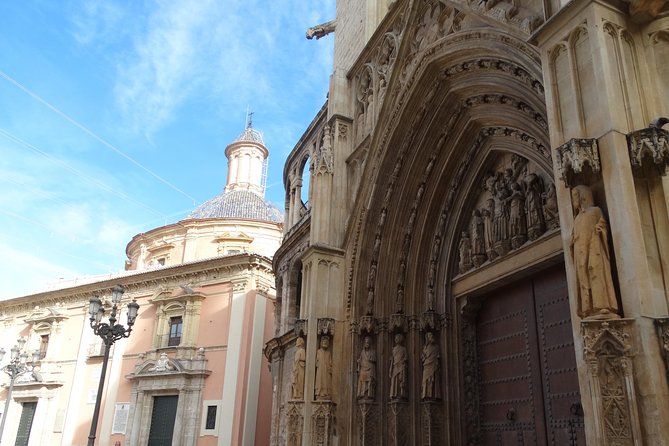
Then comes Santa Catalina Church (Iglesia de Santa Catalina). The highlight here is the Baroque tower, which opens onto the space to the most beautiful street in the city (as described in the tour framing).
You get about 15 minutes, with free admission for this stop. That “church plus viewpoint” style is often what people want on a walking tour: you get an interior or façade moment, then you’re treated to a street-level visual experience that makes the walk feel worthwhile.
If you’re traveling with limited time, this is the kind of stop that helps you remember the center as something you can picture, not just a set of named places.
Palacio del Marques de Dos Aguas: a 19th-century bourgeois snapshot
The tour includes Palacio del Marques de Dos Aguas, described as the only palace in its style and a representation of the bourgeoisie of the 19th century.
It’s about 15 minutes, and admission isn’t included. Still, even in a guided time window, it helps you balance the medieval and Roman focus with a later chapter of Valencia’s story. It gives the center a social texture—how wealth and status showed up in architecture.
This is a good moment to notice how different the palace feels compared to the religious buildings and the older civic structures. You get contrast, and contrast makes the city easier to understand.
The return to Ajuntament de Valencia: finishing with shopping street energy
You wrap up back near the starting area through the shops, with a chance to admire traditional regional costumes along the way. The tour returns to the same meeting point, so you don’t end the day feeling like you’re miles from where you started.
That final walk-through matters more than it sounds. After you’ve spent a couple of hours learning the city’s major landmarks, you’re ready to interpret smaller details. You’ll be able to spot what’s meaningful—street character, costume references, and the way the center feels alive while still historical.
Price and value: why $180.24 can make sense (or not)
At about $180.24 per person for roughly 2.5 hours, the ticket price isn’t “cheap,” but it can be good value if you care about guided explanation and included access.
Here’s what pushes the value up:
- It’s offered in English and designed to be engaging, not just a list of buildings.
- It’s a private experience for your group (so you’re not squeezed into a big crowd-style format).
- Some key entrances are included (notably Mercat Central de Valencia and La Lonja de la Seda), while other stops are free.
- A typical local drink is included at the market, which reduces extra spending and makes the experience feel complete.
Where you should be honest with yourself:
- Some major sites do not include admission (like the Valencia Cathedral and Almoina Archaeological Center). If you plan to spend longer inside those places, you’ll need extra budgeting on top of the tour price.
If you want a “great orientation + highlights in one go” plan and you’re okay with occasional extra entry fees, the pricing can work.
Who should book this Valencia Step By Step tour
This tour fits best if you:
- Want a guided, time-efficient way to cover Valencia’s historic center.
- Like when a guide connects buildings to stories, not just facts.
- Appreciate a route that mixes civic buildings, markets, medieval heritage, churches, and Roman ruins.
- Are traveling in a group that wants a private format rather than a big, mixed crowd.
It also suits people who want to keep moving without feeling rushed. The guide’s style is specifically praised for pacing that’s fast in the best way—around 2.5 hours, packed, but still explained clearly. If you’re asking questions and want photo help, Marcela’s approach is also noted for taking pictures on demand.
Should you book? My practical take
If your goal is to see a strong set of Valencia highlights in a single outing—and to understand what you’re looking at—this is an easy yes.
I’d skip or reconsider only if:
- You strongly prefer a tour where every entrance is fully included, no extra tickets needed.
- You want a slower, hours-long experience focused on one neighborhood.
- Weather is unstable during your dates. This tour requires good weather, and if it’s canceled due to poor weather, you’ll need flexibility for a different date or a full refund.
If you want a smart first visit to the center with a guide who keeps things lively and clear, Valencia Step By Step is built for that.
FAQ
How long is the Valencia Step By Step tour?
It runs for about 2 hours 30 minutes.
Where does the tour start?
The meeting point is Pl. de l’Ajuntament, 1, Ciutat Vella, 46002 València, Valencia, Spain.
Is it offered in English?
Yes, the tour is offered in English.
Is this a private tour?
Yes. Only your group participates.
What’s included in the price?
Some entrances are included (for example, Mercat Central de Valencia and La Lonja de la Seda), and a typical Valencia drink is included at the market.
Which stops require admission that isn’t included?
Valencia Cathedral, Almoina Archaeological Center, and Palacio del Marques de Dos Aguas are listed as admission not included.
Do you need a printed ticket?
No. You’ll use a mobile ticket.
Is the tour appropriate for most travelers?
The experience states that most travelers can participate.
Are service animals allowed?
Yes, service animals are allowed.
What if the weather is bad?
This experience requires good weather. If it’s canceled due to poor weather, you’ll be offered a different date or a full refund.
More Tour Reviews in Valencia
- Valencia: Oceanogràfic Entry Ticket★ 4.7 · 9,893 reviews
- Valencia: 24 or 48-Hour Hop-on Hop-off Bus Ticket★ 3.9 · 5,611 reviews
- Valencia: Sailing Catamaran Cruise with Sunset Option and DJ★ 4.1 · 4,270 reviews
- Valencia: Palosanto Flamenco Show Ticket★ 4.8 · 3,876 reviews
- Valencia Old Town Tour with Wine & Tapas in 11th Century Historic Monument★ 5.0 · 3,234 reviews