Reviewed · VALENCIA
Valencia Tour “Between Vice and Virtue”
One theme catches you fast: virtue and vice walk together here. I love how the tour uses Valencia Cathedral and the Llotja de la Seda (Silk Exchange) as two anchors for big ideas, and I love the guide’s storytelling style that makes symbolism feel practical, not stuffy. If you enjoy history that has moral tension in its teeth, this is a smart, highly focused way to see the historic core.
One thing to weigh: the “vice vs. virtue” angle is the main lens, so if you want only straightforward sightseeing with minimal interpretation, you may feel the commentary leans more philosophical than purely architectural.
In This Review
- Key things that make this tour worth your time
- Walking From Vice to Virtue in Valencia’s Historic Center
- Plaza de la Reina: Your Start Point Under the Miguelete
- Valencia Cathedral: Relics, Saints, and Art With a Message
- Basilica of the Virgen de los Desamparados: Patronage You Can Feel
- Plaça de la Verge and the Water Tribunal: Power in Plain Sight
- Calle de Navellos and the Borgia Palace: When Faith Gets Complicated
- Church of Santos Juanes: Legends and a City That Changes
- Llotja de la Seda (Silk Exchange): Wealth With Symbolic Boundaries
- Price and Time: What $35 Buys You in 2.5 Hours
- Language, Group Feel, and Comfort Tips That Actually Help
- Who This Tour Fits Best (and Who Might Skip It)
- Should You Book This Tour?
- FAQ
- What does the tour visit?
- How long is the tour?
- How much does it cost?
- Are admissions included?
- What languages is the guide available in?
- Where does the tour start?
- Is it possible to cancel?
- Is the tour wheelchair accessible?
Key things that make this tour worth your time
- A tight 2.5-hour route that hits the Cathedral and the Silk Exchange without wasting your day
- Vice-and-virtue readings of real spaces, from saints and relics to money and iconography
- Juan’s multilingual guiding (English, French, Spanish) and easy switching between languages
- Plazas and streets that connect power to people, including the Water Tribunal stop
- Inside access to both major monuments, with key admissions included
- A small-group feel in practice, including cases where the guide leads just two people
Walking From Vice to Virtue in Valencia’s Historic Center
Valencia has a way of showing its contradictions in stone. In this tour, you don’t just look at famous buildings—you learn how faith, commerce, and authority rubbed shoulders and sometimes fought. The setting matters: the historic quarter is made for slow walking, with tight streets, open plazas, and monuments that feel close enough to question.
The tour’s core idea is simple. You’ll move through places linked to religion and places linked to trade, then watch how symbols inside those spaces hint at human temptation and human self-control. That contrast is what makes the experience click. One minute you’re standing under sacred art and saints; the next you’re in a building that points to wealth, contracts, and the moral theater around money.
And yes, the guide matters. Juan—fluent in Spanish, English, and French—is known for being personable and accommodating, including adjusting explanations to the group in a light, humorous way. In one small-group experience, switching languages was no problem at all.
Before you settle on this one, set it against the Valencia tours our readers rate highest.


Plaza de la Reina: Your Start Point Under the Miguelete
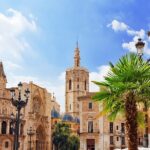
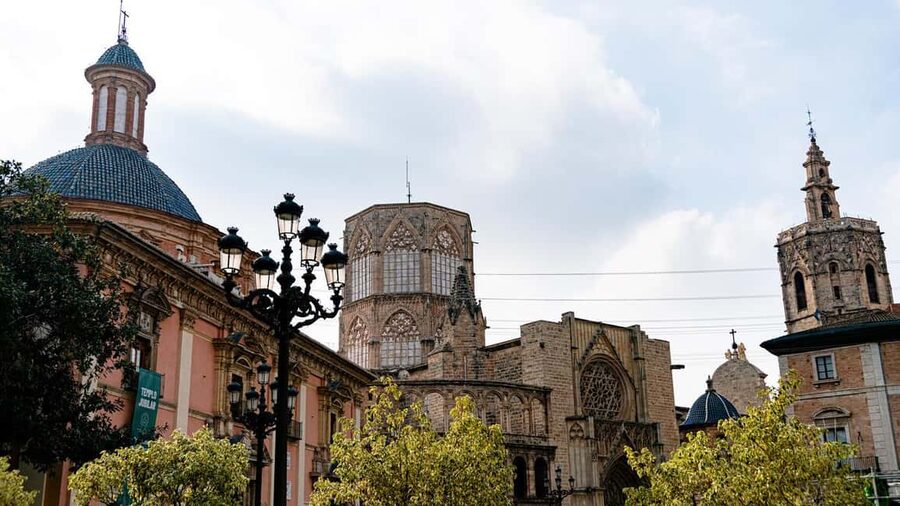
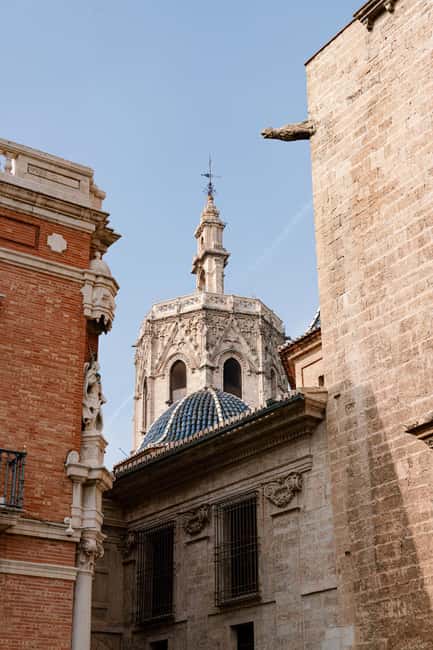
You begin at Plaza de la Reina, with a view that snaps your bearings into place. From here, you can line up the Cathedral with its bell tower, the Miguelete. Even if you’ve never been to Valencia, this first outlook helps you understand the geography: you’re walking toward major civic-religious power.
This is also a good spot to get your head around what the tour will do. Instead of treating the Cathedral as a standalone monument, you’ll learn to see it as part of a bigger system—devotion nearby, politics nearby, money nearby. The walking start sets expectations, so the rest of the stops feel connected rather than random.
Valencia Cathedral: Relics, Saints, and Art With a Message
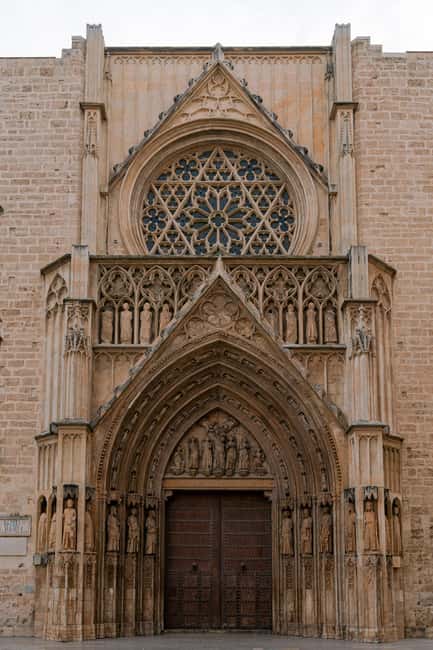
The Cathedral is the tour’s first big interior moment. You’ll visit with a guide and focus on what’s inside: relics, saints, and sacred art that shaped how people understood protection, punishment, and holiness over time. If you like religious art as more than decoration, this stop is strong. You’re not just looking for pretty details—you’re learning how meaning gets installed into everyday belief.
The guide’s approach tends to frame these items as stories people used. Saints and relics weren’t abstract ideas; they were part of how communities explained luck, illness, and moral behavior. That’s the “virtue” side of the tour: devotion presented as guidance.
One practical note: cathedrals often mean standing and slow looking. If you’re sensitive to long indoor pauses, pace yourself and take small breaks when you can. It’s worth it, but it’s not a quick-photo stop.
Basilica of the Virgen de los Desamparados: Patronage You Can Feel
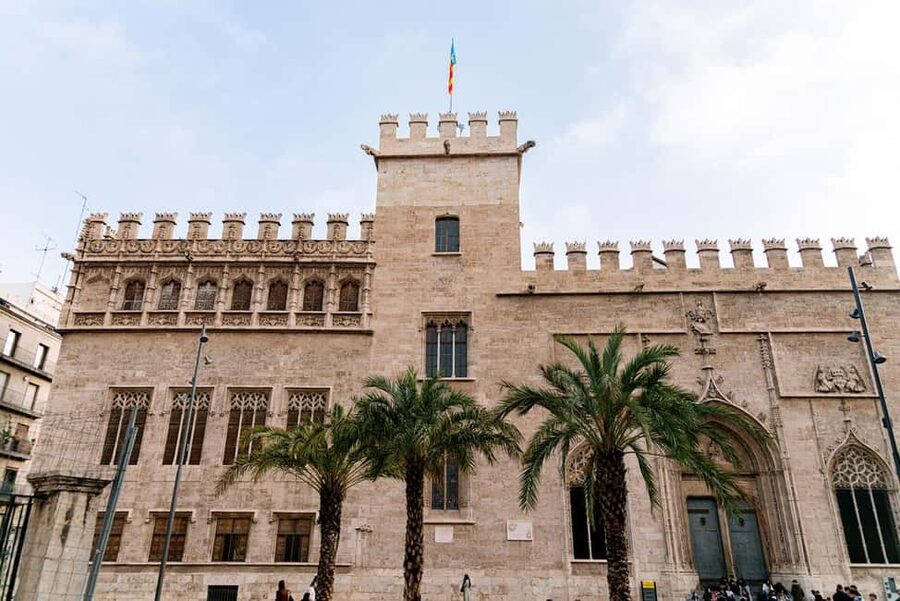
Next up is the Basilica of the Virgen de los Desamparados. This stop is about devotion around Valencia’s patron saint and the history of that relationship. Instead of only focusing on famous art, the tour centers on what the Basilica represented to ordinary people—faith as identity, not just ceremony.
What I like here is the way it balances the Cathedral. The Cathedral can feel like a grand stage for sacred symbolism. The Basilica stop brings you closer to the lived side of religion. You start to see how “virtue” didn’t stay inside churches. It moved through the streets and into civic life.
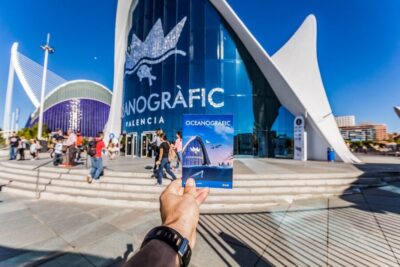
- Valencia: Oceanogràfic Entry Ticket
★ 4.7 · 9,893 reviews - Valencia: 24 or 48-Hour Hop-on Hop-off Bus Ticket
★ 3.9 · 5,611 reviews - Valencia: Sailing Catamaran Cruise with Sunset Option and DJ
★ 4.1 · 4,270 reviews - Valencia: Palosanto Flamenco Show Ticket
★ 4.8 · 3,876 reviews
Plaça de la Verge and the Water Tribunal: Power in Plain Sight
At Plaza de la Virgen (Plaça de la Verge), you’ll encounter the Water Tribunal, described as the oldest court in Europe. This is one of the most interesting moments on the tour because it breaks the usual mold of “church equals religion, business equals money.”
Here, governance and fairness show up in a very human way. The Water Tribunal is not a palace scene with dramatic speeches—it’s about how rules get enforced and how disputes get handled. That’s “power” without needing a crown.
It also supports the tour’s main theme. Markets and institutions grow where people negotiate control. You see how Valencia organized itself—how virtue was practiced through systems, not only through sermons.
Calle de Navellos and the Borgia Palace: When Faith Gets Complicated
Walking to Carrer de Navellos, you’ll get pointed explanations about the Borgia Palace and the role of the Inquisition in Valencia. This is where the tour turns more intense, using specific references tied to fear, authority, and the way moral judgment can become political judgment.
If you’re expecting only sweet saint stories, this is the moment that reminds you Valencia’s past included pressure and consequence. The tour doesn’t pretend history was simple. The “vice” side isn’t just temptation in daily life—it’s also the machinery of power that decided what was acceptable.
It’s also a great street-level lesson. These are not distant museum objects. You’re standing where social influence and institutional threats would have been felt.
Church of Santos Juanes: Legends and a City That Changes
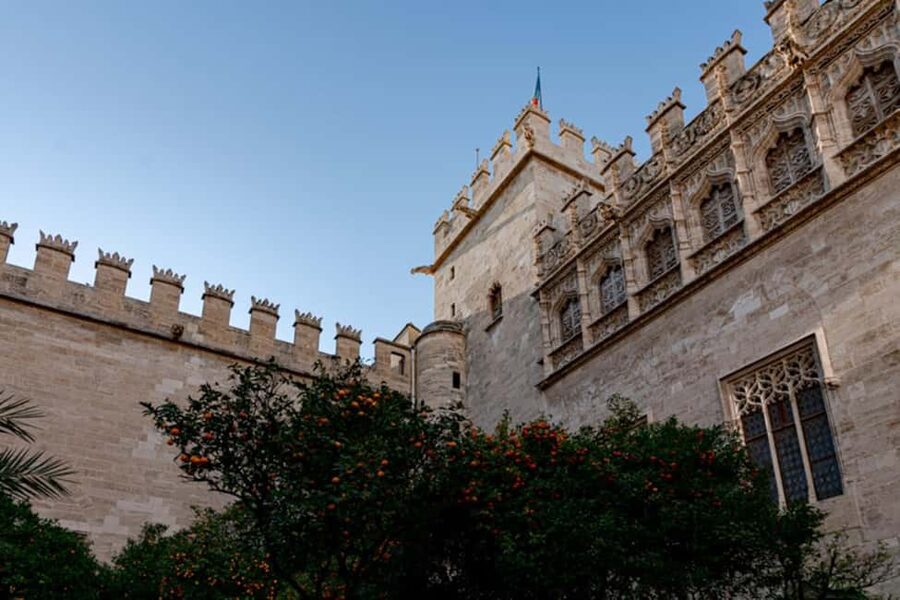
The Church of Santos Juanes is a guided stop with history and legends. This stop feels like a bridge between the heavier institutional themes and the trade-and-morality angle that comes next.
Santos Juanes also illustrates how Valencia’s spirituality evolved. The guide helps you read the building as a record of changing attitudes—what mattered, what people feared, and how communities used sacred spaces to make sense of their world.
If you like walking tours that make you notice how religious meaning adapts over time, you’ll appreciate this. If you’re here only for the biggest monuments, you might still find this one more thought-provoking than you expected.
Llotja de la Seda (Silk Exchange): Wealth With Symbolic Boundaries
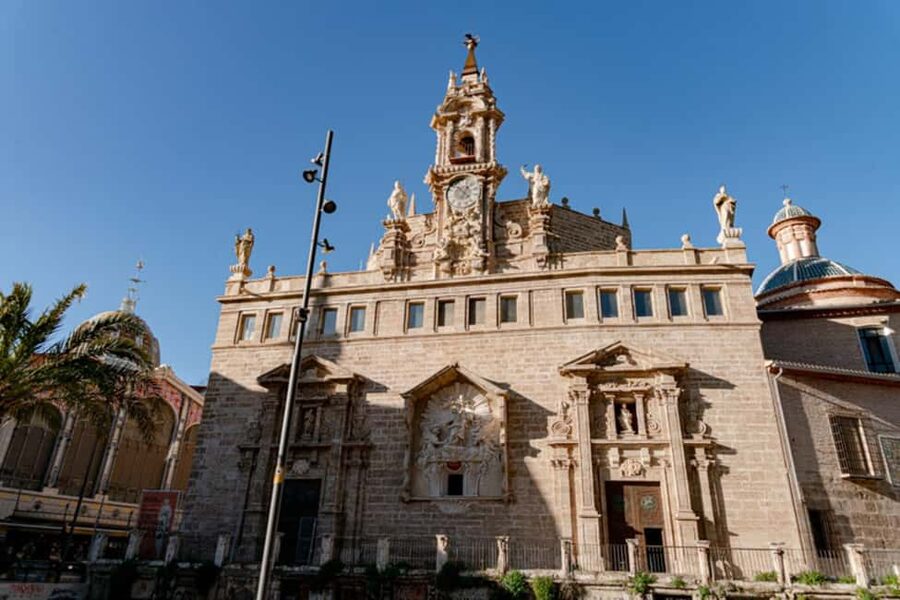
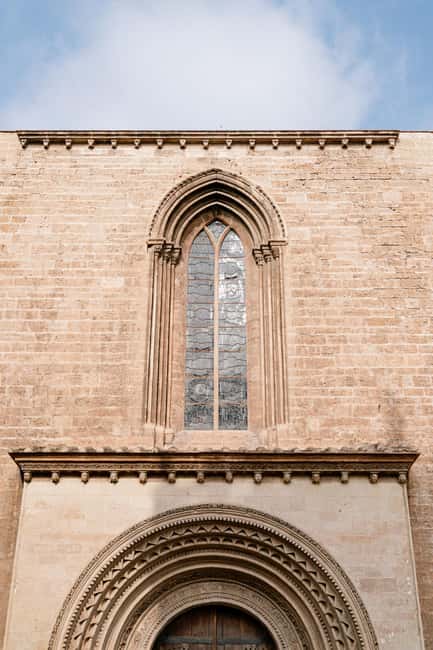
Finally, you reach the Silk Exchange, one of the most important monuments tied to Valencia’s economic splendor in the 15th century. You’ll enter for a guided visit, and the focus isn’t only on grandeur. The tour pays attention to hidden symbolism and the relationship between Christian morality and commercial power.
This is the “vice” section of the tour—not in a cartoon way, but as a real-world tension. Trade creates opportunities, status, and rivalry. It also invites people to rationalize desire. The guide connects the building’s iconography to moral stories that would have been understood in that era, showing how commerce tried to stay inside a moral framework.
I particularly like how this stop reframes the Silk Exchange. Many people see it as architecture or craftsmanship. Here, you see it as a statement: wealth wasn’t just earned—it was displayed, argued for, and morally interpreted.
Price and Time: What $35 Buys You in 2.5 Hours
At about $35 per person for a 2.5-hour guided experience, you’re paying for two things: guided interpretation and included admissions.
You get admission to:
- the Valencia Cathedral
- the Silk Exchange
- the Basilica of the Virgen de los Desamparados
That matters. If you were to plan this alone, you’d still spend money on entry tickets and time sorting out what to look for. Here, the value comes from having the guide help you read symbolism fast—so you don’t waste your limited time in the historic center guessing what you’re seeing.
The other part of the value is pacing. The route keeps the big stops close enough that you feel you’re moving through a single story, not hopping between unrelated landmarks.
Language, Group Feel, and Comfort Tips That Actually Help
The tour runs with a live guide in English, French, and Spanish, and Juan’s style is flexible—people can shift conversations between languages when needed. That’s great if you’re traveling with companions who don’t all speak the same language well.
The tour is also listed as wheelchair accessible, which is a big plus if mobility is a concern. Still, historic centers often mean uneven surfaces and changing terrain. Even with accessibility, I recommend dressing for lots of walking and wearing shoes you trust on old stone.
Timing-wise, you’re on the route for just 2.5 hours, so it’s a good fit when you want culture without surrendering your whole day.
Who This Tour Fits Best (and Who Might Skip It)
This tour is a strong match if you like:
- religious art and how symbols communicate
- the way economics shapes civic life
- guided explanations that connect streets and monuments
- a clear theme that gives your walking structure
It’s also ideal if you want two major monuments—Cathedral and Silk Exchange—without building a plan from scratch.
You might consider skipping if your priority is strictly “see and go” sightseeing. The vice-versus-virtue lens drives the interpretation. You’ll hear moral and political connections, not just dates and names.
Should You Book This Tour?
I’d book it if you want Valencia to feel like a connected story instead of a checklist. The Cathedral and the Silk Exchange are both worth your time on their own, but the value here is the guide’s framing: religion, commerce, and power in the same walk.
If you’re on a first visit and you enjoy thoughtful, human-scale explanations (especially from a guide who can switch languages smoothly), this tour is a practical win.
If you’d rather keep things lighter and purely scenic, you might feel the theme takes center stage. In that case, you could pair your day with a more relaxed “free walk” and choose a less interpretive monument visit.
FAQ
What does the tour visit?
The tour includes stops at Valencia Cathedral, the Basilica of the Virgen de los Desamparados, Plaza de la Virgen (with the Water Tribunal), Church of Santos Juanes, and the Llotja de la Seda (Silk Exchange).
How long is the tour?
It lasts 2.5 hours.
How much does it cost?
The price is $35 per person.
Are admissions included?
Yes. Admission to the Cathedral of Valencia and the Silk Exchange is included, along with the Basilica of the Virgen de los Desamparados.
What languages is the guide available in?
The live guide offers English, French, and Spanish.
Where does the tour start?
It starts at Plaza de la Reina.
Is it possible to cancel?
Yes, you can cancel up to 24 hours in advance for a full refund.
Is the tour wheelchair accessible?
The activity is listed as wheelchair accessible.
More Tour Reviews in Valencia
- Valencia: Oceanogràfic Entry Ticket★ 4.7 · 9,893 reviews
- Valencia: 24 or 48-Hour Hop-on Hop-off Bus Ticket★ 3.9 · 5,611 reviews
- Valencia: Sailing Catamaran Cruise with Sunset Option and DJ★ 4.1 · 4,270 reviews
- Valencia: Palosanto Flamenco Show Ticket★ 4.8 · 3,876 reviews
- Valencia Old Town Tour with Wine & Tapas in 11th Century Historic Monument★ 5.0 · 3,234 reviews