
Reviewed · VALENCIA TUK TUK TOURS
Valencia: Tuk tuk tour
Valencia is big, but this ride helps. This Valencia tuk tuk tour is a fast, open-air way to line up the city’s must-sees without burning your legs.
I like the mix of stops: medieval gates, a post–Spanish Civil War memorial gate, the flower-changing bridge, the football buzz at Mestalla, then straight into the modern worlds of the old port and the City of Arts and Sciences. I also like the human factor. Guides such as Tony, Salvador, Silvio, Francisco, and Sebastian come up often in feedback, and they tend to explain what you’re seeing while keeping things moving.
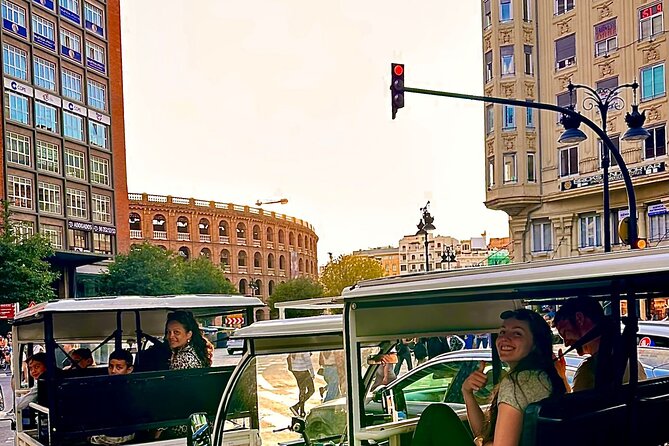
One thing to consider: the tuk tuk’s open design is great for looking forward, but it can make it harder to see details that require looking up, and traffic noise can sometimes cover the guide.
In This Review
- Key things to know before you go
- Price and logistics: what $32.44 really buys
- First views: Serrano Towers and the Sea Gate story
- The Puente de las Flores: plan around the flower timing
- Mestalla Stadium: football energy without the game-day chaos
- Old Port + Veles e Vents: where modern Valencia meets boats
- Beaches on the route: Malvarrosa and Las Arenas for your next stop
- City of Arts and Sciences: the fast way to see modern Valencia
- Mercado Central: shopping and a food-plan boost
- Bullring and Estación del Norte: two architecture stops for a short break
- Quart Towers: ending at another medieval gate
- Timing tips: avoid the heat, and don’t chase exact seconds
- What to expect from the tuk tuk itself
- So, should you book this Valencia tuk tuk tour?
- FAQ
- How long is the Valencia tuk tuk tour?
- What is the price per person?
- Where does the tour start?
- Does the tour end back at the meeting point?
- What languages are guides offered in?
- What’s included in the price?
- Is tipping included?
- How big is the group?
- Are service animals allowed?
- Can I cancel for free?
Key things to know before you go
- Small group feel (max 12): better odds you’ll get your questions answered without a crowd squeeze.
- Bottled water included: one less thing to carry, especially if you’re riding in summer heat.
- A tight route in 1–2 hours: you get an overview across old town, sea, and modern Valencia.
- Photo-friendly stops: multiple guides are praised for helping you capture the sights.
- Expect street-level viewing: great for monuments and arches; less perfect for rooftop angles.
- Pick a realistic time: midday heat in August is tough on walking, but evenings can still be loud with traffic.
Price and logistics: what $32.44 really buys
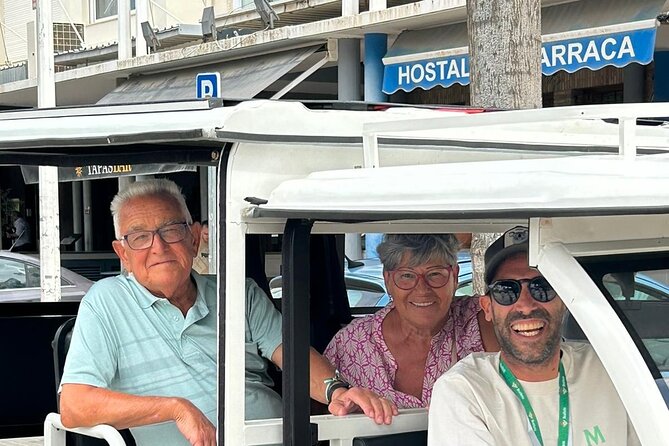
At $32.44 per person for roughly 1–2 hours, this is priced like an efficient “highlights pass.” You’re not paying for a deep, one-site museum experience. You’re paying to cover a lot of ground with minimal effort, plus an English-speaking guide and one bottled water per person.
That value makes sense in Valencia, where neighborhoods can feel far apart even when they’re not. The tuk tuk gets you between sightseeing clusters without the stop-start frustration of buses or finding parking. With a maximum of 12 travelers, you also tend to get more flexibility than you would on a larger bus tour.
Logistics are straightforward. The tour starts at C. de la Blanqueria, 3, Ciutat Vella (46003) and ends back at the same meeting point. It’s listed as near public transportation, which is useful if you’re combining it with other plans like lunch in El Carmen or a market stop.
Same tuk tuk pace, different Valencia circuits
First views: Serrano Towers and the Sea Gate story
The ride kicks off with one of Valencia’s most recognizable defensive silhouettes: the Serrano Towers. These are Gothic towers built as part of the medieval city walls between 1392 and 1398, created by architect Pere Balaguer. The design is simple and strong on purpose—think gatehouse, not decoration.
What I like here is the “why it matters” angle. You learn how the towers worked as a main defensive gate and also as an entrance for people arriving from the Serranos area (hence the name). Later on, you get the bonus: you can explore the interior and climb for city views, which turns architecture into a viewpoint.
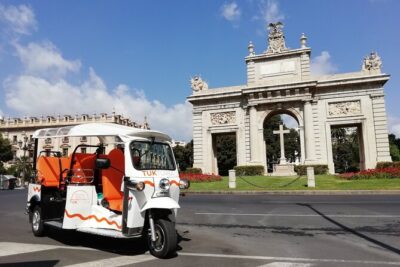
Then you move to the Sea Gate, which is easy to misunderstand at first glance because it looks ancient. It’s actually a modern reconstruction, rebuilt in 1946 to honor those who fell in the Spanish Civil War. White stone and three arches (with the central one largest) give it a clean, solemn feel—very different from medieval brick defense.
If you enjoy history that’s tied to place and meaning, these two stops give you a strong emotional range fast: medieval protection, then 20th-century memory.
The Puente de las Flores: plan around the flower timing
Next comes the bridge built to step over the Turia Gardens: the Puente de las Flores (opened in 2002). This one is famous because the floral installation changes every four months.
Here’s the practical catch: flower timing matters. The info you’ll get on the tour notes that the “current” month can be the least impressive time to see it, because September triggers another change. So if you’re coming right before or after a seasonal swap, you might see fewer flowers or a different look than what you expected from photos.
Still, the bridge is worth stopping for because it’s a quirky Valencia detail—more playful than the stone gates—and it helps you connect to the Turia Gardens area, which is central to how the city feels today.
Mestalla Stadium: football energy without the game-day chaos
You’ll also pass by Mestalla, home of Valencia CF and one of Spain’s emblematic stadiums. It opened in 1923, seats about 50,000, and was designed by Santiago Calatrava.
The key idea is atmosphere. Mestalla is known for its steep stands, which bring fans close to the pitch. Even if you’re not a hardcore football fan, it’s a clear example of how architecture can shape crowd energy.
One note for expectations: you’re not going inside for a full stadium tour based on the information you’re given. You’re here for context, a visual stop, and the human angle of why locals care about the place.
- Valencia: Oceanogràfic Entry Ticket
★ 4.7 · 9,893 reviews - Valencia: 24 or 48-Hour Hop-on Hop-off Bus Ticket
★ 3.9 · 5,611 reviews - Valencia: Sailing Catamaran Cruise with Sunset Option and DJ
★ 4.1 · 4,270 reviews - Valencia: Palosanto Flamenco Show Ticket
★ 4.8 · 3,876 reviews
Old Port + Veles e Vents: where modern Valencia meets boats
The tour then turns toward the old port, described as covering about one million square meters and packed with activity. This is where Valencia mixes culture, innovation, business, and food, and you can feel it in the density of things happening.
A highlight is Veles e Vents, known for its distinctive architecture. It hosts exhibitions, dance events, and other arts programming. Then you’ll hear about the Tinglados and old shipyard area—an engine of maritime life.
What makes this stop useful is that it’s not just “pretty docks.” The port also functions with sports clubs and federations, plus service companies for activities like sailing, diving, and kayaking. If you want to understand how Valencia uses its coastline beyond beaches, this is a strong checkpoint.
Beaches on the route: Malvarrosa and Las Arenas for your next stop

Valencia’s coastline is part of why it works as a vacation. You’ll hit two beach areas that locals treat like everyday spaces, not just postcard backdrops.
First is the most famous beach in Valencia, where fine golden sand meets easy access to the city. In the mid–19th century, it shifted from a flower area to the beach you recognize today. It also gets plenty of restaurants and entertainment around it, and some spots can turn into nightlife zones, such as Marina Beach Club.
Then you move to the beach called Las Arenas, named after the old fishing quarter. Locals still call the area Las Arenas, linked to an old spa that’s now a luxury hotel complex.
Practical tip: this is a great segment if you’re thinking ahead. Even if you don’t stop long, you’ll learn where to return later for lunch, a stroll, or a sunset walk. Just remember: the tuk tuk timing is tight, so treat the beach view like a taste, not the whole meal.
City of Arts and Sciences: the fast way to see modern Valencia
If medieval gates make you happy, you’ll still enjoy this pivot. The City of Arts and Sciences is the big modern spectacle, designed by Santiago Calatrava and Félix Candela. Construction began in 1996 and finished in 2009, with the stated goal of refreshing Valencia into a cultural, scientific, and leisure center.
Even if your time is limited, you get a strong orientation here. The complex is built to feel like you’re inside a sci-fi set, but the practical value is that you can compare the architecture styles quickly: dramatic forms, bold engineering, and the way the space functions as both a civic project and an attraction.
If you’re the type who likes to map cities mentally, this stop helps you connect dots between Valencia’s old walls and its modern ambition.
Mercado Central: shopping and a food-plan boost
Back on the more everyday side of city life, you’ll reach the Central Market of Valencia. This one opened in 1928 and is known as one of the oldest and most vibrant markets in Spain, with modernist architecture.
The building was designed to replace an older market square and provide a functional space for fresh, local produce. Look for the iron and glass dome, colorful ceramics, and decorative details. The best value here is the “you can use this right away” factor: once you’ve seen it from the outside, you can plan your lunch or snack strategy with more confidence.
The market is also near other major attractions like La Lonja and Plaza del Ayuntamiento, which helps if you’re trying to chain things together efficiently on foot afterward.
Bullring and Estación del Norte: two architecture stops for a short break
Two more stops give you a break from the big modern spectacle and bring you back into Valencia’s design story.
The Bullring opened in 1859. It’s a prominent example of neoclassical architecture, designed by Sebastian Monleon. It seats around 10,000, and the circular brick structure includes Doric columns, inspired by the Roman Colosseum. These days, it’s also used for cultural events and concerts, so the space has shifted from sport to broader public use.
Next is Estación del Norte, a modernist railway station opened in 1917, designed by Demetrio Ribes. It features colorful ceramics and regional tilework. The lobby and waiting area are described as an elegant indoor space, and some people connect the vibe to film-like set design.
For practical travelers, these two stops are ideal if you like to understand a city without committing to long entry lines. You get architecture, scale, and a sense of how Valencia expresses itself in public buildings.
Quart Towers: ending at another medieval gate
The route finishes with the Quart Towers, medieval city gates built between 1441 and 1460. They were part of the defensive wall, positioned on the road toward Quart, the path connecting Valencia with the west and north.
The structure is robust and defensive: two cylindrical towers linked by a wall and a large arch, built in brick with Gothic elements. They were damaged during the War of Independence and restored in the 19th century.
This ending works well because it bookends your experience. Early on you saw the Serrano Towers and Sea Gate, and now you close with another gateway built for defense. It gives your quick overview route a sense of narrative.
Timing tips: avoid the heat, and don’t chase exact seconds
A lot depends on when you ride. The tour info itself says the time is 1–2 hours, but real life in Valencia includes traffic and sudden street changes.
If you’re visiting in hot summer months, you’ll be happier if you choose a morning or late evening slot rather than the hardest midday heat. The tuk tuk helps you avoid a long walk, but you’re still outdoors, and the ride is open-air.
Also, give yourself a little buffer at the meeting point. Some feedback highlights that finding the exact spot can be tricky if you’re cutting it close. Since the tour starts at C. de la Blanqueria, 3, I’d treat it like an appointment: arrive early enough to check your location once, not twice while stressed.
What to expect from the tuk tuk itself
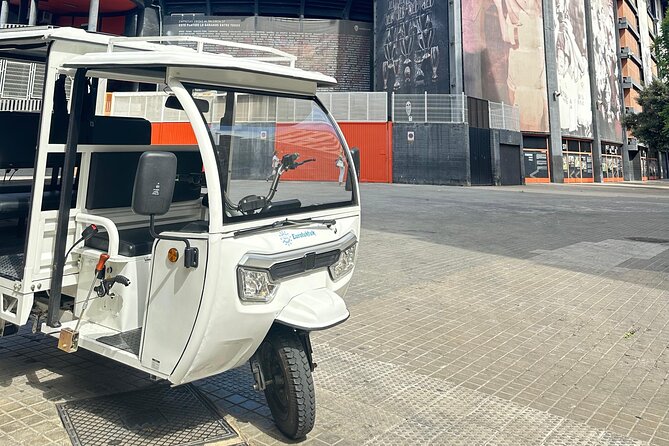
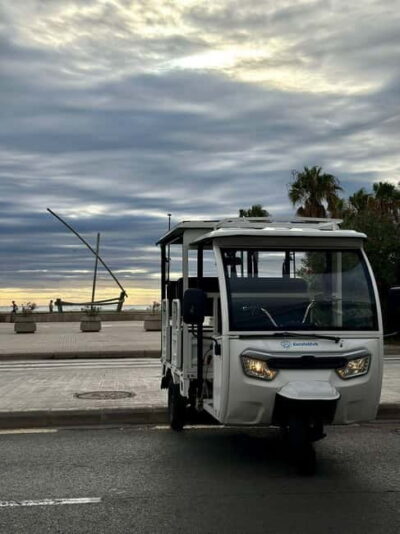
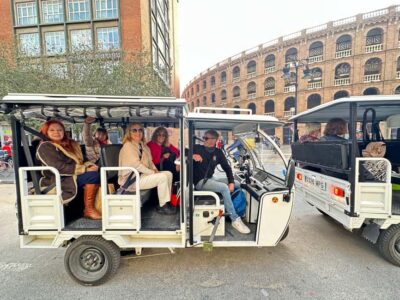
The vehicle style matters here. The open structure makes it easy to enjoy views at street level. That’s a big part of why this works as a highlights tour.
The trade-off is visibility up high. The coverage design means tall buildings or rooftops might be partially obscured, and traffic noise can make hearing harder at times. If you have big expectations for skyline photos, set them for street-level moments and monument faces, not far-top details.
If you’re traveling in a group, note that a tour size cap still doesn’t mean everyone rides in the same exact vehicle. The information you’ll be given includes safety capacity per tuk tuk, so you should expect the tour to possibly split into different tuk tuks while keeping the same overall route.
So, should you book this Valencia tuk tuk tour?
I’d book it if you want a practical overview in a short window—especially if you’re on a 4-day break or you want to see old walls, sea areas, and modern Valencia without building a complex itinerary.
I wouldn’t book it if your goal is deep time at one site. This is about getting your bearings fast, then helping you decide what to return to on foot (or with a separate ticketed plan).
If you do book, my strongest advice is simple: pick a time that avoids peak heat, bring a light layer if the day feels cool or windy, and arrive early enough to find C. de la Blanqueria, 3 without rushing. Then sit back, enjoy the quick story arc from towers to beaches to sci-fi architecture, and use the ride to plan your next hours in Valencia.
FAQ
How long is the Valencia tuk tuk tour?
It runs about 1 to 2 hours.
What is the price per person?
The price is $32.44 per person.
Where does the tour start?
The meeting point is C. de la Blanqueria, 3, Ciutat Vella, 46003 València, Valencia, Spain.
Does the tour end back at the meeting point?
Yes, it ends back at the meeting point.
What languages are guides offered in?
The guide is offered in English (and also Spanish, Portuguese, Italian, and German).
What’s included in the price?
You get bottled water, with 1 bottle per person.
Is tipping included?
No, tip is not included.
How big is the group?
The tour has a maximum of 12 travelers.
Are service animals allowed?
Yes, service animals are allowed.
Can I cancel for free?
Yes. You can cancel up to 24 hours in advance for a full refund.
More Tour Reviews in Valencia
- Valencia: Oceanogràfic Entry Ticket★ 4.7 · 9,893 reviews
- Valencia: 24 or 48-Hour Hop-on Hop-off Bus Ticket★ 3.9 · 5,611 reviews
- Valencia: Sailing Catamaran Cruise with Sunset Option and DJ★ 4.1 · 4,270 reviews
- Valencia: Palosanto Flamenco Show Ticket★ 4.8 · 3,876 reviews
- Valencia Old Town Tour with Wine & Tapas in 11th Century Historic Monument★ 5.0 · 3,234 reviews
Tuk Tuks, Route by Route
- Valencia: Complete Tuk-Tuk Tour Around the City★ 4.8 · 793 reviews
- Valencia: Full 2-Hour Tuk Tuk Tour★ 4.7 · 733 reviews
- Valencia Complete Tour by Tuk Tuk★ 4.5 · 593 reviews
- Valencia: 2-hour City Highlights Guided Tour by Tuk Tuk★ 4.5 · 388 reviews
- Valencia: 1-hour Historical Tour in a Tuk Tuk★ 4.8 · 95 reviews
The newest Valencia reviews on our desk





Valencia Tuk Tuk Tours, compared.
 ★ 4.8Complete Tuk-Tuk Tour Around the CityFrom $47793 reviews
 ★ 4.7Full 2-Hour Tuk Tuk Tour733 reviews
 ★ 4.5Valencia Complete Tour by Tuk TukFrom $48593 reviews
 ★ 4.52-hour City Highlights Guided Tour by Tuk TukFrom $47388 reviews
 ★ 4.81-hour Historical Tour in a Tuk Tuk95 reviews
 ★ 4.8Tuk Tuk City TourFrom $4472 reviews
 ★ 4.91-hour Private Tuk Tuk TourFrom $2960 reviews
 ★ 4.5Tuk Tuk Full City TourFrom $4756 reviews
Browse the lists this tour appears in