
Reviewed · VALENCIA WALKING TOURS
Valencia guided tours – walking tours –
One walk, five big Valencia landmarks. This guided route strings together standout sights in a tight 3–4 hour stroll, with an insider who helps you connect the dots without getting stuck on a map. You can also choose a start time that fits your day, and you’ll move at a pace your group can handle. You get a pro guide and you’re focused on what to look at rather than just where to go.
What I like most is the way the tour pairs serious architecture with everyday city life. The North Railway Station feels like a time capsule of modernist design, and the Mercat Central turns food shopping into a visual treat with its glass-and-metal look. I also appreciate that the itinerary can flex based on what you care about, so you’re not trapped in a rigid script.
The main thing to plan for: some key sites have tickets you’ll pay separately (like La Lonja de la Seda and Cathedral entry). That’s not a deal-breaker, but it’s worth budgeting and checking what you want to enter versus view from outside.
In This Review
- Key points before you go
- Why this Valencia walking tour works in real life
- Meeting at Pl. de l’Ajuntament: getting started without stress
- Stop 1: Valencia North Station and modernist design details
- Plaza Redonda: the Round Square’s long market legacy
- La Lonja de la Seda: Gothic trade power and the Contract Hall
- Mercat Central de Valencia: a modernist market with a parrot weathercock
- Valencia Cathedral and the Miguelete tower: what to expect
- Pace control: why customization matters on a walking tour
- Price and value: what $216.26 per group really buys
- Who should book this tour (and who might skip it)
- Should you book this Valencia guided walking tour?
- FAQ
- How long is the Valencia walking tour?
- How much does the tour cost?
- Is the tour offered in English?
- Are tickets included for all stops?
- Can we enter the Valencia Cathedral during the tour?
- Is pickup available?
- Is this tour wheelchair accessible?
Key points before you go
- Insider pacing: You can adjust the rhythm and itinerary to match your group.
- Architecture + daily life: From modernist stations to markets, you see Valencia in full context.
- Small private group: Your group of up to 15 stays together (not a crowded big-bus vibe).
- Tickets aren’t fully included: Several stops include sights, but not all entrances.
- Thursday Cathedral bonus: The Water Tribunal is tied to Thursday at 12:00 (if you’re there at the right time).
Why this Valencia walking tour works in real life
Valencia is a city where the street corners matter. This tour leans into that by keeping you moving on foot and teaching you how to read what you’re seeing—materials, styles, and the city’s commercial muscle. Instead of dumping facts and hoping you remember them, the guide helps you notice the details as you pass them.
It’s also built for planning ease. You’ll pick a start time that matches your schedule, and the tour runs about 3–4 hours. At $216.26 per group (up to 15 people), the cost can make sense if you’re traveling with friends or family rather than booking a solo option and hoping the group rate still feels fair.
One more practical plus: it’s offered in English, with a mobile ticket, and pickup is available if you coordinate. The meeting point is Pl. de l’Ajuntament in Ciutat Vella, so you’re starting in the city center where it’s easiest to get oriented.
Walkers who read this review also pulled up these Valencia routes
Meeting at Pl. de l’Ajuntament: getting started without stress
The tour starts and ends at Pl. de l’Ajuntamemt, 1 (Ciutat Vella). That’s a smart choice because it’s central and walkable, and it helps you avoid that common travel headache: “Where do we actually meet?”
Pickup is offered but needs agreement with the client, so if you’re coming from the train station or your hotel isn’t close, message ahead. Since the tour is near public transportation, you shouldn’t have trouble getting there, even if your timing is a little messy.
Because it’s a private tour, you’re not squeezed into someone else’s schedule. That matters with a walking route. I’d plan on comfortable shoes and a light layer—Valencia weather can shift, and you’ll be outside for multiple stops.
Stop 1: Valencia North Station and modernist design details
Your first big moment is Valencia Station North, a preserved example of railway architecture in Spain. It uses a Secession Modernist style, inaugurated in 1917 by architect Demetrio Ribes.
What I’d watch for here is the regional pride baked into the building. The design was meant to integrate products from Valencia’s industries—things like forges, ironwork, wood, ceramics, bronze, and stone—so the station doesn’t just move people. It advertises identity.
The stop is about 15 minutes, and an admission ticket is included, so you’re not just passing by the façade. If you’ve ever walked into a station and wondered why it feels like a palace, this is where the answer lives.
Plaza Redonda: the Round Square’s long market legacy
Next you’ll reach Plaza Redonda, also called the Round Square. It was built between 1839 and 1856, originally to regulate street selling. In other words, this isn’t random décor. It’s city planning done with style.
The space is made of three-story symmetrical buildings wrapped around a central pool of still water and a fountain. The fountain is noted as one of the first drinking water fountains in Valencia, which helps you understand why this kind of square mattered beyond shopping.
The tour keeps this stop to about 10 minutes, with admission included. It’s also a good moment to slow down, check what local shops are selling, and reset before the heavier architectural sites. If you’re picking up small ceramics or textiles, this is one of the places where you’ll see those goods up close.
Other Valencia outings that earned a spot in our notes
- Valencia: City Walking Tour with Top Attractions – ITALIAN
★ 4.9 · 242 reviews - Discover Valencia: Guided Walking Tour
★ 4.9 · 211 reviews - Valencia Private Walking Tour with Official Valencian Guide
★ 5.0 · 176 reviews - The 10 Tastings of Valencia With Locals: Private Food Walking Tour
★ 4.5 · 119 reviews
La Lonja de la Seda: Gothic trade power and the Contract Hall
Then comes La Lonja de la Seda (the Silk Exchange), one of Valencia’s most iconic monuments. It’s famous for Gothic civil architecture and was built for commercial transactions during the city’s late 15th-century prosperity.
This stop is around 25 minutes, but the big caution is that admission is not included. So if you care about fully entering the monument, plan on buying that ticket separately.
The highlight is the Hall of Pillars, also known as the Contract Hall. It features 24 helicoidal columns—spiral-like columns that reference ship ropes or twisted silk. The idea is clever: Valencia’s business world is translated into the building’s structure. In 1996, it was declared a World Heritage monument, which tells you this is more than local bragging rights.
If you like architecture that makes economic history feel physical, this is usually the stop people remember most.
Mercat Central de Valencia: a modernist market with a parrot weathercock

After trading history, you’ll get daily-life energy at Mercat Central de Valencia. The market’s modernist building was constructed between 1914 and 1928, and it’s huge—over 8,000 square meters—with nearly 400 stalls.
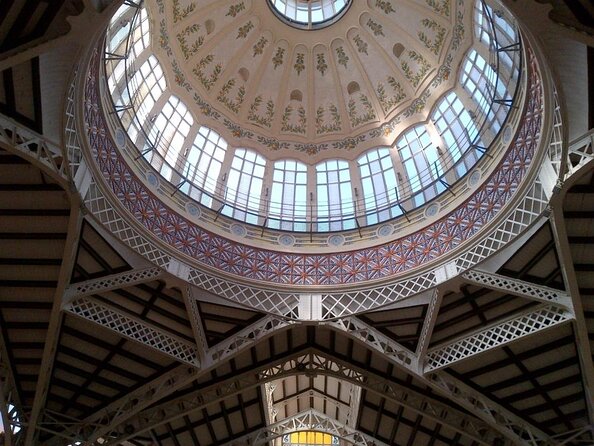
What makes it special isn’t only what you can buy. It’s the building itself: glass and metal used in a way that feels almost theatrical. The central dome is topped with a weathercock shaped like a parrot, which is such a specific detail it’s hard to forget once you notice it.
This stop is about 15 minutes with admission included. That short time works well because you don’t get forced into a shopping errand—you get the visual hit first, and you can linger after the tour if you want.
If you’re sensitive to crowds or want fewer choices under pressure, come with a quick plan: even a 10-minute window can be enough to see the market vibe and grab one small edible souvenir.
Valencia Cathedral and the Miguelete tower: what to expect
Your last major stop is Valencia Cathedral, a site with layered uses. The cathedral was built on the spot of a Roman temple and later a mosque, with its construction dating back to the 13th century. That mix explains why you’ll see different architectural styles across the doors—Romanesque, Gothic, and Baroque influences.
The tour information focuses on understanding the cathedral’s story from outside, and the guide can tailor the level of entry: entrance is at the request of the client. Admission is not included, so you’ll want to decide ahead of time if climbing or entering is worth the extra time and ticket cost for your group.
Here’s what to watch for outside:
- The main Puerta de los Hierros is Baroque.
- The Puerta de los Apóstoles is Gothic.
- The third, Puerta del Palau, is Romanesque.
Two extra bits that make the cathedral stop feel more alive:
- The Holy Grail Chapel is noted as housing the chalice used by Jesus Christ at the Last Supper.
- Every Thursday at 12:00, the Water Tribunal takes place, and it’s been in existence since 960 without a break, based on oral law governing water use in Valencia’s fertile fields.
If you’re keen on views, the Miguelete belfry is a major payoff. It’s reached by climbing 207 steps, and you get city views from the top—just remember that ticketing and stamina are separate decisions.
The tour gives you about 25 minutes here, so you can absorb the big picture even if you choose not to enter.
Pace control: why customization matters on a walking tour
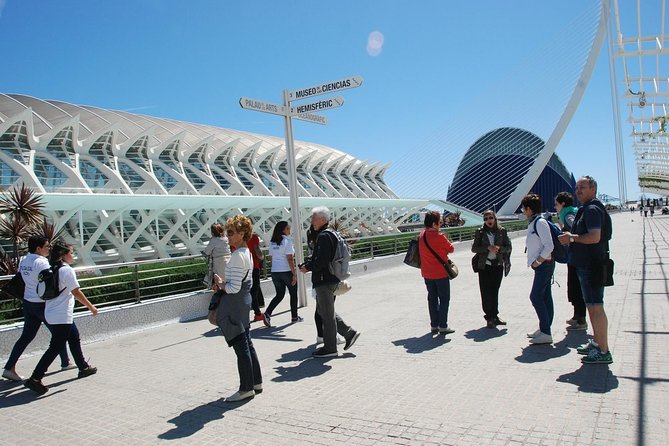
A walking tour lives or dies on pacing. This one is designed so your guide can adjust to your group’s interests, and that’s a big deal when you have mixed travelers—someone who loves buildings, someone who wants photos, and someone who just wants to get to lunch.
In practice, pacing flexibility means you can spend a little more time on the architectural details that catch your eye, or you can shorten a stop if your group is ready to move on. It also means questions don’t feel like interruptions; they fit into the flow.
Two guides named in the provided experience notes—Dalia and Ángela—were praised for knowledge, responsiveness, and adjusting pickup points so people didn’t get lost. If you’re the type who hates arriving late or figuring out meeting spots on your own, that responsiveness is worth its weight in gold.
Price and value: what $216.26 per group really buys
Let’s talk value without hand-waving.
You pay $216.26 per group, for up to 15 people, with a duration of about 3–4 hours. That can be a good deal if you’re splitting costs with friends or family. A private setup also means you’re not stuck with a random group tempo.
What you get included:
- A professional guide
- Sights at several stops where admission is indicated as included (like North Station, Plaza Redonda, and Mercat Central)
What you should expect to pay separately:
- La Lonja de la Seda admission
- Valencia Cathedral admission (entrance is at request)
So the real financial equation is simple: if you want to enter La Lonja and the cathedral, budget for extra ticket costs. If you’re fine viewing the cathedral from outside and prioritize architecture plus market atmosphere, you can keep spend under control.
One more value point: the tour is often booked about 30 days in advance, so if your travel dates are fixed, don’t wait too long.
Who should book this tour (and who might skip it)
This tour fits best if you:
- Want a guided walkthrough of major Valencia sights without sorting details yourself
- Like architecture and city planning (stations, squares, exchange buildings, cathedrals)
- Prefer a private experience over crowd herding
- Have limited time and still want the “big five” highlights on foot
You might consider another option if you:
- Absolutely need all entrances included in the price
- Have very limited mobility and don’t want any walking (this is generally “most travelers can participate,” but walking is core here)
- Are only interested in modern art or beach time and won’t care about old-city monuments
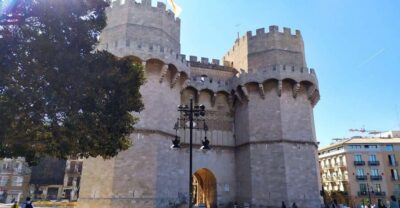
There’s also a small accessibility note: only the Serranos Gates is mentioned as not accessible to wheelchair users, and it isn’t included anyway since you’ll see it from outside.
Should you book this Valencia guided walking tour?
If you want an efficient, high-impact introduction to Valencia’s old center, I’d book it. The combination of North Station, Plaza Redonda, La Lonja, Mercat Central, and Valencia Cathedral gives you a full-spectrum view: industry, commerce, daily life, and sacred architecture—linked by an actual guide instead of a loose self-guided route.
The only serious reason to hesitate is the ticket math. Since La Lonja and cathedral admission are not included, decide early whether your group wants to enter or just look from outside. Once you’re clear on that, the rest is straightforward: good pacing, private-group attention, and a route that makes the city easier to understand fast.
If you’re traveling in a group of up to 15, it can also be one of the better ways to get a guided experience without paying premium solo rates.
FAQ
How long is the Valencia walking tour?
It runs about 3 to 4 hours.
How much does the tour cost?
The price is $216.26 per group, up to 15 people.
Is the tour offered in English?
Yes, it’s offered in English.
Are tickets included for all stops?
No. Admission is included for some stops (like the North Railway Station, Plaza Redonda, and Mercat Central), but not included for others such as La Lonja de la Seda and the Valencia Cathedral.
Can we enter the Valencia Cathedral during the tour?
Entrance to the cathedral is at the request of the client. Admission is not included.
Is pickup available?
Pickup is offered, but the pickup details are to be agreed with the client.
Is this tour wheelchair accessible?
The information provided notes that only the Serranos Gates is not accessible to wheelchair users, but it’s not included and can be seen from outside. The tour itself is otherwise described as suitable for most travelers.
More Walking Tours in Valencia
- Valencia: Essentials and World Heritages Sites Walking Tour★ 4.7 · 684 reviews
- Valencia: Historical Walking Tour★ 4.6 · 390 reviews
- Valencia: Private Walking Tour with a Local★ 4.8 · 298 reviews
- Valencia: City Walking Tour with Top Attractions – ITALIAN★ 4.9 · 242 reviews
- Discover Valencia: Guided Walking Tour★ 4.9 · 211 reviews
More Tour Reviews in Valencia
- Valencia: Oceanogràfic Entry Ticket★ 4.7 · 9,893 reviews
- Valencia: 24 or 48-Hour Hop-on Hop-off Bus Ticket★ 3.9 · 5,611 reviews
- Valencia: Sailing Catamaran Cruise with Sunset Option and DJ★ 4.1 · 4,270 reviews
- Valencia: Palosanto Flamenco Show Ticket★ 4.8 · 3,876 reviews
- Valencia Old Town Tour with Wine & Tapas in 11th Century Historic Monument★ 5.0 · 3,234 reviews
Valencia at Walking Pace
- Valencia: Essentials and World Heritages Sites Walking Tour★ 4.7 · 684 reviews
- Valencia: Historical Walking Tour★ 4.6 · 390 reviews
- Valencia: Private Walking Tour with a Local★ 4.8 · 298 reviews
- Valencia: City Walking Tour with Top Attractions – ITALIAN★ 4.9 · 242 reviews
- Discover Valencia: Guided Walking Tour★ 4.9 · 211 reviews
The newest Valencia reviews on our desk





Valencia Walking Tours, compared.
 ★ 4.7Essentials and World Heritages Sites Walking TourFrom $21684 reviews
 ★ 4.6Historical Walking TourFrom $17390 reviews
 ★ 4.8Private Walking Tour with a LocalFrom $56298 reviews
 ★ 4.9City Walking Tour with Top Attractions – ITALIANFrom $17242 reviews
 ★ 4.9Discover Valencia: Guided Walking TourFrom $18211 reviews
 ★ 5.0Valencia Private Walking Tour with Official Valencian GuideFrom $127176 reviews
 ★ 4.5The 10 Tastings of Valencia With Locals: Private Food Walking TourFrom $152119 reviews
 ★ 4.6Fallas Festival Walking Tour with Entry TicketFrom $4686 reviews
Browse the lists this tour appears in