
Reviewed · OCEANOGRàFIC, BIOPARC & MUSEUMS
Valencia Romana and Visigoth. Almoina and Crypt Museum included.
Roman Valencia is still hiding in plain sight. This tour is a tight, story-driven route that moves from Torres dels Serranos and the Roman port story to the Visigoth layers beneath San Vicente Mártir. I especially like the way Paulino turns street corners and stone blocks into believable scenes, and I like that Almoina gives you actual building remains instead of just photos and names. One drawback: the format is brisk, so if you want to linger in the museum, plan to come back on your own afterward.
You’ll cover major anchors of Roman Valencia in about two hours, finishing near the cathedral at Plaça de la Reina. It’s built for small groups (up to 12) and runs in English, with a mobile ticket to keep things simple. Also helpful: each stop includes admission to the archaeological sites you’ll visit.
In This Review
- Key Highlights You’ll Actually Notice
- Walking the Roman City’s Spine: From Serranos to the Cathedral Area
- Torres dels Serranos: Pre-Roman Valencia Before the Romans Take Over
- Pont dels Serrans: The Roman Port and Maritime Traffic Clues
- Puente de la Trinidad: The Oldest Bridge Logic You Can See
- Plaza del Virgen: The Roman City Center, From Republic to Empire
- Almoina Archaeological Museum: Roman Public Buildings and Their Social Jobs
- San Vicente Mártir Crypt: Visigoth Chapel and the Christian Turn
- Plaça de la Reina: Roman Valencia’s Limits and Demographics
- Price and Value: About $30 for Guided Roman and Visigoth Stops
- The Practical Stuff That Makes This Tour Easier
- Who Should Book This Roman and Visigoth Tour
- Should You Book It?
- FAQ
- How long is the tour?
- What language is the tour offered in?
- Do I need a printed ticket?
- How large is the group?
- Where does the tour start and end?
- Are museum or archaeological site entrances included?
- What’s included in the price?
- Are alcoholic beverages included?
- What is the cancellation policy?
Key Highlights You’ll Actually Notice
- Paulino’s storytelling makes Roman engineering and Visigoth faith changes feel human, not academic
- Almoina Archaeological Museum shows Roman public buildings and explains what each one did
- Three bridges (Serranos, Trinidad, and the way they connect) give you a practical sense of ancient Valencia
- San Vicente Mártir Archaeological Crypt focuses on the shift from pagan religion to Christianity
- Small group size (max 12) helps you ask questions and keep the pace comfortable
Walking the Roman City’s Spine: From Serranos to the Cathedral Area
What makes this tour work is the shape of the route. You start at the Torres dels Serranos, then walk across and along the city’s historic river-and-port zone, and gradually move toward the Roman center. By the time you finish in Plaça de la Reina in front of Valencia’s cathedral area, you have a mental map of where Roman life likely concentrated—and where it stopped.
This isn’t a slow “read every plaque” experience. It’s more like guided street theater with evidence. The guide points out what you’re looking at, then supplies the story that makes the remains make sense. That’s why the bridges matter so much here: they aren’t just scenic stops. They’re physical links between how Valencia moved people, goods, and ships long before you arrived.
The pacing is also pretty fair for a first-timer. Short outside stops get you oriented, then the plan shifts indoors for Almoina and the archaeological crypt where you can see the layers up close.
Sharks, gorillas or optical tricks: other Valencia tickets we compared
Torres dels Serranos: Pre-Roman Valencia Before the Romans Take Over
You begin just outside the Torres dels Serranos, and the first minutes are about what Valencia looked like shortly before Roman arrival. This helps you avoid the common mistake of treating the Roman story as if it appeared from nowhere. You get a quick baseline so the later discussion of Roman change lands with weight.
This is a great early stop because it’s close to where modern Valencia still funnels foot traffic through the old city. You’re not walking miles to start learning; you’re learning as you walk. Also, because the stop is around 10 minutes, it’s long enough to set context but not so long that you’re bored before the good stuff begins.
Tip for your brain: think of the guide’s intro as your “camera focus.” Once it clicks, everything you see afterward—ports, bridges, public buildings—feels connected instead of random sightseeing.
Pont dels Serrans: The Roman Port and Maritime Traffic Clues
Next comes the Pont dels Serrans, where the guide explains the Roman port Valencia had and how maritime traffic worked. This is the stop that often surprises people, because you might not automatically picture Roman Valencia as a ship-and-trade city when you’re standing on a modern bridge.
You’ll get the sense that water transport wasn’t a side detail. It was part of how the city grew and how supplies moved. That makes the surrounding streets and public spaces feel more logical later in the tour, especially when the route reaches the civic center.
This stop is also short—about 10 minutes—so it’s not meant to replace a full port history lecture. It’s meant to give you a working idea you can carry to the rest of the landmarks.
Puente de la Trinidad: The Oldest Bridge Logic You Can See
Then you’re at the Puente de la Trinidad, described as the oldest bridge in Valencia and largely following the Roman construction model. That’s a big deal for a walking tour: you’re not only hearing about Roman engineering. You’re standing where the engineering still shapes the city.
In practical terms, bridges are information. They show where the city needed a crossing, how people likely traveled, and how design choices can echo for centuries. When the guide talks about the Romans here, it’s not abstract. The bridge gives you a concrete reference point.
This is another 10-minute segment, which keeps the tour flowing. The goal is to keep you from zoning out. You get enough time to absorb the “Roman model” idea, then move on before your attention wanders.
- Valencia: Oceanogràfic Entry Ticket
★ 4.7 · 9,893 reviews - Valencia: 24 or 48-Hour Hop-on Hop-off Bus Ticket
★ 3.9 · 5,611 reviews - Valencia: Sailing Catamaran Cruise with Sunset Option and DJ
★ 4.1 · 4,270 reviews - Valencia: Palosanto Flamenco Show Ticket
★ 4.8 · 3,876 reviews
Plaza del Virgen: The Roman City Center, From Republic to Empire
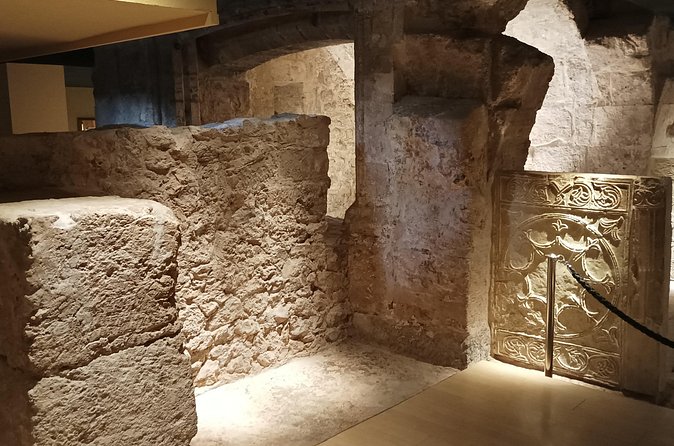
At Plaza del Virgen, the tour shifts into the heart of the Roman city story. You’ll hear about the center of Roman Valencia and the historical events that took place from the Republican era to the Imperial era.
This stop matters because it ties together the earlier engineering talk with civic life. Ports and bridges explain movement—markets, buildings, and religious shifts explain why people stayed. The plaza setting also helps you visualize a center that was likely busy, political, and central to identity.
The time here is longer—about 30 minutes—so you get room for the guide’s explanation without it feeling like a rush. If you like history that has dates but also has location-based meaning, this is where you’ll feel the most payoff.
Almoina Archaeological Museum: Roman Public Buildings and Their Social Jobs
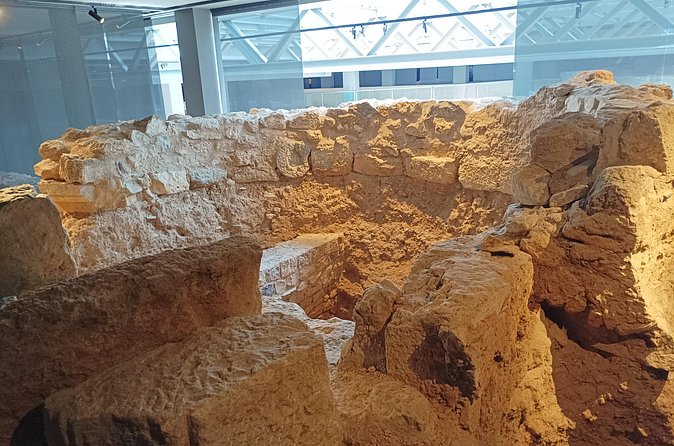
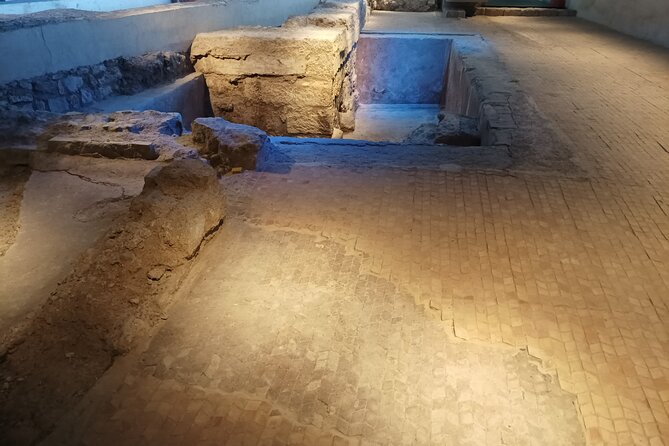
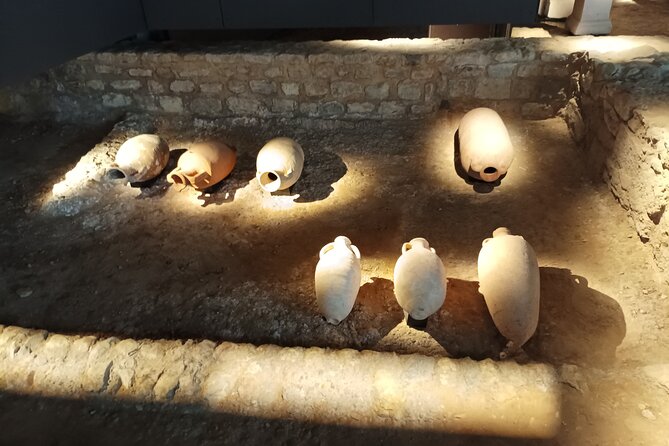
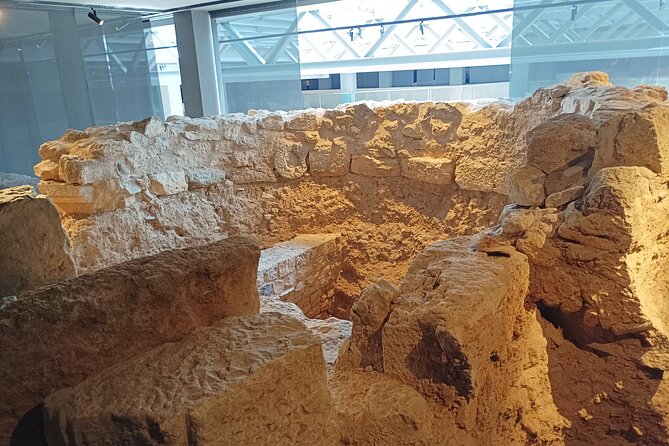
La Almoina Archaeological Museum is the main museum moment, and it’s one of the best uses of time on the route. You’ll visit archaeological remains of the Roman public buildings, and the guide explains the social function of each one.
That “social function” detail is the difference between a museum that only shows rocks and a museum that teaches you how daily life might have worked. Instead of treating public buildings as just impressive ruins, you learn what they likely did for community life—who would use them and why they mattered.
You’ll have about 30 minutes inside. That’s enough time to see the highlights and understand the big picture, but not so long that you get numb from information. If you’re the type who loves museum labels and wants to read every corner, you might wish the visit were longer. But as part of a two-hour walking tour, it’s a sensible chunk.
Also, museum entrance is included, which makes the price feel more honest. You’re paying for a guided circuit where you don’t keep pulling out your wallet for separate tickets.
San Vicente Mártir Crypt: Visigoth Chapel and the Christian Turn
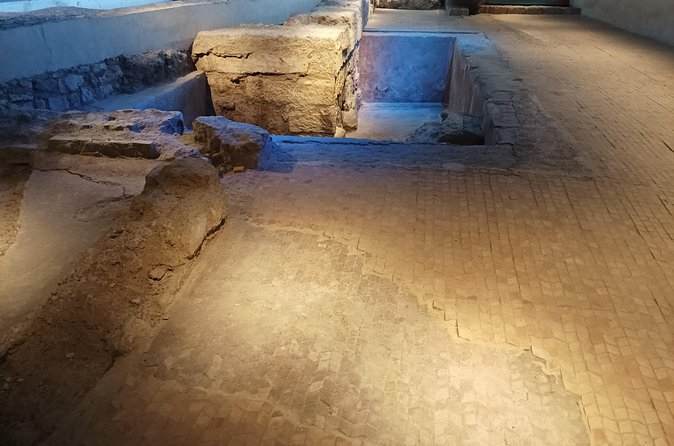
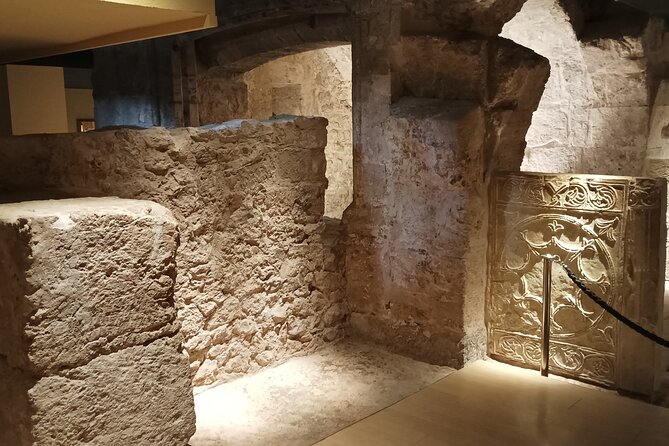
Next is the Cripta Arqueologica de San Vicente Mártir, tied to the Visigoth period. Here you visit the remains of a chapel connected to the Christian basilica and dedicated to the city’s patron saint. The guide also explains the change from a pagan religion to Christianity.
This is the stop that adds depth and contrast. Romans built infrastructure and civic patterns; Visigoths and later Christian practice reshaped belief and worship. When the guide frames this as a change in religion rather than just a timeline marker, it gives you a clearer sense of what people’s lives might have felt like.
The crypt visit is shorter—about 15 minutes—but that works well for underground spaces. Too long and the experience turns heavy. This amount of time helps you absorb the key idea: religion changes leave physical traces, and you can still read those traces if someone points you in the right direction.
Plaça de la Reina: Roman Valencia’s Limits and Demographics
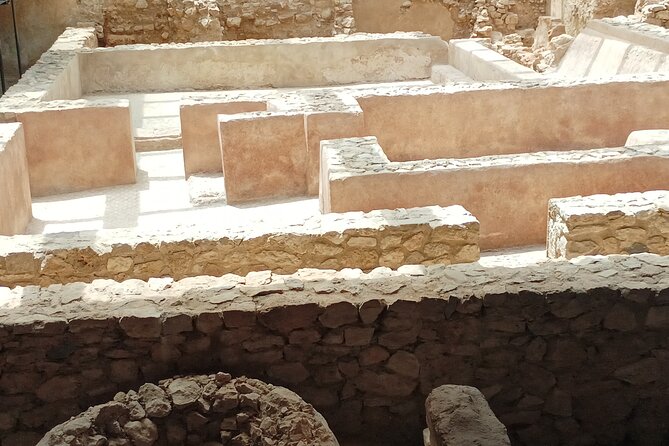
You finish in Plaça de la Reina, where the guide explains the rest of Roman Valencia’s urban layout—its city limits and demographics. This is a smart ending because it turns the tour from a list of monuments into an understanding of a whole city.
City limits are what most people never think about. You’ll hear how the Roman city’s boundaries shaped who lived where and how dense life was in different areas. Demographics are mentioned as part of that big picture, which helps you stop imagining Roman Valencia as only one kind of person living in one kind of space.
This is the final 15 minutes, and it’s meant to be a “wrap your head around it” stop. By the time you’re done, you should be able to look at the map of Old Valencia and feel how the Roman city likely sat inside it.
Price and Value: About $30 for Guided Roman and Visigoth Stops
At around $30.23 per person for about 2 hours, this is priced like a budget-friendly orientation tour—especially because entrance to the archaeological museums is included. You’re not paying for a pure walking lecture where you just stand outside and look at walls. You get indoor time at Almoina and the crypt.
Small group size (up to 12) also matters here. For this kind of dense history, a bigger group can mean you don’t hear the details, and you don’t get questions answered. With fewer people, the guide can keep the pace tight without steamrolling anyone who wants to linger on one concept.
Two more value points: it’s English, and it uses a mobile ticket, so you’re not wasting time on complicated paper check-ins.
If you’re deciding between doing this and trying to DIY a Roman-ruins day, the guided part is the value. Roman sites can look like stone and shadows if you don’t have a framework. Here, you get that framework fast.
The Practical Stuff That Makes This Tour Easier
The tour runs in English and uses a mobile ticket, which is simple on a busy travel schedule. It’s near public transportation, so you’re not forced into a long walk just to start. Also, the duration is about two hours, which makes it a good slot on a day when you want more than one activity.
One timing note: it’s commonly booked around 60 days in advance on average, so if your travel dates are set, don’t treat it like a last-minute gamble.
Who Should Book This Roman and Visigoth Tour
This fits best if you like:
- seeing Roman remains in context, not just taking pictures
- guides who explain why a place mattered socially, not only when it happened
- a compact route that gives you a working mental map fast
It may be less ideal if you want a slow, read-every-label museum afternoon. This tour is built to keep momentum, and each stop is timed to deliver the main ideas without dragging.
It also suits people who want a guided history walk through Old Valencia but still want to get back out into the city with energy.
Should You Book It?
Yes, I think you should—if you want a smart, guided introduction to Roman and Visigoth Valencia in a short window. The strongest reason is the balance: outside architecture and bridges explain movement, while Almoina and the San Vicente Mártir crypt give you the physical evidence of public life and religious change.
One more reason: the tour is led by Paulino, and the feedback style around the guide is very consistent—storytelling that makes the past feel like it’s acting right in front of you. If that’s your style of history, you’ll likely enjoy this a lot.
Book it when you want clear orientation, included museum access, and a route that doesn’t waste your time.
FAQ
How long is the tour?
It runs for about 2 hours.
What language is the tour offered in?
The tour is offered in English.
Do I need a printed ticket?
No. You’ll use a mobile ticket.
How large is the group?
The tour has a maximum of 12 travelers.
Where does the tour start and end?
It starts at Torres de Serranos (C. de la Blanqueria, 1, Ciutat Vella) and ends at Plaça de la Reina, in front of the cathedral.
Are museum or archaeological site entrances included?
Yes. Entrance to the archaeological museums (and the included admission at stops) is part of the tour.
What’s included in the price?
All fees and taxes are included. Admission to archaeological museums is included as well.
Are alcoholic beverages included?
No. Alcoholic beverages are not included.
What is the cancellation policy?
You can cancel for a full refund up to 24 hours before the experience starts. Cancellation within 24 hours of the start time isn’t refunded.
More Tour Reviews in Valencia
- Valencia: Oceanogràfic Entry Ticket★ 4.7 · 9,893 reviews
- Valencia: 24 or 48-Hour Hop-on Hop-off Bus Ticket★ 3.9 · 5,611 reviews
- Valencia: Sailing Catamaran Cruise with Sunset Option and DJ★ 4.1 · 4,270 reviews
- Valencia: Palosanto Flamenco Show Ticket★ 4.8 · 3,876 reviews
- Valencia Old Town Tour with Wine & Tapas in 11th Century Historic Monument★ 5.0 · 3,234 reviews
Oceanografic, Bioparc and the Museum Shelf
- Valencia: Oceanogràfic Entry Ticket★ 4.7 · 9,893 reviews
- Valencia: Oceanogràfic, Hemisfèric & Science Museum Combo★ 4.4 · 2,959 reviews
- Valencia: Bioparc Valencia Admission Ticket★ 4.8 · 1,841 reviews
- Valencia: Principe Felipe Science Museum Entry Ticket★ 4.3 · 1,039 reviews
- Valencia: San Nicolas, Silk Museum and Santos Juanes Church★ 4.3 · 391 reviews
The newest Valencia reviews on our desk




Oceanogràfic, Bioparc & Museums, compared.
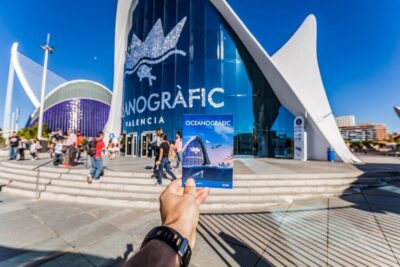 ★ 4.7Oceanogràfic Entry TicketFrom $449,893 reviews
 ★ 4.4Oceanogràfic, Hemisfèric & Science Museum ComboFrom $542,959 reviews
 ★ 4.8Bioparc Valencia Admission TicketFrom $351,841 reviews
 ★ 4.3Principe Felipe Science Museum Entry TicketFrom $111,039 reviews
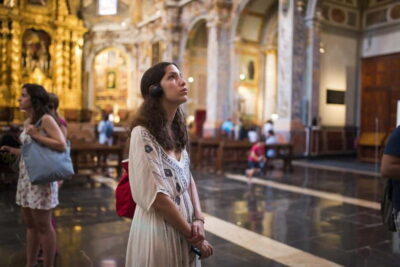 ★ 4.3San Nicolas, Silk Museum and Santos Juanes ChurchFrom $17391 reviews
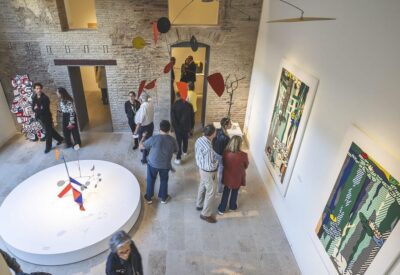 ★ 4.6Hortensia Herrero Art Center Ticket or Guided TourFrom $14151 reviews
 ★ 4.5Your Ticket to the Museum of IllusionsFrom $17149 reviews
 ★ 3.7Museo Iluziona Entry Ticket With Optional VRFrom $1483 reviews
Browse the lists this tour appears in