
Reviewed · VALENCIA WALKING TOURS
Walking in Valencia
A walk like this turns Valencia into a story you can actually see. This route strings together major landmarks in a smooth loop of Art Nouveau, Gothic details, and the Belle Époque look of the early 1900s—plus the Turia river thread that explains why the city developed the way it did. It runs as a private, guided experience in English, starting near Estació del Nord and ending at Mercado de Colón.
I especially liked how the tour builds momentum fast: you start at Estació del Nord and quickly move into the center, so you don’t feel stuck waiting around. I also like that most stops include admission tickets, which makes it more than just a photo walk and helps you spend time looking at real things, not only facades.
One possible drawback: the pacing can feel a bit stop-and-chat heavy. One review noted that the gaps between stories sometimes felt long, so if you hate slow moments, bring patience (or come with a question ready).
In This Review
- Quick highlights worth knowing
- From Estació del Nord to the first mosaic hits
- Town Hall Square: Belle Époque details you can spot quickly
- Central Market and the Art Nouveau core
- Plaza Redonda: the oldest round “mall” idea in town
- Plaça de la Reina: Cathedral area symbols in one tight circle
- Serranos Towers: Gothic style plus the Turia river lesson
- Palacio del Marquès de Dos Aguas: the façade you won’t forget
- Mercado Colón: an Art Nouveau ending with horchata
- How Enrique makes the tour feel smooth
- Duration, ticket style, and what to expect from the structure
- Who this walking tour is best for
- Should you book Walking in Valencia?
- FAQ
- FAQ
- What is the duration of the Walking in Valencia tour?
- Where does the tour start and end?
- Is the tour in English?
- Is this tour private?
- Do I need to print tickets?
- Are admission tickets included during the stops?
- Where are the main stops on the route?
- Is the tour suitable for most people?
- What happens if the weather is bad?
- Can I cancel and get a refund?
Quick highlights worth knowing
- Estació del Nord mosaics right at the start, so you get the visual hook early
- Belle Époque buildings around Town Hall Square that tie directly to Valencia’s modernization
- Central Market (opened 1928) with Art Nouveau impact plus a Silk Market connection
- Plaza Redonda: a renewed round building where you can still sense old-school craft
- Serranos Towers and the Turia storyline that makes the river feel like more than a map fact
- Colón Market horchata moment at the end, with a classic meet-up vibe
From Estació del Nord to the first mosaic hits
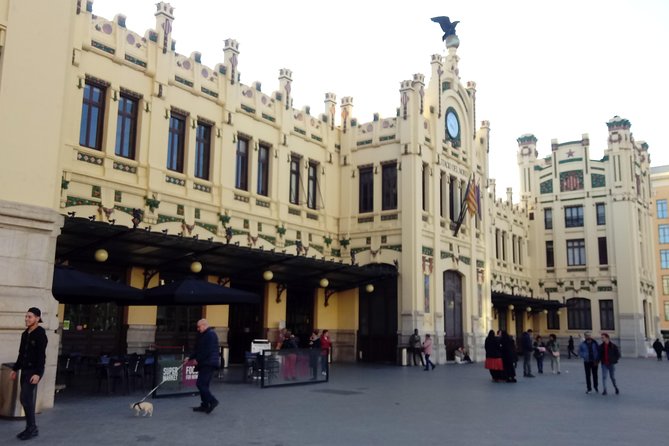
Your tour starts near València-Estació del Nord (Carrer d’Alacant, 25). If you think of stations as only transit, this stop changes that. You’ll see the train station and spot the mosaic pictures that make it feel like part of Valencia’s public art scene, not just infrastructure.
This first segment is valuable because it sets the tone. You’re not wandering aimlessly trying to decide what to look at. You get a guided eye right away, which helps you understand what makes Valencia’s architecture worth slowing down for—especially when the tour shifts toward the Old Town.
Tip: arrive a few minutes early. Since the tour starts at 5:00 pm, you’ll also catch nicer light for photos before the evening rush.
Walkers who read this review also pulled up these Valencia routes
Town Hall Square: Belle Époque details you can spot quickly
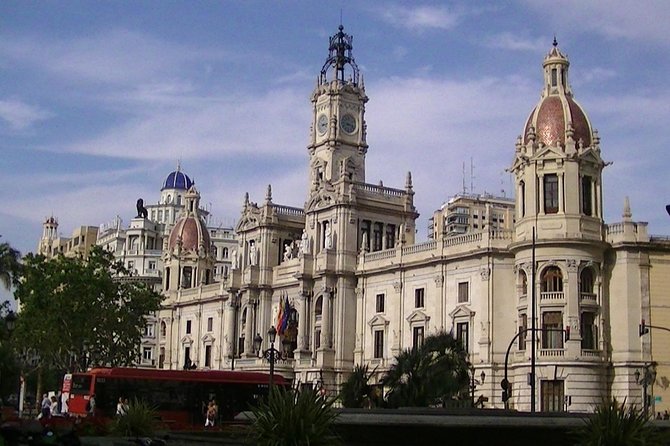
Next comes Placa del Ajuntament, where Valencia’s Town Hall Square atmosphere turns formal and elegant. You’ll also see the Post Office building here, both showing the city’s Belle Époque look from the early 20th century.
Why this stop works: it gives you a transition between eras. Valencia isn’t only medieval street magic or one style of building. This area helps you notice how the city presented itself during a period of growth—especially when you compare these buildings to what you’ll see later, closer to the Cathedral zone and towers.
The tour keeps this stop short (around 5 minutes), so it’s more about identifying key features than getting lost in one square. If you want extra time, you can circle back on your own afterward once you know what to look for.
Central Market and the Art Nouveau core
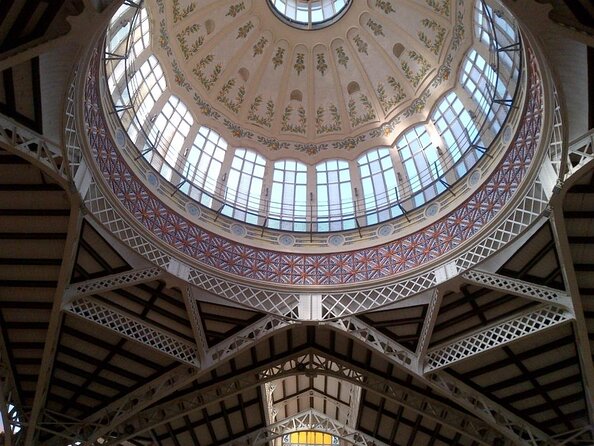
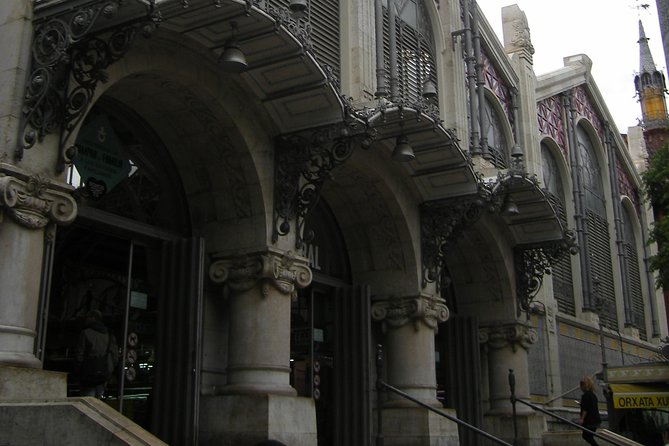
Then you’re in the center at Mercat Central de Valencia, an Art Nouveau building that opened in 1928. Even if you’ve only got a few minutes, this is the stop where Valencia’s design gets loud in a good way.
You’ll also hear about the diamond of Valencia concept (the market’s setting within the city’s core) and you’ll get the connection to older commercial power: the Silk Market from the 15th century. That pairing matters. It shows how Valencia’s economy and identity weren’t just about one period—they layered over time.
Practical note: markets can be busy. Since this is a walking tour with limited time per stop, expect a guided glance-and-understand rhythm rather than an extended market shopping spree. If you want to linger later, plan a follow-up visit on a different day.
Plaza Redonda: the oldest round “mall” idea in town
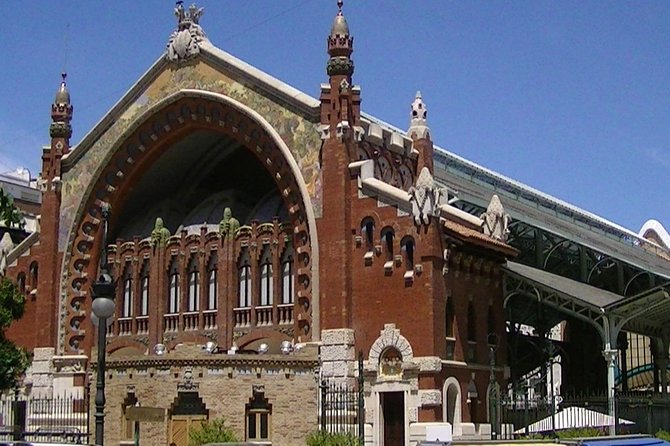
Next is Plaza Redonda, described as Valencia’s first and oldest mall, the Round Square. The building has been renewed, but the important part is the feel: the shops still offer handwork in the spirit of what’s been there for around a century.
This stop is quick, but it’s memorable because it’s functional history. You’re not just looking at a monument. You’re looking at a commercial building type that still serves people today, which makes the architecture feel less like a museum and more like a real part of city life.
If you like crafts, this is where you’ll probably want to slow down just a bit. Even in a guided timeline, you can often catch enough to decide whether something is worth buying.
Other Valencia outings that earned a spot in our notes
- Valencia: City Walking Tour with Top Attractions – ITALIAN
★ 4.9 · 242 reviews - Discover Valencia: Guided Walking Tour
★ 4.9 · 211 reviews - Valencia Private Walking Tour with Official Valencian Guide
★ 5.0 · 176 reviews - The 10 Tastings of Valencia With Locals: Private Food Walking Tour
★ 4.5 · 119 reviews
Plaça de la Reina: Cathedral area symbols in one tight circle
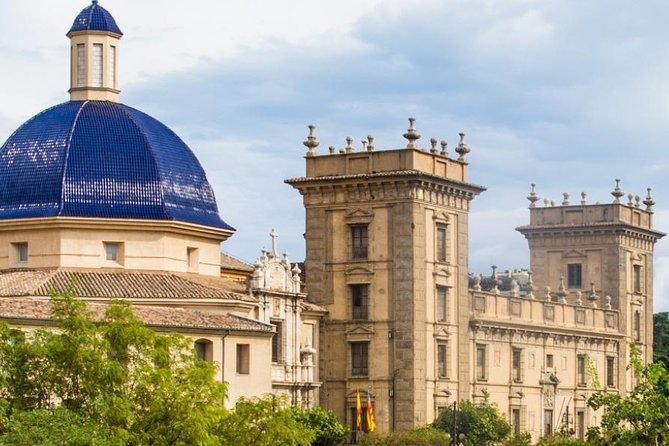
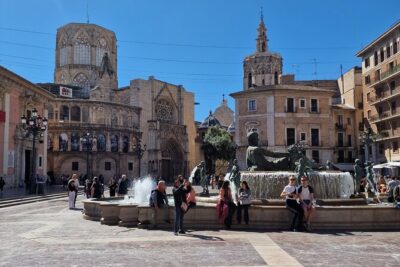
At Placa de la Reina, the tour zeroes in on the symbols of Valencia’s Old Town: the Cathedral, the Micalet Tower, and the Virgin Square. This is one of those areas where it helps to have a guide because the landmarks are close together, but the stories aren’t obvious just by staring up.
You’ll spend about 10 minutes here, which is just enough time to understand what you’re looking at and why it matters. This stop is also a good moment to pause and take in the scale. The Cathedral complex and the tower are the kind of things that shift your perspective—suddenly you understand why so many older cities grew upward and outward around religious and civic centers.
Small strategy: if you want photos, position yourself quickly before the group moves on. The tour keeps moving, and you’ll miss your best angles if you’re indecisive.
Serranos Towers: Gothic style plus the Turia river lesson
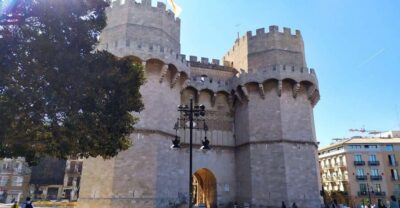
After walking through Serranos Street, the tour reaches Torres dels Serrans, the Serranos Towers. Here the style is Gothic, and the guide connects it to how the Turia river mattered for Valencia’s evolution.
This is one of the best “why” stops on the route. City walls and towers make sense when you understand the geography they guarded. When your guide ties the towers to the Turia, it clicks: you stop thinking about the towers as isolated stone and start thinking about the city’s practical needs—water, movement, defense, growth.
This stop is also short (about 5 minutes). Still, it leaves you with a mental map that helps you later when you look at other old-city structures on your own.
Palacio del Marquès de Dos Aguas: the façade you won’t forget
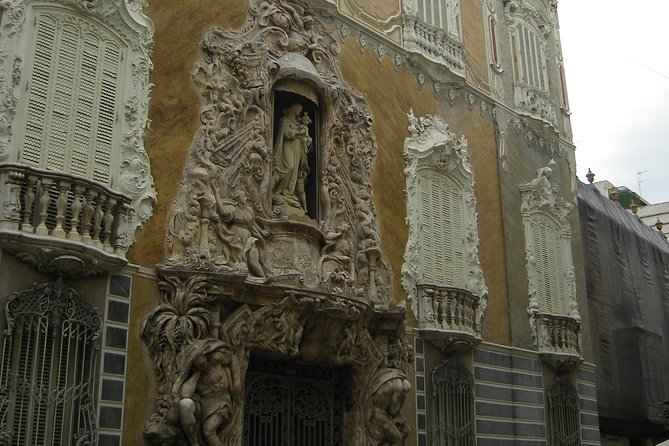
Next comes Palacio del Marquès de Dos Aguas. Even when you only see the façade, it can feel like a “wait, stop” moment. The style is described as Baroque, and the building houses the National Ceramic Collection.
Why I think this stop is a win on a walking tour: it gives you a strong visual payoff. Baroque façades are full of energy—shapes and details that feel like they’re in motion. Even if you don’t get a long look, you walk away with something you can point to and say, that’s Valencia’s drama.
If you want more ceramics, consider pairing this tour with a longer museum visit later. The tour gives you the entry ticket into the theme, but it doesn’t replace the chance to study the collection at your own pace.
Mercado Colón: an Art Nouveau ending with horchata
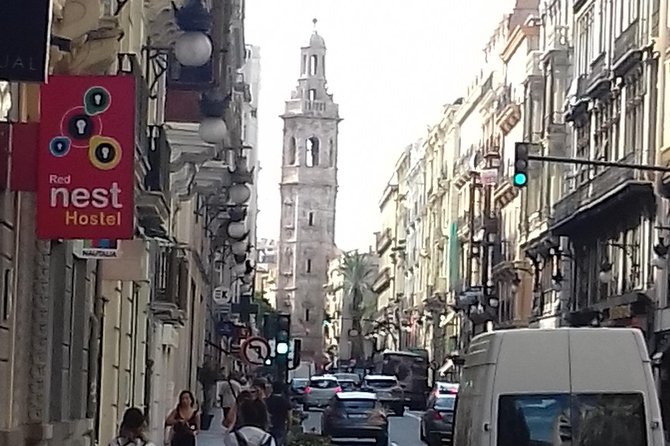
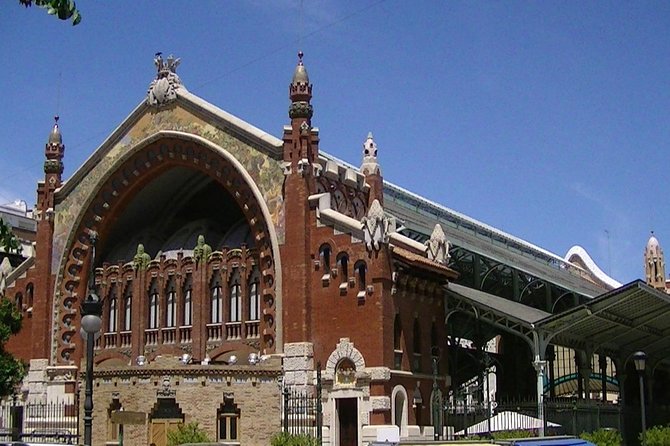
Your walk finishes at Mercado de Colón near the shopping street Carrer de Colón. This is another Art Nouveau building, opened in 1916 and renewed in the 21st century. The ending matters here because the market has a natural “linger” function.
This stop is described as a perfect meeting point, and it’s also where you can enjoy horchata, a traditional Valencian beverage. That’s a smart way to close: you end not only with another landmark, but with something you can taste and take your time with.
Practical tip: keep some energy for the end. Even if the walk is only 2 to 3 hours, you’ll be on your feet through multiple central areas. Horchata here feels like a reward, not an afterthought.
How Enrique makes the tour feel smooth
This experience is led by the provider alapontasins.com, and your guide is often Enrique. Multiple reviews highlight that Enrique is friendly, punctual, and good at answering questions. One thing I really like from the feedback is that he’s able to conduct the tour across languages without leaving people behind or turning the experience into a one-person monologue.
A practical plus: one review mentions Enrique was able to postpone the appointment when someone was ill. That’s a sign you’re dealing with a guide who can manage real-life issues, not just run a script.
That said, one review mentioned the timing between stories can sometimes feel a bit long. On a walking tour, that usually means short stretches are more about explanation than movement. If you prefer fast-forward sightseeing, you might want to come with your own curiosity—ask questions early so the guide can steer the story to what you care about.
Duration, ticket style, and what to expect from the structure
The tour runs about 2 to 3 hours and is a private experience, meaning only your group participates. It’s offered in English, and you’ll get a mobile ticket.
Most stops include admission tickets, which changes the value equation. Instead of paying for only curbside explanations, you’re paying for access and guided context at key locations. That’s especially helpful in Valencia’s central areas, where buildings are close together but their meaning isn’t always obvious from the street.
Also, the route is near public transportation. That’s useful if you’re not staying exactly where the tour starts.
Weather matters too. The experience requires good weather, and if it’s canceled due to poor weather, you’ll be offered a different date or a full refund.
Who this walking tour is best for
This is a strong choice if you want:
- A guided way to see Valencia’s Old Town landmarks without hunting for information
- A mix of architecture styles (Art Nouveau, Gothic, Baroque, and Belle Époque) in one coherent loop
- Short, high-impact stops that help you learn fast and still breathe between sites
It’s also a good fit if you travel with service animals. Service animals are allowed, and most travelers can participate.
If you hate structured timing and want to roam freely for hours, you might find the stop rhythm a bit guided. But if you like a plan that still leaves you with ideas for after the tour, this fits well.
Should you book Walking in Valencia?
I’d book it if you want an organized, design-focused tour that walks you through Valencia’s most recognizable Old Town landmarks with practical context. The included admission tickets and the way the guide connects buildings to the city’s development—like the Turia river storyline—make it feel like more than sightseeing.
I’d think twice only if you’re extremely sensitive to slower pacing between explanations. One review pointed that out, and this route is structured, so you’ll likely experience some of that explanation time rather than purely “move, shoot, go.”
FAQ
FAQ
What is the duration of the Walking in Valencia tour?
It lasts about 2 to 3 hours.
Where does the tour start and end?
It starts at València-Estació del Nord, Carrer d’Alacant, 25, Extramurs (46004). It ends at Mercado de Colón, Ensanche (46004).
Is the tour in English?
Yes, the tour is offered in English.
Is this tour private?
Yes. It’s a private tour/activity, and only your group participates.
Do I need to print tickets?
No. You’ll have a mobile ticket.
Are admission tickets included during the stops?
Yes. Admission tickets are included at the listed stops.
Where are the main stops on the route?
Key stops include Estació del Nord, Placa del Ajuntament, Mercat Central de Valencia, Plaza Redonda, Placa de la Reina (Cathedral area), Torres dels Serrans, Palacio del Marquès de Dos Aguas, and Mercado de Colón.
Is the tour suitable for most people?
Most travelers can participate, and service animals are allowed.
What happens if the weather is bad?
The experience requires good weather. If it’s canceled due to poor weather, you’ll be offered a different date or a full refund.
Can I cancel and get a refund?
Free cancellation is available. You can cancel up to 24 hours in advance for a full refund. If you cancel less than 24 hours before the start time, the amount you paid will not be refunded.
More Walking Tours in Valencia
- Valencia: Essentials and World Heritages Sites Walking Tour★ 4.7 · 684 reviews
- Valencia: Historical Walking Tour★ 4.6 · 390 reviews
- Valencia: Private Walking Tour with a Local★ 4.8 · 298 reviews
- Valencia: City Walking Tour with Top Attractions – ITALIAN★ 4.9 · 242 reviews
- Discover Valencia: Guided Walking Tour★ 4.9 · 211 reviews
More Tour Reviews in Valencia
- Valencia: Oceanogràfic Entry Ticket★ 4.7 · 9,893 reviews
- Valencia: 24 or 48-Hour Hop-on Hop-off Bus Ticket★ 3.9 · 5,611 reviews
- Valencia: Sailing Catamaran Cruise with Sunset Option and DJ★ 4.1 · 4,270 reviews
- Valencia: Palosanto Flamenco Show Ticket★ 4.8 · 3,876 reviews
- Valencia Old Town Tour with Wine & Tapas in 11th Century Historic Monument★ 5.0 · 3,234 reviews
Valencia at Walking Pace
- Valencia: Essentials and World Heritages Sites Walking Tour★ 4.7 · 684 reviews
- Valencia: Historical Walking Tour★ 4.6 · 390 reviews
- Valencia: Private Walking Tour with a Local★ 4.8 · 298 reviews
- Valencia: City Walking Tour with Top Attractions – ITALIAN★ 4.9 · 242 reviews
- Discover Valencia: Guided Walking Tour★ 4.9 · 211 reviews
The newest Valencia reviews on our desk


Valencia Walking Tours, compared.
 ★ 4.7Essentials and World Heritages Sites Walking TourFrom $21684 reviews
 ★ 4.6Historical Walking TourFrom $17390 reviews
 ★ 4.8Private Walking Tour with a LocalFrom $56298 reviews
 ★ 4.9City Walking Tour with Top Attractions – ITALIANFrom $17242 reviews
 ★ 4.9Discover Valencia: Guided Walking TourFrom $18211 reviews
 ★ 5.0Valencia Private Walking Tour with Official Valencian GuideFrom $127176 reviews
 ★ 4.5The 10 Tastings of Valencia With Locals: Private Food Walking TourFrom $152119 reviews
 ★ 4.6Fallas Festival Walking Tour with Entry TicketFrom $4686 reviews
Browse the lists this tour appears in