
Reviewed · VALENCIA OLD TOWN & EL CARMEN
Essential Valencia and its World Heritage sites
World Heritage in just two hours. This guided Old Town walk in Valencia links major UNESCO landmarks with the living traditions that shape the city. You’ll get a logical route, clear stories, and a comfortable pace built for sightseeing without stress.
I like the way it spotlights La Lonja de la Seda, including time inside the monument. I also like the human touch: guides such as Gábor and Sara are praised for being friendly, funny, and ready to answer questions, which makes the history feel usable, not like a lecture.
One thing to keep in mind: two key moments depend on timing. Ajuntament de Valencia is only on weekdays, and the Silk Exchange (La Lonja de la Seda) may require a ticket workaround if it closes for any event during your visit.
In This Review
- Key highlights worth planning for
- A Two-Hour Walk Through Valencia’s World Heritage and Traditions
- Starting at Estació del Nord: Art Nouveau and an easy first win
- Fallas at Plaça de l’Ajuntament and the weekday Ajuntament stop
- Mercat Central de Valencia: Art Nouveau views and the Mediterranean Diet thread
- Inside La Lonja de la Seda: the UNESCO Silk Exchange experience
- Valencia Cathedral from the outside: the Holy Grail clue
- Plaza de la Virgen and the Water Tribunal on Thursday
- Pacing, group size, and why the route feels easy
- Price and value: what $21.36 actually buys you
- Language options and who may want a different plan
- Should you book this Valencia Old Town World Heritage tour?
- FAQ
- How long is the tour?
- What time does it start?
- Where do we meet?
- Where does the tour end?
- Is the tour guided and what’s included?
- What’s not included?
- Is it a mobile ticket?
- Does the schedule depend on the day of the week?
- What if La Lonja de la Seda (Silk Exchange) is closed during the visit?
- Can I change the tour language?
- What about children and weather?
- Can I cancel for free?
Key highlights worth planning for
- La Lonja de la Seda entry is included, so you’re not just looking at it from the street
- Fallas is explained as living UNESCO Intangible Heritage, not just a festival poster
- You cover both architecture and tradition, from Estació del Nord to the Water Tribunal
- Small-group feel, with a maximum of 25 travelers
- A sensible Old Town route, ending near Plaça de la Mare de Déu so you can keep exploring on your own
- A clear backup plan if Silk Exchange access is affected during your visit
A Two-Hour Walk Through Valencia’s World Heritage and Traditions
If your Valencia time is tight, this tour is a smart way to get your bearings fast—without sacrificing the big UNESCO names. You’re led through the Old Town on foot with a focus on World Heritage sites, plus the city’s intangible traditions that UNESCO also recognizes.
The best part is the mix. You won’t only stare at buildings; you’ll learn why Valencia built them, who used them, and how traditions still shape daily life. That’s how a list of monuments turns into a sense of place.
It also helps that the tour is structured around short stops—around 10 to 30 minutes each—so you can absorb what matters without feeling dragged from one thing to the next.
Still circling Ciutat Vella? These reviews walk the same lanes
Starting at Estació del Nord: Art Nouveau and an easy first win
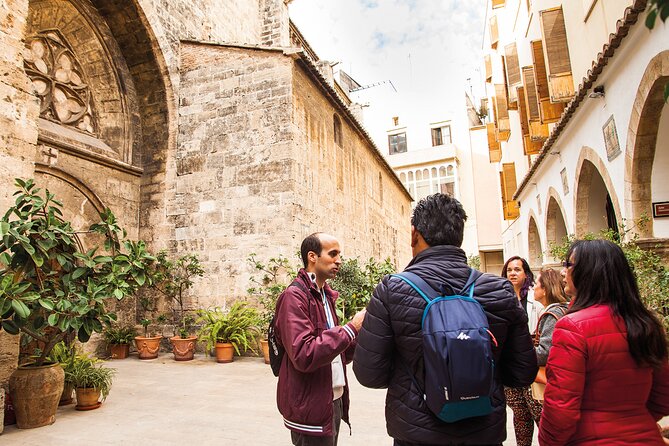
You begin at the Tourism Hub on C/ de Xàtiva, 24 (Extramurs), with a 10:00 am start. The walk kicks off with a visit to Estació del Nord, where you’ll see both the external and internal spaces.
Why this stop matters: it sets the tone. Estació del Nord is Art Nouveau in style, and that design language shows you another layer of Valencia beyond Gothic stone and festival streets. It also gives you a practical warm-up—easy orientation before you move into the densest Old Town area.
You’ll typically spend about 20 minutes here, and since parts are inside, it’s a good place to steady your timing early. If it’s sunny, wear a hat and keep water handy—reviews mention guides helping guests find shade during bright conditions.
Fallas at Plaça de l’Ajuntament and the weekday Ajuntament stop
Right after the station, you move to Plaça de l’Ajuntament for a Fallas-focused lesson. This is one of Valencia’s signature traditions: Fallas are celebrated between 15 and 19 March, and they’re recognized by UNESCO (added to the list in 2016) as Intangible Heritage.
You’re not just hearing what Fallas are—you’re learning how the city turns itself into a kind of open-air museum of ephemeral monuments. Music, traditional costumes, and the unmistakable street atmosphere are part of what makes Fallas feel like a citywide event, not a single show.
Then, there’s a second Ajuntament-related stop at Ajuntament de Valencia—but only on weekdays. That’s the main scheduling wrinkle on this whole itinerary, and it’s worth planning around if your trip dates don’t include Monday through Friday.
If your dates don’t allow the weekday stop, the tour still moves forward through the other UNESCO anchor points. But if you’re the type who wants the full sequence of stories tied to exact places, adjust your Valencia plan so you hit this day-of-week condition.
Mercat Central de Valencia: Art Nouveau views and the Mediterranean Diet thread

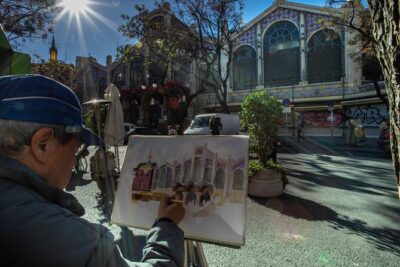
Next up is Mercat Central de Valencia. You’ll do an external visit of the Central Market and spend around 10 minutes there.
This stop is shorter, but it has a purpose: it ties Valencia’s architecture to culture. The market’s Art Nouveau look isn’t treated like decoration—it’s used to explain the Mediterranean Diet, which is also recognized by UNESCO as Intangible Heritage.
For you, this means you’ll walk away with a better sense of what the market represents. It’s not only about shopping or photos. It’s about the food habits and choices that shaped regional identity over time.
If you want a bit more time here after the tour, the location makes it easy to come back later. Just know the tour’s focus is on context, not a full market shopping spree.
First visit? These are the Valencia intros we lined up against each other
- Valencia: City Highlights Guided Bike Tour
★ 4.7 · 2,373 reviews - Valencia: Essentials and World Heritages Sites Walking Tour
★ 4.7 · 684 reviews - Valencia: Top 25 Highlights Guided Bike Tour
★ 4.8 · 644 reviews - Valencia Bike Tours: City Highlights
★ 4.9 · 450 reviews
Inside La Lonja de la Seda: the UNESCO Silk Exchange experience
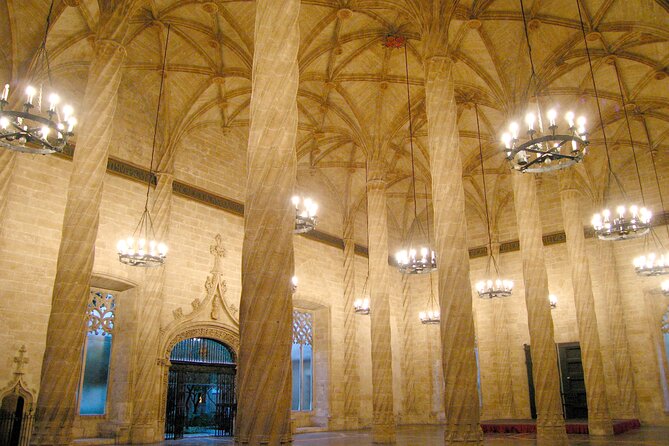
La Lonja de la Seda is the tour’s centerpiece for World Heritage. You’ll enter the Silk Lonja, a masterpiece of civil Gothic architecture declared a World Heritage Site in 1996.
What you’re here for: the Sala de Contratación, the central trading hall with columns, vaults, and ribbing that make the space feel engineered for power and precision. It’s one of those interiors where the room itself tells you something about the people who built it.
This stop is about 30 minutes and includes admission, so you’re not paying extra or hunting for tickets on your own. That matters for value because this is the only listed monument with included entry time.
There’s also a contingency built in. If La Lonja de la Seda (the Silk Exchange) is closed for any event during your visit, you’ll be offered either:
- a way to send tickets so you can enter in the afternoon, or
- an option to exchange for a ticket of the same amount for another museum/monument
That kind of backup is more than a footnote. It protects your day so you don’t lose the main reason you booked.
Valencia Cathedral from the outside: the Holy Grail clue
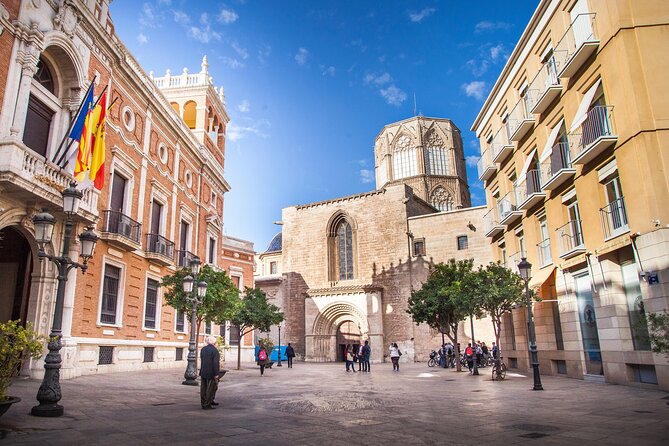
You’ll then reach La Catedral for an external visit. The program includes about 10 minutes here, and it explicitly notes that admission is not included.
The tour’s angle is still compelling: Valencia Cathedral is tied to the Holy Grail, which adds instant gravity to what you’re looking at from the streets and plazas. Even without entering, it helps you connect the religious centerpiece of the city to the monuments you’ve already seen.
For you, this is a good moment to decide if you want to add cathedral entry on your own later. If you do, plan extra time—because the tour ends at a later point and you’ll want to avoid feeling rushed.
Plaza de la Virgen and the Water Tribunal on Thursday
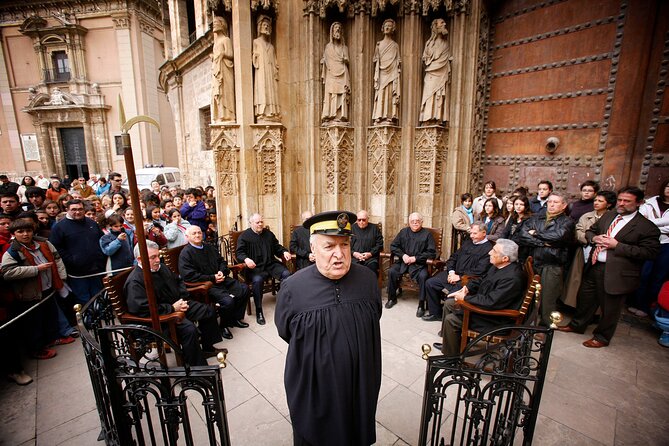
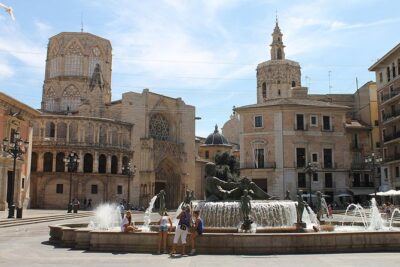
Your final major cultural stop is Plaza de la Virgen, where the Water Tribunal takes center stage. This is another UNESCO Intangible Heritage listing (since 2008), and it takes place every Thursday at midday in the Door of the Apostles of the Cathedral.
Even if you’re not there on Thursday, this stop helps you understand that Valencia isn’t only about old stones. It’s also about rules, rituals, and community traditions that keep working.
You’ll spend around 15 minutes here, and the setting makes the story feel believable. Place, architecture, and daily life line up—so it’s easier to picture how a tradition can survive for centuries when people still use it.
Pacing, group size, and why the route feels easy
The whole tour is designed around a comfortable pace over roughly two hours. The maximum group size is 25, which helps keep questions from getting lost in the shuffle.
One of the most praised elements from guides on this route is clarity. Gábor and Sara, in particular, are mentioned for being on time, providing clear meeting instructions, and answering questions without making you feel rushed. That’s not a small detail. It changes how much you get out of a walking tour.
Also, the itinerary is realistic for a short visit. You’re not sprinting across town. Instead, you hit a tight Old Town corridor—starting near C/ de Xàtiva and ending near Plaça de la Mare de Déu, 4—so you can roll into lunch or a second self-guided wander.
If you’re someone who gets tired quickly, the short time windows at each stop are a relief. You’ll have time to look, listen, and regroup.
Price and value: what $21.36 actually buys you
At about $21.36 per person, this is priced like a smart “first morning in Valencia” move. The big value driver isn’t only the guide—it’s what’s included.
You get:
- a professional guide throughout, and
- admission included for La Lonja de la Seda (the Silk Exchange)
That Silk Exchange entry is the key. If you’ve ever priced out tickets and last-minute scheduling before a must-see monument, you know how quickly “cheap walking tours” can become not-so-cheap once you add admissions.
You’ll still have one important thing not included: cathedral admission. But the tour gives you a solid external orientation and a strong reason to decide later whether to spend more time inside.
Also, the ticket delivery is mobile, which is handy. Less time spent at counters often means more time just walking and looking.
Language options and who may want a different plan
The tour runs in a group setting, and there’s an option to change the language for an additional €5/person, subject to availability. That’s useful if you want your tour to be smooth and fully explained in your preferred language.
Who this works best for:
- first-time visitors who want UNESCO World Heritage anchors without spending all day
- travelers who enjoy stories tied to real places (not just dates)
- people who want an efficient route they can build a lunch plan around afterward
Who might consider something else:
- travelers who want a full deep interior cathedral experience included in the ticket (since cathedral entry isn’t included)
- visitors who need guaranteed weekday sequencing for Ajuntament de Valencia
Should you book this Valencia Old Town World Heritage tour?
I’d book it if you want a well-paced, Old Town-focused way to connect Valencia’s monuments to its living traditions. The combination of La Lonja de la Seda entry, Fallas as UNESCO Intangible Heritage, and the Water Tribunal makes this more than a quick photo walk.
If your schedule fits the weekday requirement, even better—because the Ajuntament de Valencia stop on weekdays adds a meaningful layer to the Fallas story. And if La Lonja de la Seda is affected on the day, the built-in ticket workaround helps protect your main investment.
If you only have a small window and want to feel oriented fast, this is the kind of tour that turns your next few hours of independent wandering into something smarter.
FAQ
How long is the tour?
It runs for about 2 hours.
What time does it start?
The start time is 10:00 am.
Where do we meet?
Meet at Tourism Hub, C/ de Xàtiva, 24, Extramurs, 46007 València, Valencia, Spain.
Where does the tour end?
It ends at Plaça de la Mare de Déu, 4, Ciutat Vella, 46001 València, Valencia, Spain.
Is the tour guided and what’s included?
You get a professional guide. Admission to La Lonja de la Seda is included.
What’s not included?
Valencia Cathedral admission is not included.
Is it a mobile ticket?
Yes, this experience uses a mobile ticket.
Does the schedule depend on the day of the week?
Yes. The Ajuntament de Valencia stop is only on weekdays.
What if La Lonja de la Seda (Silk Exchange) is closed during the visit?
If the Silk Exchange closure affects the visit, you’ll be offered the option to send tickets so you can enter in the afternoon, or try to exchange them for a ticket of the same amount for another museum/monument.
Can I change the tour language?
Yes, language changes are possible subject to availability for an additional €5/person.
What about children and weather?
Children must be accompanied by an adult. The experience requires good weather, and if it’s canceled due to poor weather, you’ll be offered a different date or a full refund.
Can I cancel for free?
Free cancellation is available. You can cancel up to 24 hours in advance for a full refund.
More Tour Reviews in Valencia
- Valencia: Oceanogràfic Entry Ticket★ 4.7 · 9,893 reviews
- Valencia: 24 or 48-Hour Hop-on Hop-off Bus Ticket★ 3.9 · 5,611 reviews
- Valencia: Sailing Catamaran Cruise with Sunset Option and DJ★ 4.1 · 4,270 reviews
- Valencia: Palosanto Flamenco Show Ticket★ 4.8 · 3,876 reviews
- Valencia Old Town Tour with Wine & Tapas in 11th Century Historic Monument★ 5.0 · 3,234 reviews
The Whole City in One Go
- Valencia: City Highlights Guided Bike Tour★ 4.7 · 2,373 reviews
- Valencia: Essentials and World Heritages Sites Walking Tour★ 4.7 · 684 reviews
- Valencia: Top 25 Highlights Guided Bike Tour★ 4.8 · 644 reviews
- Valencia Bike Tours: City Highlights★ 4.9 · 450 reviews
- Valencia: 2-hour City Highlights Guided Tour by Tuk Tuk★ 4.5 · 388 reviews
Deeper into El Carmen
- Valencia Old Town Tour with Wine & Tapas in 11th Century Historic Monument★ 5.0 · 3,234 reviews
- Valencia: Old Town Tour, Wine & Tapas in an 11th c. Monument★ 4.9 · 1,797 reviews
- Valencia: Cathedral, St Nicholas, and Lonja de la Seda Tour★ 4.8 · 861 reviews
- Essentials of Valencia and its World Heritage Sites★ 4.5 · 350 reviews
- Valencia: Medieval Old Town Segway Tour★ 4.8 · 251 reviews
The newest Valencia reviews on our desk




Valencia Old Town & El Carmen, compared.
 ★ 5.0Valencia Old Town Tour with Wine & Tapas in 11th Century Historic MonumentFrom $963,234 reviews
 ★ 4.9Old Town Tour, Wine & Tapas in an 11th c. MonumentFrom $941,797 reviews
 ★ 4.8Cathedral, St Nicholas, and Lonja de la Seda TourFrom $53861 reviews
 ★ 4.5Essentials of Valencia and its World Heritage SitesFrom $20350 reviews
 ★ 4.8Medieval Old Town Segway TourFrom $41251 reviews
 ★ 5.0Essential Valencia and World Heritage Sites (English)From $12188 reviews
 ★ 4.7Valencia all in one: beaches, old town & city arts by E-bikeFrom $4778 reviews
 ★ 5.0Private premium wine tasting with snacks in Valencia’s old townFrom $7157 reviews
Browse the lists this tour appears in