
Reviewed · VALENCIA PAELLA COOKING CLASSES
Seafood paella cooking class, tapas and visit to Ruzafa market.
Paella starts with fresh fish, not a recipe card. In Valencia, this small-group class sends you to the Mercado de Ruzafa first, then you cook seafood paella step by step while a chef walks you through sangria and the why behind Valencian traditions. I love that you get real hands-on jobs at your station, and I love the way the team turns shopping into culture lessons you can actually use. One possible catch: the meeting point can be a little confusing at first, so build in a few extra minutes outside Parroquia de San Valero.
Plan on about 3 hours 30 minutes, starting at 11:00am in L’Eixample, and ending back where you started. You’ll start with a market ingredient run (Ruzafa is not visited on Sundays), then a short walk to the kitchen for a sangria workshop with tapas, before you cook and eat. The session includes a full spread: seafood paella, Valencian tomato salad, seasonal fruit, Valencian sponge cake, local wines, coffee, and mistela.
In This Review
- Key things to clock before you go
- Mercado de Ruzafa sets the tone for Valencia paella
- Meeting at Parroquia de San Valero: arrive early and look for the team
- Sangria and tapas in the kitchen area (before the cooking begins)
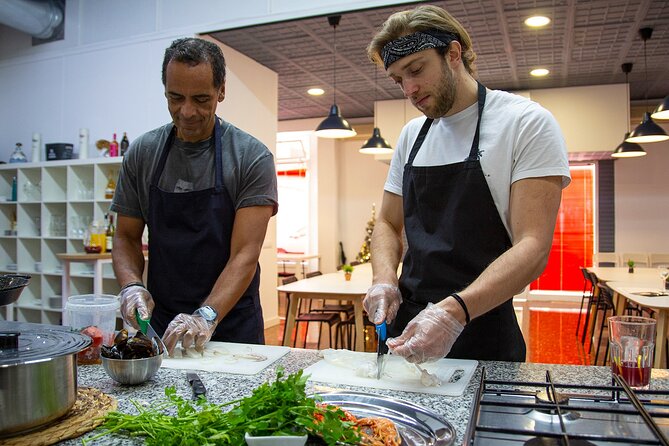
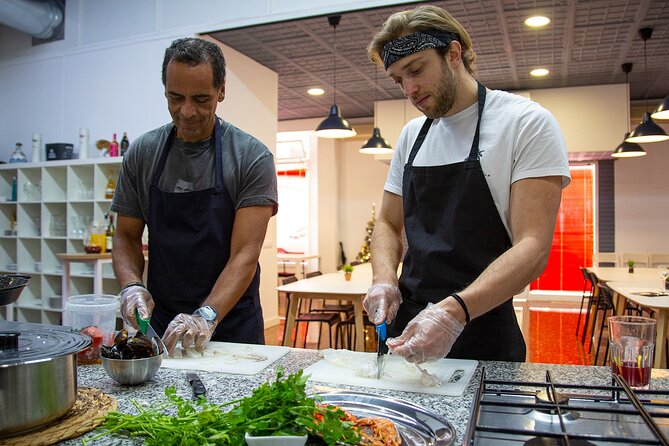
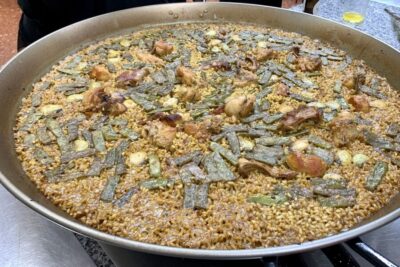
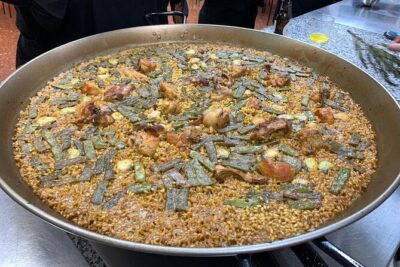
- Hands-on seafood paella: what you’ll do at the stove
- Your full tasting menu: paella, tomato salad, dessert, coffee, mistela
- Drinks and pacing: plan for sangria and wine with your meal
- Price and value: why $78.64 can make sense in Valencia
- Who this tour is best for (and who should skip it)
- A balanced note on reliability: rare cancellations can happen
- Should you book the seafood paella paella class in Valencia?
- FAQ
- What time does the seafood paella cooking class start?
- How long is the experience?
- Where is the meeting point?
- Is the activity offered in English?
- How big is the group?
- Do you visit Mercado de Ruzafa on Sundays?
- What food and drinks are included?
- Do I cook the paella or just watch?
- Can children join the class?
- Is there free cancellation?
Key things to clock before you go
- Mercado de Ruzafa ingredient shopping first: You buy what you need for a proper seafood paella.
- Sangria workshop + tapas start: You’re drinking and snacking before the cooking gets serious.
- Hands-on cooking with multiple instructors: You’ll be involved, not stuck watching.
- A proper meal, not just samples: Paella, salad, dessert, coffee, and sweet wine/mistela are part of the deal.
- Small group capped at 20: More attention when you have questions.
- No Ruzafa market visit on Sundays: If you’re planning a Sunday class, expect a different flow.
Mercado de Ruzafa sets the tone for Valencia paella
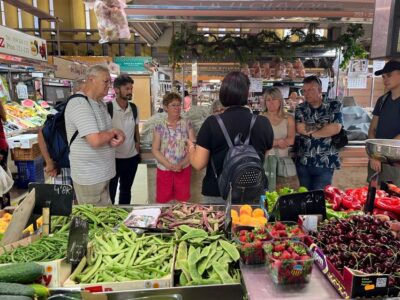
This experience makes a smart choice: it starts with ingredients, not with theory. At Mercado de Ruzafa, you’ll shop for the fresh items needed for seafood paella, and you’ll also hear where the paella ingredients and Valencian food customs come from.
I like that the market stop isn’t treated like a quick photo op. The kitchen outcome depends on what you buy, and the guide uses the stalls to explain the local logic behind things—why this ingredient matters, how people shop day to day, and what makes Valencian cooking feel different from other Spanish food.
If you can, go hungry. You’ll pick up ingredients and small tastes along the way, then you’ll have a proper meal later.
Other kitchens where the paella pan ends up in your hands
Meeting at Parroquia de San Valero: arrive early and look for the team
You meet at Parroquia de San Valero, Carrer del Pare Perera, 6 (L’Eixample, 46006 València). The start time is 11:00am, and the tour ends back at the same meeting point.
Here’s the practical tip: this kind of class often relies on a specific doorway or sign. One guest noted the meeting spot wasn’t obvious from the given address, so I’d treat “on time” as “a bit early,” especially if you’re navigating on foot. Once you’re there, it’s usually straightforward—but giving yourself a 10–15 minute buffer keeps the start stress-free.
Also note the pacing. After the market, you’ll walk about 8 minutes to reach the kitchen. If mobility is an issue for you, that short stretch matters.
Sangria and tapas in the kitchen area (before the cooking begins)
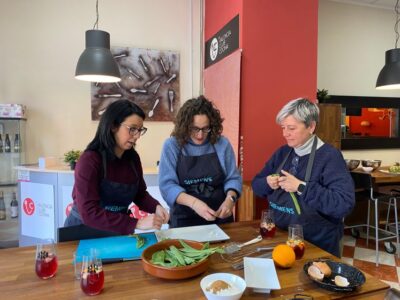
After shopping, you head to the kitchen for a sangria workshop. The chef arrives ready, and you’ll get tapas with sangria (plus beer, water, and other drinks depending on what’s listed for your session).
This part is more than “pre-dinner drinks.” It helps you shake off the travel jitters and learn the rhythm of the class. You’ll watch, ask questions, and get a feel for how the chefs teach—step by step, with lots of interaction.
In the reviews, the team energy shows up again and again. You might meet instructors like Ana, Jose, Christine, Valentin, Cris, or Guillermo during different days and language pairings. The exact lineup can vary, but the pattern is consistent: people are friendly, conversational, and quick to get everyone involved.
Hands-on seafood paella: what you’ll do at the stove
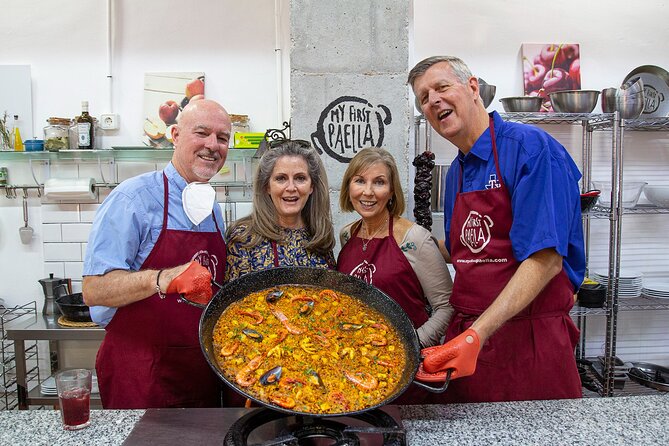
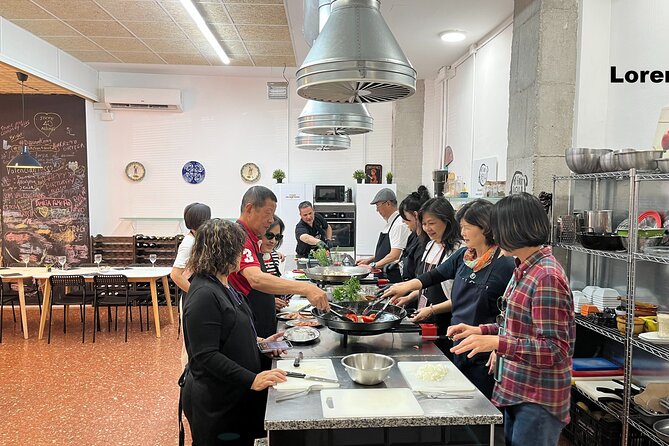
Once the tapas and sangria part settles, the real goal starts: cooking the classic seafood paella. The chef explains the process step by step, then you cook with guidance while your station stays productive.
You should expect a structure that breaks the work into clear stages. Reviews describe the class as paced so everyone can contribute, and that’s your cue that you won’t be stuck on one tiny task the whole time. Depending on the session setup, there may be more than one paella going at once—some groups cook seafood paella while another station makes a different version (like traditional meat paella).
Because you’re using ingredients you just bought, the cooking feels grounded. You’re not just following instructions—you’re making decisions about how each part fits the final dish.
What I find useful for you: paella is one of those dishes people think they understand until they try it. This class turns it into something more teachable—where timing, prep, and the order of tasks actually make sense in real life.
Still hungry? More Valencia tables and market stops
- Paella Cooking Class, Wine Tasting & Central Market in Valencia
★ 5.0 · 1,150 reviews - Valencian paella cooking class, tapas and visit to Ruzafa market.
★ 5.0 · 828 reviews - Valencia: Paella Cooking Class with Central Market Tour
★ 5.0 · 721 reviews - Valencia: Orange Farm and Orchard Trip with Tastings
★ 4.9 · 702 reviews
Your full tasting menu: paella, tomato salad, dessert, coffee, mistela
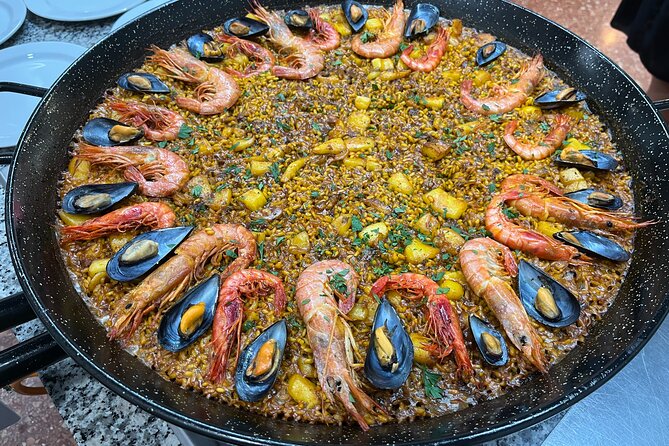
After cooking, you sit down and eat what you made. Your meal includes Valencian tomato salad, paired with Valencia wines, plus seasonal fruit and dessert.
The sample menu gives a clear picture of the style and portions. For tapas, you may see items like:
- Patatas bravas with sojanesa
- Jamón serrano
- Manchego cheese
- Steamed mussels
- Olives
For the main course, it’s seafood paella with the tomato salad. Dessert in the sample is seasonal fruit and Valencian sponge cake, along with sweet wine and coffee. In the included list, you’ll also see mistela mentioned, which lines up with that sweet-drink finish that Valencia is known for.
This matters for value and satisfaction. Many cooking classes teach a technique but leave you hungry. Here, the meal is built into the experience, so you leave full and not scrambling for food right afterward.
Drinks and pacing: plan for sangria and wine with your meal
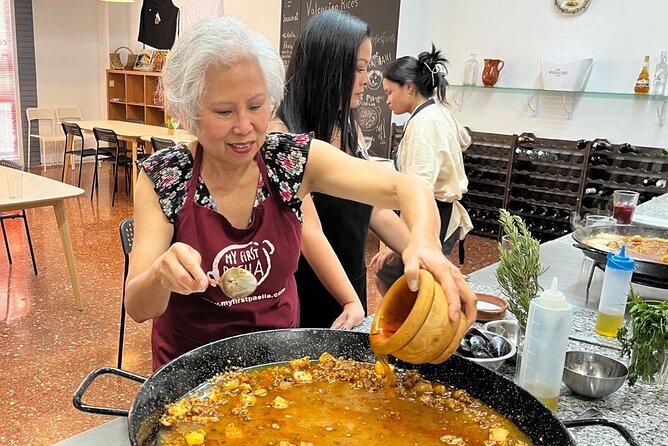
This isn’t a dry, sit-and-stare lesson. You’ll have sangria during the workshop, and you’ll also drink wine (and possibly beer and other beverages) with the paella and dessert.
If you’re the kind of person who wants to sip calmly and pace yourself, that’s fine—but keep in mind that the class is designed as a social meal. Several reviews mention good energy, laughing, and a lot of interaction. It’s part of the fun, but it’s also a reason to drink water when offered and not treat this like a quick, low-key stop.
I also like that you get coffee at the end. It helps balance the sweet finish with something more “real life” after dinner.
Price and value: why $78.64 can make sense in Valencia
At $78.64 per person, you’re paying for more than a cooking lesson. For that price, you’re getting:
- Market shopping for seafood paella ingredients
- A sangria workshop
- Tapas and multiple drink options
- Seafood paella you cook and then eat
- Side salad, dessert, coffee, and mistela/sweet wine
- All ingredients and cooking equipment
When I compare this to the cost of doing each piece separately, the value holds up. If you tried to recreate it yourself, you’d spend money on a market shop, then still pay for time, tools, and someone to teach you the process.
The group size also helps. With a maximum of 20 travelers, you’re more likely to get back-and-forth attention than in those huge classes where you cook while someone repeats instructions for the crowd.
One thing to consider: if your goal is only “eat best paella,” you could find restaurants without the class fee. But if your goal is both food and skill—plus a day that feels like Valencia, not just a meal—the class price is easier to justify.
Who this tour is best for (and who should skip it)
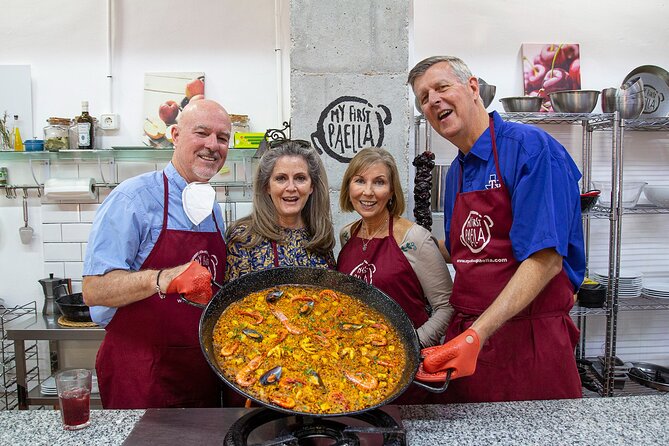
This experience fits you best if you want a hands-on Valencia food day. You’ll get market context, cooking instruction, and a group meal with a friendly team. It’s also a great fit if you enjoy meeting other people—many sessions are social in a good way, with everyone working together.
You might want to think twice if:
- You have mobility limits for the short walk to the kitchen
- You don’t like alcohol-heavy activities (sangria and wine are part of the flow)
- You want a very quiet experience (this is lively by design)
It’s also family-friendly in the sense that children can join, but children must be accompanied by an adult.
A balanced note on reliability: rare cancellations can happen
Everything is set up as a specific day, with chefs ready to teach. One review shared an instance where the class was canceled because a chef had the flu, and the operator offered alternatives. That’s not the norm in the overall picture, but it’s a useful reminder: food experiences depend on people, and illness happens.
Your best move is to book with your schedule in mind. If paella day is a hard must-do and you’re traveling with tight connections, have a Plan B for that same afternoon or evening.
Should you book the seafood paella paella class in Valencia?
I think you should book if you want an authentic Valencia food morning that turns into lunch (with sangria) and gives you real cooking confidence. The combination of Mercado de Ruzafa shopping, hands-on seafood paella, and a full meal with dessert, coffee, and mistela is exactly the kind of “do it once, learn it for later” experience that justifies its price.
Skip it if you’re after a simple restaurant meal, you hate market walking, or you’re sensitive to the class’s social, drink-included vibe.
FAQ
What time does the seafood paella cooking class start?
The class starts at 11:00am.
How long is the experience?
It runs about 3 hours 30 minutes.
Where is the meeting point?
You meet at Parroquia de San Valero, Carrer del Pare Perera, 6, L’Eixample, 46006 València, Valencia, Spain.
Is the activity offered in English?
Yes. The experience is offered in English.
How big is the group?
The class has a maximum of 20 travelers.
Do you visit Mercado de Ruzafa on Sundays?
No. There is no visit to the Ruzafa market on Sunday because the market is closed.
What food and drinks are included?
You get tapas, seafood paella, Valencian tomato salad, dessert, coffee, sangria, wine, beer, and soft drinks or water.
Do I cook the paella or just watch?
It’s hands-on. You’ll help with preparing ingredients and cooking, not just observing.
Can children join the class?
Yes, but children must be accompanied by an adult.
Is there free cancellation?
Yes. You can cancel for a full refund up to 24 hours before the start time.
More Tour Reviews in Valencia
- Valencia: Oceanogràfic Entry Ticket★ 4.7 · 9,893 reviews
- Valencia: 24 or 48-Hour Hop-on Hop-off Bus Ticket★ 3.9 · 5,611 reviews
- Valencia: Sailing Catamaran Cruise with Sunset Option and DJ★ 4.1 · 4,270 reviews
- Valencia: Palosanto Flamenco Show Ticket★ 4.8 · 3,876 reviews
- Valencia Old Town Tour with Wine & Tapas in 11th Century Historic Monument★ 5.0 · 3,234 reviews
Valencia, Plate by Plate
- Valencia Old Town Tour with Wine & Tapas in 11th Century Historic Monument★ 5.0 · 3,234 reviews
- Valencia: Old Town Tour, Wine & Tapas in an 11th c. Monument★ 4.9 · 1,797 reviews
- Paella Cooking Class, Wine Tasting & Central Market in Valencia★ 5.0 · 1,150 reviews
- Valencian paella cooking class, tapas and visit to Ruzafa market.★ 5.0 · 828 reviews
- Valencia: Paella Cooking Class with Central Market Tour★ 5.0 · 721 reviews
Paella Pans Still Warm
- Paella Cooking Class, Wine Tasting & Central Market in Valencia★ 5.0 · 1,150 reviews
- Valencian paella cooking class, tapas and visit to Ruzafa market.★ 5.0 · 828 reviews
- Valencia: Paella Cooking Class with Central Market Tour★ 5.0 · 721 reviews
- Valencian paella workshop and visit to the Algiros market★ 5.0 · 338 reviews
- Valencia: Evening Guided Paella Workshop, Tapas, and Drinks★ 4.9 · 326 reviews
The newest Valencia reviews on our desk




Valencia Paella Cooking Classes, compared.
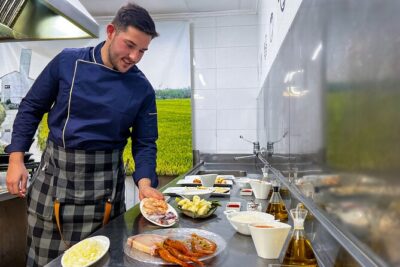 ★ 5.0Paella Cooking Class, Wine Tasting & Central Market in ValenciaFrom $841,150 reviews
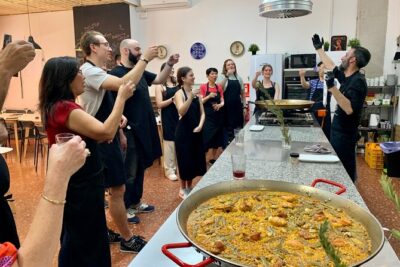 ★ 5.0Valencian paella cooking class, tapas and visit to Ruzafa market.From $78828 reviews
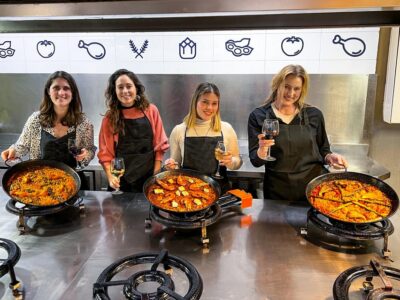 ★ 5.0Paella Cooking Class with Central Market TourFrom $82721 reviews
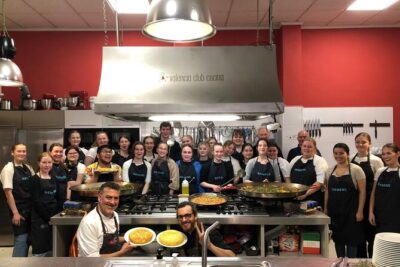 ★ 5.0Valencian paella workshop and visit to the Algiros marketFrom $82338 reviews
 ★ 4.9Evening Guided Paella Workshop, Tapas, and DrinksFrom $77326 reviews
 ★ 5.0Valencian Paella Cooking Class, Tapas & Sangria – EveningFrom $78303 reviews
 ★ 4.9Paella Workshop and Algiros Market VisitFrom $73291 reviews
 ★ 5.0Real Paella Cooking Class – Market Visit & Sangría WorkshopFrom $77291 reviews
Browse the lists this tour appears in