
Reviewed · VALENCIA PAELLA COOKING CLASSES
Valencian paella cooking class, tapas and visit to Ruzafa market.
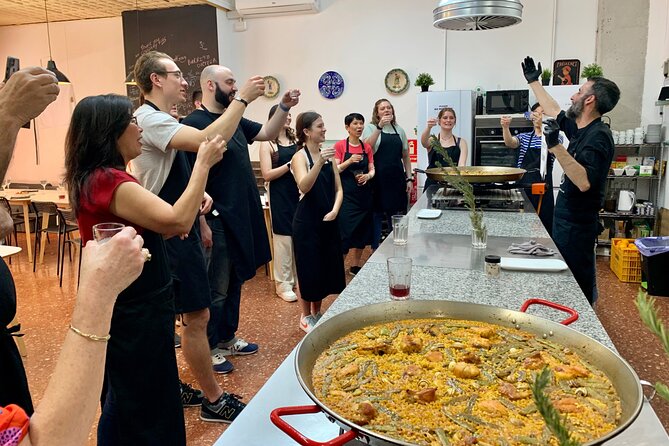
Paella tastes better when you choose the ingredients first. This 3.5-hour class strings together Ruzafa market shopping and a hands-on Valencian paella session with local chefs. I love that you don’t just watch, you cook alongside the instructors. I also love the full food and drink flow: tapas, sangria, salad, dessert, and wine. One heads-up: it’s a real cooking workshop, so you may be asked to do hands-on prep (including tougher jobs like grinding saffron).
What makes it especially practical is the pacing. You start at Parroquia de San Valero, walk to the kitchen area after the market, then settle in for a step-by-step paella you can recreate later. With a maximum of 20 people and English offered, it stays friendly instead of chaotic—and it feels like a proper afternoon in Valencia, not a scripted pit stop.
In This Review
- Key highlights and why they matter
- Starting at Parroquia de San Valero, then straight to Mercado de Ruzafa
- Ruzafa market shopping: how to buy like a local for paella
- Walking to the kitchen: tapas and sangria as your reset
- Sangria workshop: learning the drink without overcomplicating it
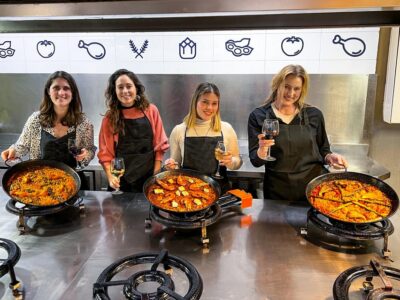
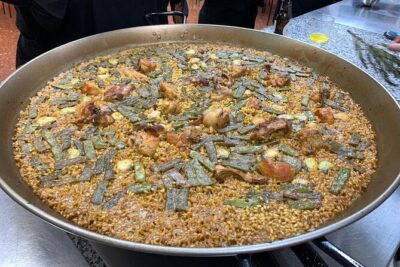
- The main event: hands-on Valencian paella (chicken and rabbit)
- What you’ll do during cooking
- Why chicken and rabbit changes the experience
- What you eat after cooking: salad, wine, sweets, and coffee
- Included lunch-style plates
- Price and value check: is $78.60 worth it?
- Group size and language: small, friendly, and in English
- Logistics you should know before you show up
- What to bring
- Alcohol pacing
- The meetup isn’t the kitchen
- Who this paella class is best for (and who might want something else)
- Should you book this Valencian paella cooking class?
- FAQ
- Where is the tour meeting point?
- What time does it start?
- How long is the experience?
- What happens at the Mercado de Ruzafa?
- What is included in the food and drinks?
- What paella do you cook?
- Is the class offered in English?
- Is there a limit on group size?
- Can children join?
Key highlights and why they matter
- Ruzafa market shopping before you cook so ingredients feel personal, not random
- Small group size (max 20) for real participation at the stove
- Sangria workshop + tapas to start you in Valencia mode (ham, cheese, mussels, olives, bravas)
- Authentic paella focus on chicken and rabbit, the classic Valencian combo
- Included drinks and sweets like wines, mistela, seasonal fruit, Valencian sponge cake, and coffee
- Step-by-step teaching so you leave with a repeatable process, not a blurry memory
Starting at Parroquia de San Valero, then straight to Mercado de Ruzafa
The experience begins at Parroquia de San Valero (Carrer del Pare Perera, 6, L’Eixample). This matters because the meetup isn’t a random storefront kitchen. It’s a clear local landmark, and from there you’re guided through the next stage: going as a group to the Mercado de Ruzafa.
The whole start-to-finish flow is about getting you oriented fast. You’re not stuck reading about paella in a brochure. You’re walking through Valencia’s everyday food world, then turning around and cooking what you just picked up. That’s the difference between a cooking class and a food experience with context.
Timing is also friendly. You’re typically starting at 11:00 am, then spending about 3 hours 30 minutes total. You’re not rushed through the steps, and you’re not sitting around waiting for everyone else to catch up.
Other kitchens where the paella pan ends up in your hands
Ruzafa market shopping: how to buy like a local for paella
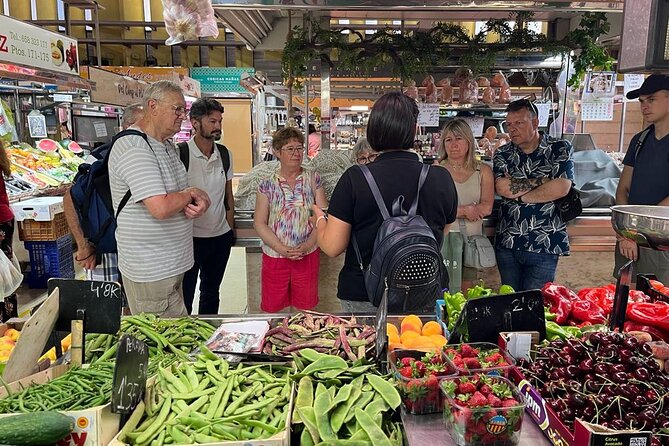
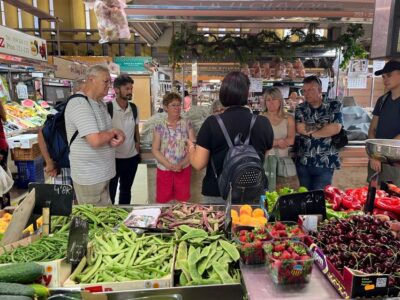
Ruzafa is the point where the class gets smarter. Before the kitchen, you’ll walk with your group and the guide to the market, then help with the shopping for the fresh products needed for a good paella. While you browse, you’ll get stories about the origin of paella and Valencian customs—the kind of background that makes ingredient choices feel logical.
Here’s what I like about this stage for your benefit: market time forces you to think in ingredients, not in recipes. Paella isn’t just a pan of rice. It’s decisions about what’s fresh, what tastes right together, and how the final dish should feel. When you see produce and seafood in a real market setting, you remember it later when you’re cooking at home.
The market stop also gives you a natural conversation starter with your group. You’ll hear questions about paella, the pan, and the Valencian table culture, and you’ll likely compare what you see with what you cook in your own country. That social side is real value, especially if you’re traveling solo.
Walking to the kitchen: tapas and sangria as your reset
After the market, you’ll walk about 8 minutes to the kitchen area. This short transition keeps the energy up. You don’t lose the thread you built in the market, and you’re ready to switch from shopping mode to cooking mode.
Before the paella work starts, you’ll get a mini food-and-drink warm-up. You’ll be served tapas along with sangria (plus beer, water, and other included drinks). The menu you may encounter includes items like jamón serrano, Manchego cheese, steamed mussels, olives, and patatas bravas with sojanesa.
This part is more than just snacking. It helps you settle into a relaxed pace right before the most hands-on part. And if you’ve ever tried to cook while hungry and slightly nervous, you’ll understand why this matters. Your confidence improves fast once you’ve had a proper start.
Also, note the alcohol setup. Sangria and wine are part of the experience, and several people love that it’s not stingy. If you prefer lighter drinking, you can still enjoy the food and learn the process, but you should plan your pace.
Sangria workshop: learning the drink without overcomplicating it
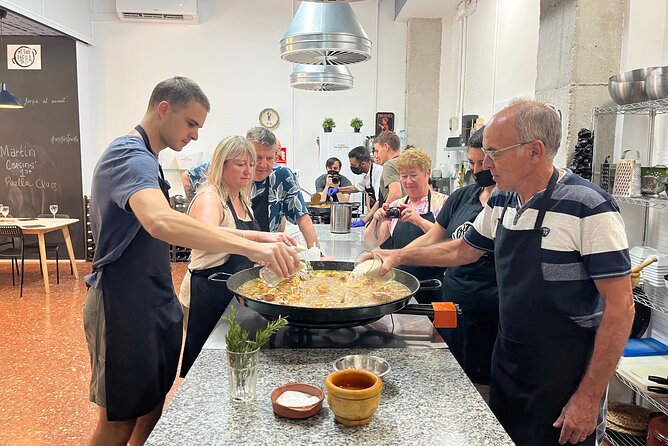
Right at the kitchen, the class includes a sangria workshop. The idea is simple: learn how to make it while you’re getting comfortable in the space, then enjoy it as part of the group meal setup.
What I like for you here is the balance. This isn’t a chemistry lecture about fruit ratios or long theory. It’s a practical workshop that fits the day. You get a drink you can replicate, and it sets the tone for how paella is meant to be eaten: shared, relaxed, and social.
If you’re traveling with friends, it’s also a fun way to keep everyone engaged before the cooking steps begin. And if you’re traveling alone, the workshop creates quick conversation.
Still hungry? More Valencia tables and market stops
- Paella Cooking Class, Wine Tasting & Central Market in Valencia
★ 5.0 · 1,150 reviews - Valencian paella cooking class, tapas and visit to Ruzafa market.
★ 5.0 · 828 reviews - Valencia: Paella Cooking Class with Central Market Tour
★ 5.0 · 721 reviews - Valencia: Orange Farm and Orchard Trip with Tastings
★ 4.9 · 702 reviews
The main event: hands-on Valencian paella (chicken and rabbit)
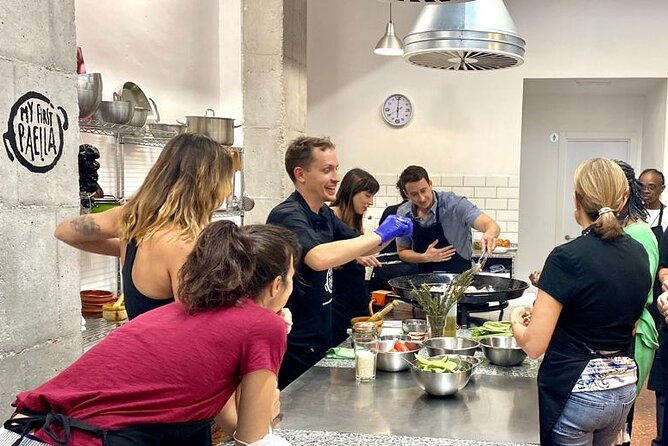
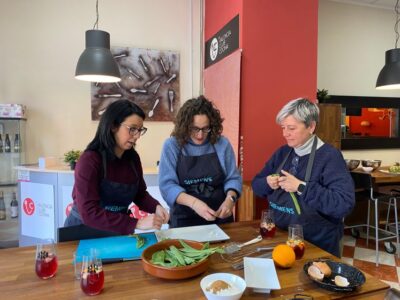
Now the reason you booked this. The chef explains step by step how to make traditional Valencian paella, and you cook alongside the team rather than just watching.
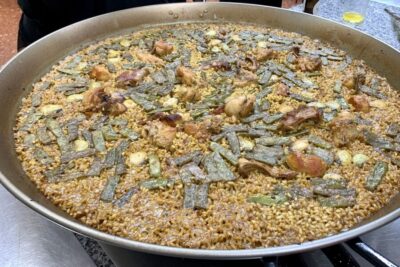
The classic version used here centers on chicken and rabbit, which is a big deal if you care about authenticity. Many paella classes elsewhere drift toward seafood-only or chicken-only. This one keeps the traditional Valencian pairing front and center, which makes your finished meal feel like Valencia instead of a generic rice dish.
What you’ll do during cooking
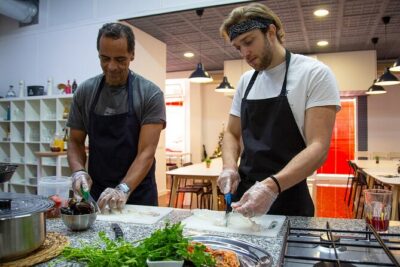
You’ll likely take on specific tasks while the chef guides you. The best part is that you’ll understand the roles of different steps. Salt, saffron, and the order of actions matter. One practical tip from the experience: if you end up doing the work of grinding saffron, be ready for it to be more effort than it looks on paper. It’s not dangerous, but it can feel like real prep work.
You’ll finish with a paella you actually made as a group. That’s what makes it memorable: the sense that you contributed to the whole dish, not just one garnish.
Why chicken and rabbit changes the experience
Chicken and rabbit give the dish a different depth than many simplified versions. You’re working within a style built around slow flavor development and classic Valencian comfort. When you cook it yourself, you start to understand why Valencians treat paella like a social center—because the dish takes time, attention, and shared effort.
What you eat after cooking: salad, wine, sweets, and coffee
Once the paella is done, you sit down and eat what you cooked. The meal includes several components, and the variety is a big part of the value of this experience.
Included lunch-style plates
- Valencian tomato salad alongside the paella
- Valencian wines and sweet wine
- Seasonal fruit
- Typical Valencian sponge cake
- Coffee, plus the drinks to round out the meal
There’s also a strong tapas-to-main-to-dessert rhythm. You’ll often start with bites, then move into paella, then finish with sweets and coffee. That flow keeps things satisfying without feeling like you’re constantly eating random snacks.
For you, this matters because paella classes sometimes end with a small plate and a polite drink. Here, the meal is set up like you’re actually having lunch in Valencia. And yes, it’s filling. Plan accordingly.
Price and value check: is $78.60 worth it?
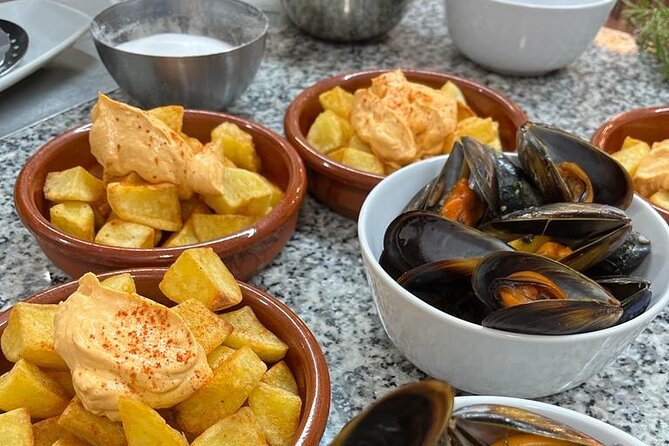
At $78.60 per person, you’re paying for more than a recipe. You’re paying for:
- market-guided ingredient selection at Mercado de Ruzafa
- a cooking lesson with step-by-step instruction
- hands-on participation (not a show)
- tapas, sangria, beer, water
- a full sit-down meal with wine, sweet wine, salad, fruit, sponge cake, and coffee
On a pure “cooking class only” comparison, it might look high. But the price makes sense when you treat it as a full afternoon of food, drink, and instruction. You’ll also likely get more from the class because it’s structured around real ingredients and a real lunch table.
It’s also booked fairly often, averaging 33 days in advance, which hints that the experience sells well when schedules align. If you’re aiming for a specific week, booking sooner tends to keep options open.
Group size and language: small, friendly, and in English
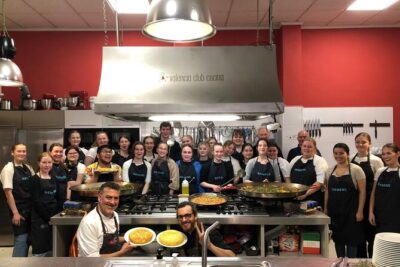
The class has a maximum of 20 travelers. That size is a sweet spot. It’s large enough that you’ll meet people, but small enough that the chef can still guide you and you’re not stuck waiting your turn for basic tasks.
English is offered, and some classes may be run by multi-lingual guides. In practice, this means you should feel comfortable asking questions about steps, ingredients, and what to do next while you’re cooking.
Logistics you should know before you show up
A few practical details can help you have an easier, more enjoyable time.
What to bring
- An appetite. The meal is substantial.
- Comfortable shoes. You’re walking between the market and kitchen.
- A relaxed attitude about participating. The class is hands-on.
Alcohol pacing
Sangria and wine are included. If you’re trying to stay in control, pace yourself at the start. The class moves into cooking work soon after the tapas and drinks, so keep that in mind.
The meetup isn’t the kitchen
The meetup is outside Parroquia de San Valero. You’ll be organized and then taken to the market and later the kitchen area. Don’t expect the kitchen to be right at the church steps.
Who this paella class is best for (and who might want something else)
This is a great fit if you want:
- a true Valencian paella lesson (with chicken and rabbit)
- hands-on cooking with a small group
- a structured food day that includes market context, drinks, and dessert
It’s especially good for couples, small groups, and solo travelers who want an easy way to connect with other people. The group cooking and shared meal do a lot of the social work for you.
Who might want a different format? If you hate any kind of hands-on prep or prefer a strictly non-alcohol experience, you may find the workshop style more active than you want. Still, you can enjoy the cooking and meal, just manage your drink pace.
Should you book this Valencian paella cooking class?
If you’re choosing between a quick paella tasting and a real cooking lesson, this one leans toward learning. I’d book it if you care about ingredient choices, want step-by-step guidance, and like the idea of finishing with a full Valencia-style lunch—market to pan to dessert.
Book it sooner rather than later if your dates are fixed, since it’s commonly reserved weeks ahead. And if you enjoy food culture, not just food, the market stop and the Valencian customs talk make the day feel anchored.
If your goal is a hands-on skill you can repeat, plus a fun afternoon of sangria, tapas, and paella, this is an easy yes.
FAQ
Where is the tour meeting point?
You meet at Parroquia de San Valero (Carrer del Pare Perera, 6, L’Eixample, 46006 València, Valencia, Spain).
What time does it start?
The start time is 11:00 am.
How long is the experience?
It lasts about 3 hours 30 minutes.
What happens at the Mercado de Ruzafa?
You’ll go to the market together and make the purchase of fresh products needed to cook paella, along with explanations about paella origins and Valencian customs.
What is included in the food and drinks?
You’ll have tapas, sangria (plus beer and water), salad, paella, seasonal fruit, Valencian sponge cake, mistela (fortified wine), sweet wine, and coffee.
What paella do you cook?
The authentic Valencian paella taught in the class is made with chicken and rabbit.
Is the class offered in English?
Yes. English is offered.
Is there a limit on group size?
Yes. The maximum group size is 20 travelers.
Can children join?
Children must be accompanied by an adult.
More Tour Reviews in Valencia
- Valencia: Oceanogràfic Entry Ticket★ 4.7 · 9,893 reviews
- Valencia: 24 or 48-Hour Hop-on Hop-off Bus Ticket★ 3.9 · 5,611 reviews
- Valencia: Sailing Catamaran Cruise with Sunset Option and DJ★ 4.1 · 4,270 reviews
- Valencia: Palosanto Flamenco Show Ticket★ 4.8 · 3,876 reviews
- Valencia Old Town Tour with Wine & Tapas in 11th Century Historic Monument★ 5.0 · 3,234 reviews
Valencia, Plate by Plate
- Valencia Old Town Tour with Wine & Tapas in 11th Century Historic Monument★ 5.0 · 3,234 reviews
- Valencia: Old Town Tour, Wine & Tapas in an 11th c. Monument★ 4.9 · 1,797 reviews
- Paella Cooking Class, Wine Tasting & Central Market in Valencia★ 5.0 · 1,150 reviews
- Valencia: Paella Cooking Class with Central Market Tour★ 5.0 · 721 reviews
- Valencia: Orange Farm and Orchard Trip with Tastings★ 4.9 · 702 reviews
Paella Pans Still Warm
- Paella Cooking Class, Wine Tasting & Central Market in Valencia★ 5.0 · 1,150 reviews
- Valencia: Paella Cooking Class with Central Market Tour★ 5.0 · 721 reviews
- Valencian paella workshop and visit to the Algiros market★ 5.0 · 338 reviews
- Seafood paella cooking class, tapas and visit to Ruzafa market.★ 5.0 · 328 reviews
- Valencia: Evening Guided Paella Workshop, Tapas, and Drinks★ 4.9 · 326 reviews
The newest Valencia reviews on our desk




Valencia Paella Cooking Classes, compared.
 ★ 5.0Paella Cooking Class, Wine Tasting & Central Market in ValenciaFrom $841,150 reviews
 ★ 5.0Paella Cooking Class with Central Market TourFrom $82721 reviews
 ★ 5.0Valencian paella workshop and visit to the Algiros marketFrom $82338 reviews
 ★ 5.0Seafood paella cooking class, tapas and visit to Ruzafa market.From $78328 reviews
 ★ 4.9Evening Guided Paella Workshop, Tapas, and DrinksFrom $77326 reviews
 ★ 5.0Valencian Paella Cooking Class, Tapas & Sangria – EveningFrom $78303 reviews
 ★ 4.9Paella Workshop and Algiros Market VisitFrom $73291 reviews
 ★ 5.0Real Paella Cooking Class – Market Visit & Sangría WorkshopFrom $77291 reviews
Browse the lists this tour appears in