
Reviewed · VALENCIA PAELLA COOKING CLASSES
Valencia: Paella Workshop and Algiros Market Visit
Paella tastes better when you make it. This Valencia Club Cocina workshop pairs a morning market stop at Algiros with a chef-led paella lesson, so you start with ingredients and end with the meal. You cook alongside a group, with English instruction and plenty of snacks before the big rice moment.
What I really like is how hands-on it feels, from chopping and stirring to learning the tricks for the crunchy bottom called socarrat. One thing to watch: the Algiros Market visit only runs Monday–Saturday mornings, and the market shuts in August, so your timing needs to fit.
In This Review
- Key things I’d circle before you book
- Valencia Club Cocina: a real kitchen with clear instruction
- Algiros Market (morning only): choosing ingredients in the real neighborhood
- Paella workshop: the rice technique and the crunchy bottom (socarrat)
- Tortilla de patatas: the side dish that teaches technique
- Coca de llanda and merengada ice cream: dessert that feels distinctly Valencian
- Wine, sangria, and mistela: how the drinks fit the meal
- The meal you cook: toast, sit-down eating, and a take-home recipe
- Price and value: does $73 per person make sense?
- Who this workshop fits best (and who should skip it)
- Should you book the Valencia paella and Algiros Market class?
- FAQ
- How long is the Valencia paella workshop?
- Where do I meet for the workshop?
- Does the class include a visit to Algiros Market?
- What dishes do we make?
- Is vegetarian paella available?
- What drinks are included?
- Is the workshop taught in English?
- Is the activity wheelchair accessible?
- What should I bring?
- Is there a age limit?
Key things I’d circle before you book
- Algiros Market first: you pick Mediterranean ingredients before you cook
- Valencian paella method, not just recipe: rice technique and the crunchy bottom matter
- A full menu in 2.5 hours: paella plus tortilla and coca de llanda
- Plenty of drinks with your meal: sangria (including non-alcoholic), DO wine tasting, and mistela
- Names to expect: instructors like Carles, Joan, William, Mark, Carlos, and Adana show up as standout hosts
- You leave with something real: a personalized diploma and a Valencian paella recipe to use later
Valencia Club Cocina: a real kitchen with clear instruction
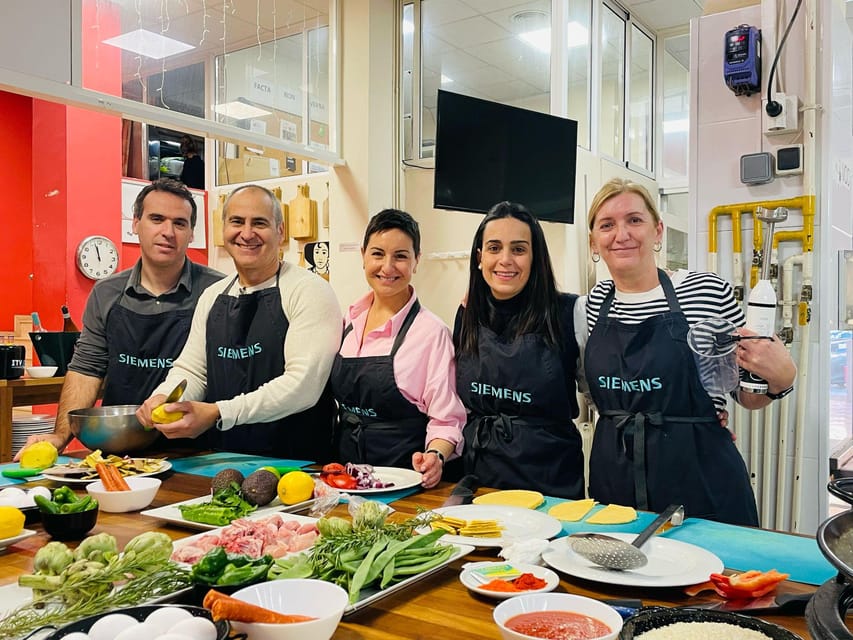
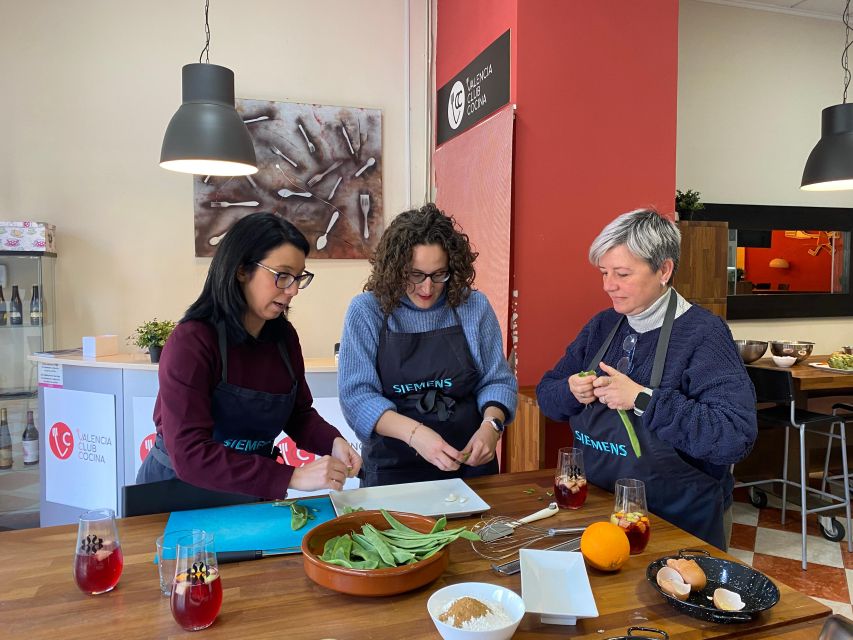
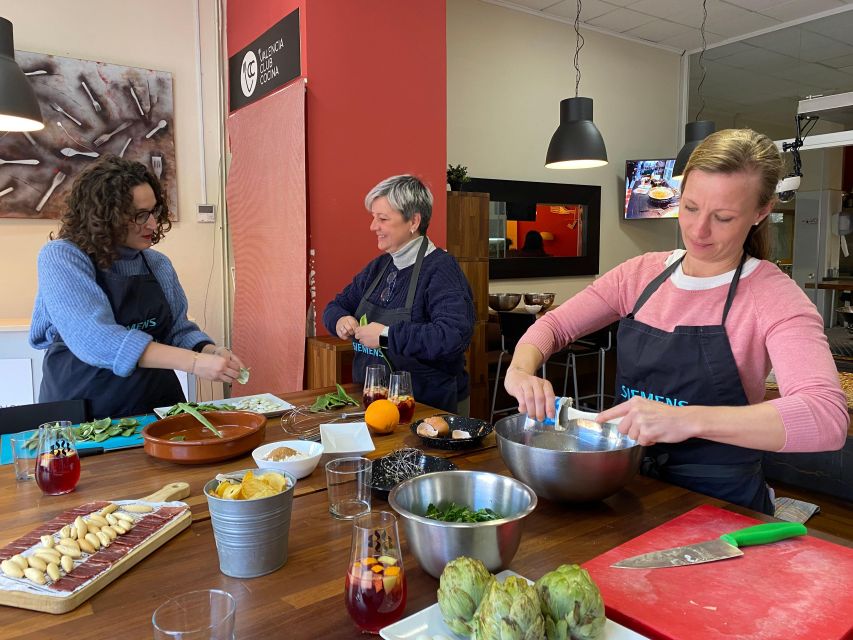
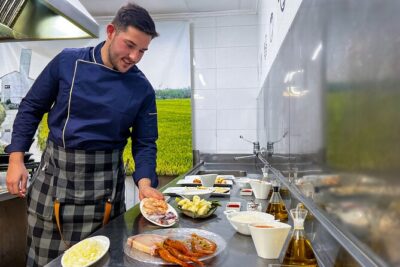
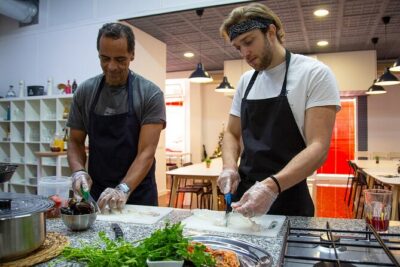
This class runs out of Valencia Club Cocina, a culinary school with over 12 years of experience. The setup is practical: you’re not watching from the sidelines. You’re in the kitchen with a chef guiding steps in English, with help coming from an instructor team and (in many sessions) an assistant style of support.
For a first-time cook, this matters. Paella is one of those dishes where the final result depends on timing, heat, liquid amounts, and how you handle the pan. A workshop like this gives you a framework you can actually repeat at home, instead of just copying ingredients.
Also, it’s built for mixed groups. Even when people come in as total novices, the structure lets you participate in tasks that match your comfort level—chopping, stirring, prepping, or taking turns at key moments.
If you want a smooth, no-stress meal experience, the 2.5-hour length helps. It’s long enough to learn technique and eat what you make, but short enough that you’re not stuck in a half-day cooking marathon.
Other kitchens where the paella pan ends up in your hands
Algiros Market (morning only): choosing ingredients in the real neighborhood
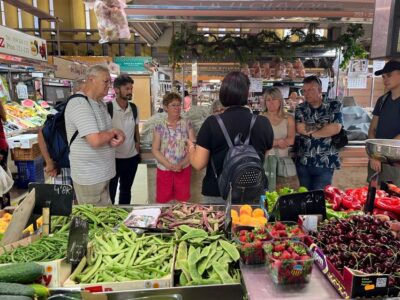
The experience begins with a visit to Algiros Market, an indoor market known for fresh local produce. The point isn’t to “browse for fun.” It’s to see how Valencian cooking starts—with ingredients that are available locally and at peak freshness.
You’ll look for Mediterranean staples you’ll later recognize in your dishes. If you care about food beyond the final plate, this step is the difference between an okay cooking class and one that feels like Valencia. You get the logic of the menu: why certain items show up, what you’re supposed to look for, and how markets connect to local flavors.
Important timing note: the market visit is scheduled Monday to Saturday morning only. It’s closed in the afternoon and on Sundays, and it’s closed during August. The market stop is also subject to availability, so if your dates are tight, plan around the possibility that you might not catch the full market component.
Practical tip: if you’re the type who likes to snack as you explore, this is a good moment for it. But don’t overdo it right before the cooking starts—you still need energy for paella, tortilla prep, and dessert later.
Paella workshop: the rice technique and the crunchy bottom (socarrat)
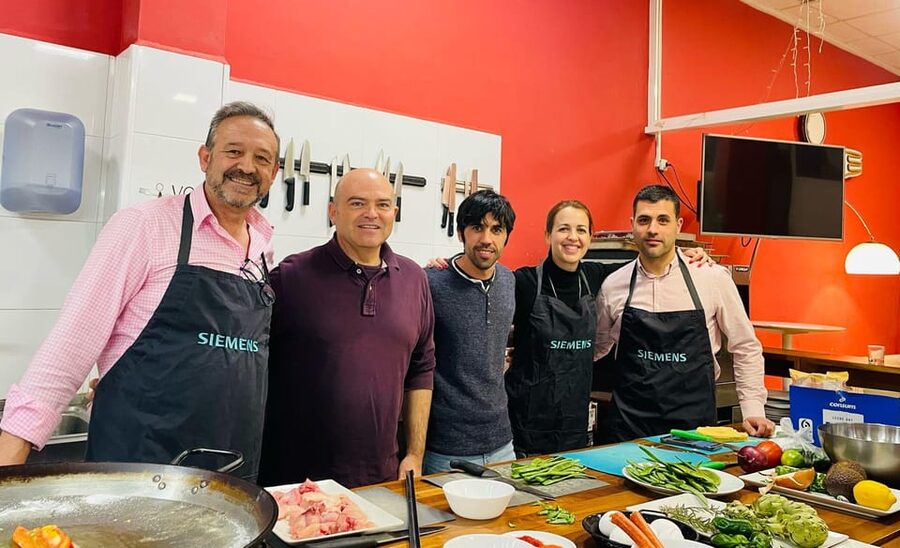
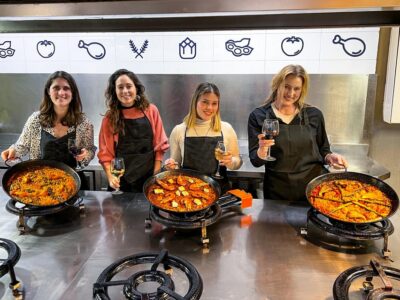
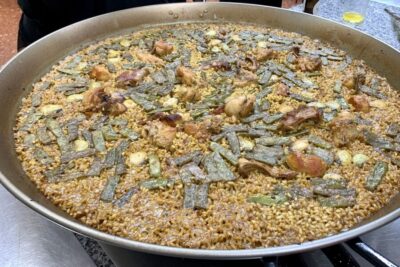
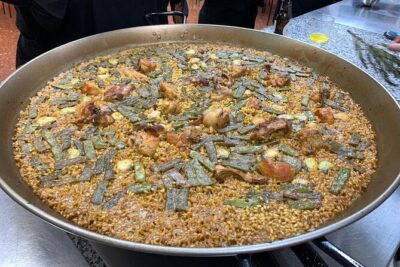
The center of the day is the Valencian paella workshop. You’ll cook a traditional menu with paella as the main dish. By default, it’s described as either chicken or vegetables. If you want vegetarian paella, you’ll need to request it in advance.
Here’s what makes a paella class valuable: you’re not just learning what goes into the pan. You’re learning how to treat the rice during the process. The methods that chefs teach—how you manage heat, when you stop stirring, and how you recognize doneness—are usually where home results fall apart.
One detail that comes up repeatedly in descriptions of this experience is the focus on the crunchy layer at the bottom: socarrat. That’s the part many people only experience in a restaurant. In a good workshop, you get the “why” behind it, not just the final look.
You’ll also get a tasting setup as you work. The experience includes things like Spanish jam and chips/breadsticks, plus a Valencian DO wine tasting. Even if you’re not a wine person, this portion is a useful cue for Spanish flavor pairing and how locals think about meals: you cook and snack, you taste, then you eat what you made.
Food pacing is another strength. People talk about how the class stays interactive without rushing you into one hard task after another. You’ll take turns, so you get a feel for the workflow and still stay part of the process rather than feeling like you’re watching.
Tortilla de patatas: the side dish that teaches technique
You also make a Spanish omelet—commonly known as tortilla de patatas. This matters because tortilla teaches a different skill set than paella. Paella is rice and broth control. Tortilla is egg handling, patience, and attention to the texture you’re building.
In many cooking sessions, chefs guide you through timing and turning so the tortilla comes out set but not dry. One reason this addition works so well is that it gives you variety in skills. You get to practice more than one kind of kitchen thinking, which makes the workshop feel more like learning cooking rather than only following a paella script.
It’s also a smart menu choice for the group. Tortilla is forgiving compared to more delicate dishes, so everyone can contribute and still end up with something satisfying. When you sit down to eat at the end, the tortilla rounds out the paella with comfort-food energy.
Still hungry? More Valencia tables and market stops
- Paella Cooking Class, Wine Tasting & Central Market in Valencia
★ 5.0 · 1,150 reviews - Valencian paella cooking class, tapas and visit to Ruzafa market.
★ 5.0 · 828 reviews - Valencia: Paella Cooking Class with Central Market Tour
★ 5.0 · 721 reviews - Valencia: Orange Farm and Orchard Trip with Tastings
★ 4.9 · 702 reviews
Coca de llanda and merengada ice cream: dessert that feels distinctly Valencian
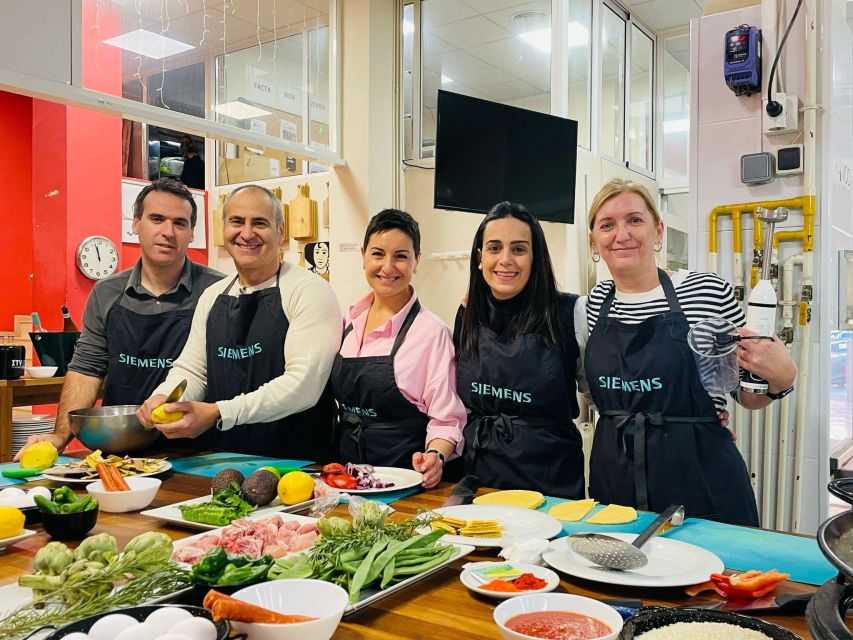
Coca de llanda is included as dessert. You’ll make it as part of the workshop, and it comes with merengada milk ice cream—another classic touch tied to Valencian flavor culture.
Coca de llanda isn’t the kind of dessert you encounter everywhere in Spain, which is exactly why I like including it in a workshop menu. It gives you a taste of what people actually reach for locally, rather than only the most universal sweets.
And if you’ve ever tried to bake something at home and found the result didn’t match what you tasted in a café, this portion helps. You’re watching how the chef handles texture and timing, then eating it while it’s at its best. That’s the real learning moment.
Wine, sangria, and mistela: how the drinks fit the meal
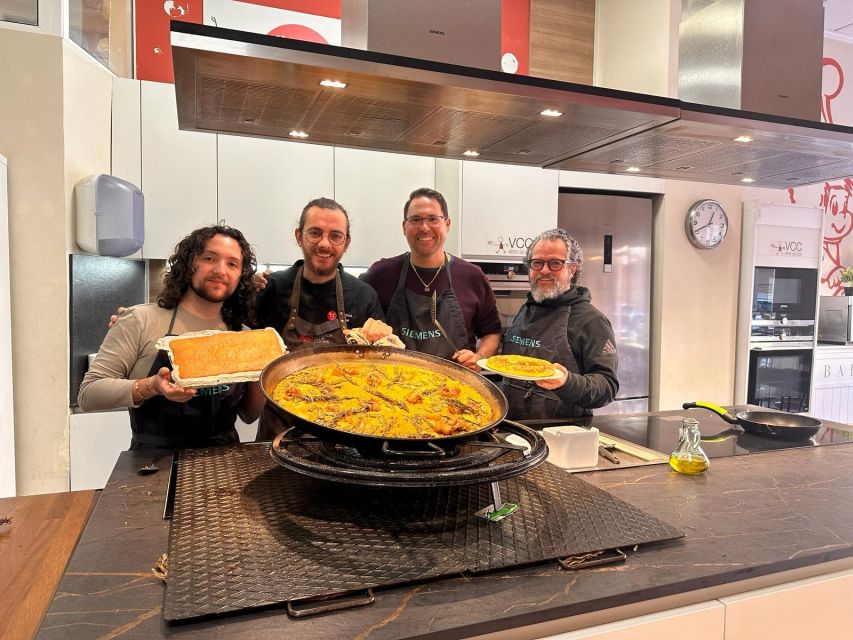
Food and drink are part of the structure here, not random add-ons. You’ll have water and beer, plus soft drinks, and wine with the meal. You’ll also have sangria (with a non-alcoholic option available) and a shot of mistela, a wine liqueur.
A big part of the appeal is comfort. You’re working in a kitchen, then eating what you made. Having drinks built into the rhythm keeps it social and easygoing, especially if your group is international.
Also, the inclusion of a Valencian DO wine tasting helps you understand what you’re drinking in context. Even if you don’t plan to buy bottles, it’s a low-pressure way to learn what locals consider appropriate for a meal like this.
One consideration: if you’re sensitive to alcohol or you’re driving, pick the non-alcoholic sangria option and stick to water. The experience is designed to work either way.
The meal you cook: toast, sit-down eating, and a take-home recipe
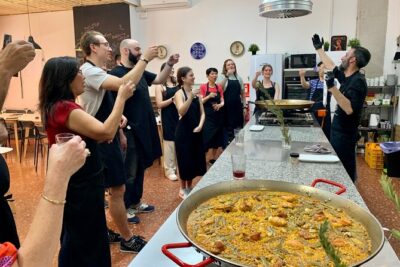
Once your paella and tortilla are ready, you sit down and share the meal with the chef and the group. This is when the class clicks. You see how the flavors connect, and you get immediate feedback from the people who guided the process.
You’ll raise a toast with wine and sangria, then eat your paella (chicken or vegetables/vegetarian request) along with the rest of the menu. Snacks are included earlier too—Spanish jam, chips, and breadsticks—so you’re not arriving at the end starving.
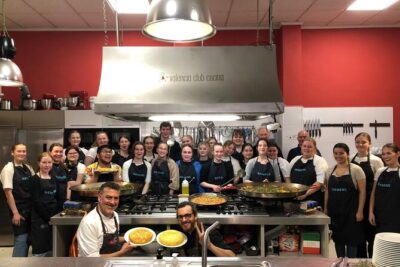
What you also leave with is a nice bonus: a personalized diploma with your group photo and a Valencian paella recipe you can recreate later. That makes the workshop more than a one-time meal. You can bring the method home and stop guessing.
And yes, the “crunchy rice” element matters. People often mention the paella turning out well, especially when the socarrat is done right. When that happens, paella goes from tasting like rice with flavor to tasting like an actual dish with texture.
Price and value: does $73 per person make sense?
At $73 per person for a 2.5-hour experience, the value comes from what’s included:
- Instructor-led cooking (hands-on instruction)
- A market visit for morning tours (Mon–Sat)
- Paella plus tortilla and coca de llanda
- Drinks with the meal (water, beer, soft drinks, wine)
- Sangria (including non-alcoholic option)
- Wine tasting (Valencian DO)
- A shot of mistela
- Souvenirs (personalized diploma) and a paella recipe to take home
If you compare this to buying paella and dessert in a restaurant, the drinks and the included learning time are what tip the balance. You’re not just paying for food; you’re paying for technique coaching plus an ingredient shopping step.
There’s also a hidden value: you learn how to avoid common paella mistakes. If you’ve ever tried to make paella at home and ended up with rice that’s too wet, too sticky, or missing that browned bottom texture, this class targets the gap.
So for most people who like food experiences, $73 feels like a fair price for a full meal with instruction, not a pricey gimmick.
Who this workshop fits best (and who should skip it)
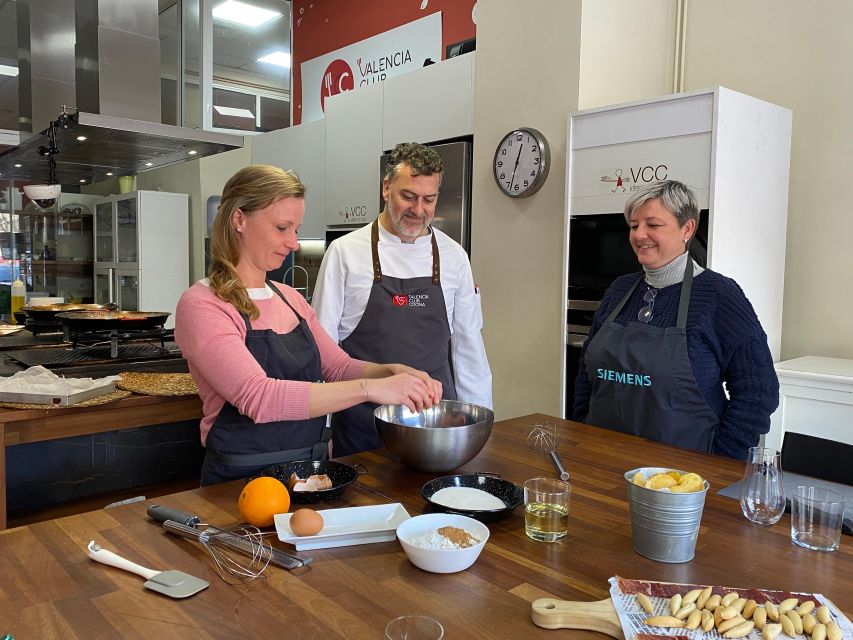
This class is a strong pick if:
- You want a hands-on cooking experience rather than a sightseeing-only food tour
- You like Valencian food specifically, not just generic Spanish tapas
- You want to leave with a recipe you can actually use
- You enjoy learning through doing (chopping, stirring, turning tortilla, working the paella pan)
It’s also a nice fit for groups. Many people come for special trips and mention fun, interactive hosting, with chefs who keep things moving and explain steps clearly.
It may not be ideal if:
- Your dates don’t align with market availability (morning Mon–Sat only, closed Sundays, and closed during August)
- You’re hoping for seafood paella: the menu is listed as chicken or vegetables (seafood isn’t stated here)
- You’re traveling with children under 2 years old (not suitable)
If you’re vegetarian, plan ahead. Vegetarian paella is available, but you’ll need to request it.
Should you book the Valencia paella and Algiros Market class?
If you want the most “Valencia” version of paella—ingredients from a real local market, then a chef-guided method for rice and the signature crunch—this is an easy yes.
Book it when:
- You’re in Valencia for long enough to catch a Monday–Saturday morning window
- You like learning cooking steps you can repeat at home
- You’re okay spending $73 for a full meal plus wine tasting and dessert
Skip it when:
- Your schedule depends on Sunday, an afternoon slot, or a trip in August (the market portion won’t be there)
- You only want a quick snack without cooking time
Overall, I’d recommend this class as one of the better “food learning” options in Valencia because the experience connects the dots: market → cooking technique → finished plate → take-home recipe.
FAQ
How long is the Valencia paella workshop?
It runs for 2.5 hours.
Where do I meet for the workshop?
You meet at Valencia Club Cocina.
Does the class include a visit to Algiros Market?
Yes, for morning tours Monday to Saturday. The market visit is not available on Sundays and afternoon tours, and it’s closed in August.
What dishes do we make?
You’ll make traditional Valencian paella (chicken or vegetables, or vegetarian paella if requested), a Spanish potato omelet (tortilla), and coca de llanda, finished with merengada milk ice cream.
Is vegetarian paella available?
Vegetarian paella is available if you request it in advance.
What drinks are included?
The experience includes sangria (with a non-alcoholic option), Valencian DO wine tasting, and water, beer, soft drinks, and wine with your meal. A shot of mistela is also included.
Is the workshop taught in English?
Yes. The instructor is English-speaking.
Is the activity wheelchair accessible?
Yes, it is wheelchair accessible.
What should I bring?
Bring a camera and comfortable clothes.
Is there a age limit?
It’s not suitable for children under 2 years.
More Tour Reviews in Valencia
- Valencia: Oceanogràfic Entry Ticket★ 4.7 · 9,893 reviews
- Valencia: 24 or 48-Hour Hop-on Hop-off Bus Ticket★ 3.9 · 5,611 reviews
- Valencia: Sailing Catamaran Cruise with Sunset Option and DJ★ 4.1 · 4,270 reviews
- Valencia: Palosanto Flamenco Show Ticket★ 4.8 · 3,876 reviews
- Valencia Old Town Tour with Wine & Tapas in 11th Century Historic Monument★ 5.0 · 3,234 reviews
Valencia, Plate by Plate
- Valencia Old Town Tour with Wine & Tapas in 11th Century Historic Monument★ 5.0 · 3,234 reviews
- Valencia: Old Town Tour, Wine & Tapas in an 11th c. Monument★ 4.9 · 1,797 reviews
- Paella Cooking Class, Wine Tasting & Central Market in Valencia★ 5.0 · 1,150 reviews
- Valencian paella cooking class, tapas and visit to Ruzafa market.★ 5.0 · 828 reviews
- Valencia: Paella Cooking Class with Central Market Tour★ 5.0 · 721 reviews
Paella Pans Still Warm
- Paella Cooking Class, Wine Tasting & Central Market in Valencia★ 5.0 · 1,150 reviews
- Valencian paella cooking class, tapas and visit to Ruzafa market.★ 5.0 · 828 reviews
- Valencia: Paella Cooking Class with Central Market Tour★ 5.0 · 721 reviews
- Valencian paella workshop and visit to the Algiros market★ 5.0 · 338 reviews
- Seafood paella cooking class, tapas and visit to Ruzafa market.★ 5.0 · 328 reviews
The newest Valencia reviews on our desk




Valencia Paella Cooking Classes, compared.
 ★ 5.0Paella Cooking Class, Wine Tasting & Central Market in ValenciaFrom $841,150 reviews
 ★ 5.0Valencian paella cooking class, tapas and visit to Ruzafa market.From $78828 reviews
 ★ 5.0Paella Cooking Class with Central Market TourFrom $82721 reviews
 ★ 5.0Valencian paella workshop and visit to the Algiros marketFrom $82338 reviews
 ★ 5.0Seafood paella cooking class, tapas and visit to Ruzafa market.From $78328 reviews
 ★ 4.9Evening Guided Paella Workshop, Tapas, and DrinksFrom $77326 reviews
 ★ 5.0Valencian Paella Cooking Class, Tapas & Sangria – EveningFrom $78303 reviews
 ★ 5.0Real Paella Cooking Class – Market Visit & Sangría WorkshopFrom $77291 reviews
Browse the lists this tour appears in